
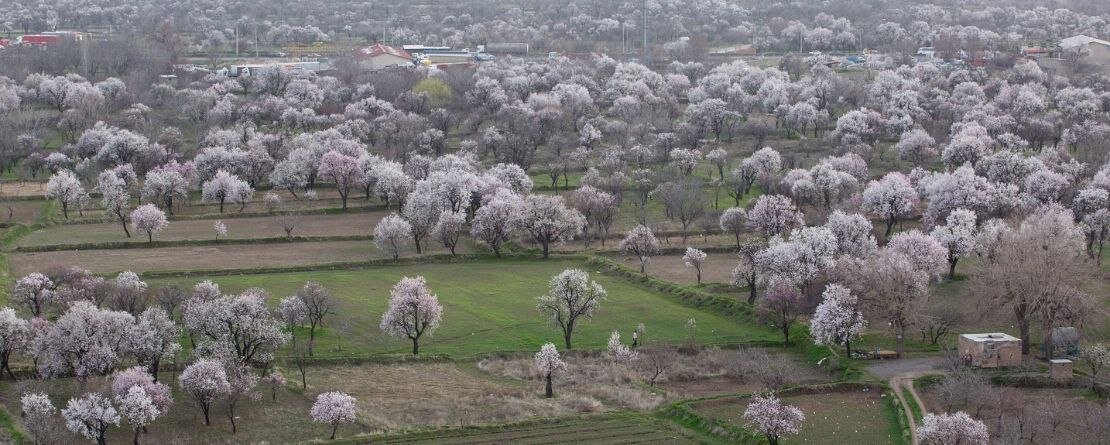
TEHRAN – The ancient traditional gardens of Qazvin (Bagestan) have received the Globally Important Agricultural Heritage System (GIAHS) certification awarded by the Food and Agriculture Organization (FAO).
Currently, there are six designated sites in Iran, ranking the country fourth in the world. China, Japan, and South Korea are ranked 1st to 3rd with 25, 17, and 9 sites.
The 2025 GIAHS Awards Ceremony was held on October 31 at FAO Headquarters in Rome as part of FAO’s 80th anniversary celebrations. The event celebrated 28 new agricultural heritage designations in 14 countries, bringing the total number of globally recognized heritage systems to 102.
Selection criteria under FAO’s GIAHS program stipulate that sites must be globally significant, have public good value, and support food and livelihood security, agro-biodiversity, sustainable knowledge systems and practices, social values and culture, and landscape excellence.
Iran’s World Agricultural Heritage Sites include the qanat irrigated agricultural heritage system of Kashan, the qanat-based saffron farming system of Gonabad, the grape production system of the Jowzan Valley, the Estavan rain-fed fig orchard heritage system of Fars province, the traditional walnut farming system of Twiserkan, Hamedan province, and the ancient traditional gardens of Qazvin Bagestan.
The traditional gardens of Qazvin are flood diffusion systems that date back thousands of years when the city of Qazvin developed. The city, located at the foot of the Alborz Mountains, has protected its inhabitants from flooding by creating gardens surrounding the city, adapted to its watershed and used it to produce nuts and local delicacies.
Bagestan is endowed with rich agro-biodiversity, with around 100 local varieties of pistachio, almond, grape, apricot, walnut and plum trees coexisting. Grapes, pistachios, and almonds represent the species with the greatest number of local and indigenous varieties. For example, 25 types of grapes have been identified, and their history dates back to the 16th century.
Launched by FAO at the 2002 World Summit on Sustainable Development and formally endorsed as an FAO Enterprise Program in 2015, the GIAHS Initiative identifies and protects good agricultural systems where communities maintain complex relationships with their territories.
This evolving and resilient region is characterized by agro-biodiversity, traditional knowledge, valuable cultures and unique landscapes, and is sustainably managed by farmers, pastoralists, fishers and forest dwellers in ways that support livelihoods, adaptive management and knowledge exchange.
MT/MG