
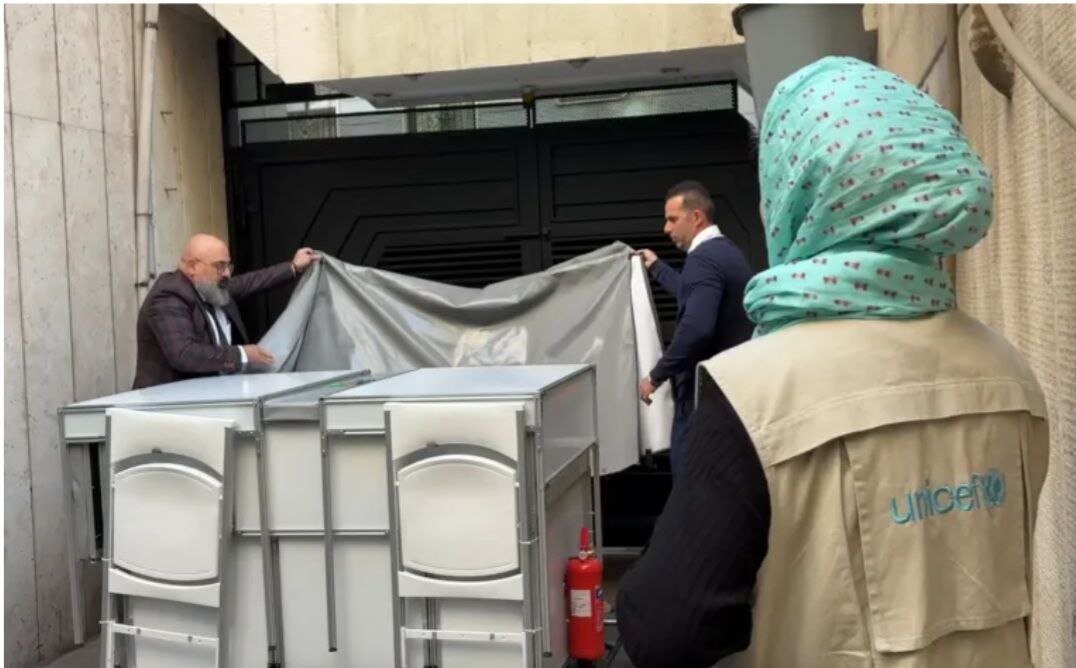
TEHRAN – In an effort to ensure that Iran’s health system is strong and ready to protect everyone, especially the most vulnerable, in the event of a crisis, the United Nations Children’s Fund (UNICEF) has procured portable tents and rapid response backpacks.
This is a step toward ensuring access to health care for children, women, and anyone else who needs it during disasters and emergencies. According to a press release on the UNICEF website on November 4, UNICEF is focusing on two projects that will provide immediate assistance to people.
1. Portable emergency health tent
When an earthquake or flood occurs, regular medical clinics can be damaged. To solve this problem, UNICEF is purchasing a special, easy-to-use primary health care (PHC) emergency portable tent.
Here’s why these tents are important:
Care for all: Specially set up to ensure people continue to have access to basic health care, support pregnant women and even assist with childbirth.
Ready to use: Lightweight and designed for quick setup in remote or hard-to-reach locations.
Complete clinic in a tent: Each tent is fully equipped like a small hospital unit. It can provide essential medical services to around 200 people every day.
They were tested! The idea worked well after the Kermanshah earthquake and 10 tents have now been delivered to different areas.
2. Quick action backpack for medical teams
Emergencies can also cause rapid spread of disease (epidemics). To stop this, UNICEF has procured rapid response backpacks.
These backpacks allow health teams to:
Become a rapid diagnostician: Contains tools and equipment to quickly investigate disease outbreaks and determine their causes.
Provide first aid: We have critical supplies to provide immediate first aid and basic care to those affected.
Go anywhere: Light and portable, it allows healthcare workers to instantly reach people in remote areas, even where clinics are broken down.
Stay on the job: This allows healthcare workers to continue providing care and looking for problems for several days without having to return to the main clinic.
UNICEF is ensuring these quick-action backpacks reach health teams and will also train staff on how best to use the backpacks.
Supporting the Ministry of Health, Labor and Welfare
ISNA quoted UNICEF official Mohammad Eslami as saying that one of UNICEF’s top priorities is to support countries in adding new vaccines to their immunization programs to protect children from more diseases and reduce mortality.
He made the remarks on October 12 while speaking at a workshop on immunization and vaccine-preventable diseases in Kerman province, ISNA reported.
Despite the sanctions, UNICEF is doing everything in its power to provide the necessary vaccines and support the Ministry of Health to ensure that no child is left behind, the official added.
Mr. Eslami emphasized the importance of the cold chain system, saying that the main purpose is to provide cold chain equipment to maintain the efficacy of vaccines.
Currently, the cold chain situation in the country is good and the Ministry of Health, with support from UNICEF, is providing new standard refrigeration facilities to be installed in areas without cold chain systems.
UNICEF added that it also provided 17 standard refrigerated vehicles to transport the vaccines to different parts of the country in a safe temperature range.
The official also said families and children should learn about the important role of vaccination in preventing life-threatening diseases. Mr. Eslami further pointed out that the guidance of target groups is therefore one of UNICEF’s main activities carried out this year.
WHO official Omid Zamani praised Iran’s achievements in its vaccination program, saying the country’s vaccination rate was satisfactory at about 97%.
However, in some border areas and areas where migrants live, children and adults may not have enough access to vaccinations. Therefore, it is essential for the country to accurately identify and cover these areas, he said.
Referring to the rotavirus and pneumococcal vaccines that were added to the national immunization program last year, the official said three more vaccines will be introduced into the national immunization program over the next five years.
MT/MG