
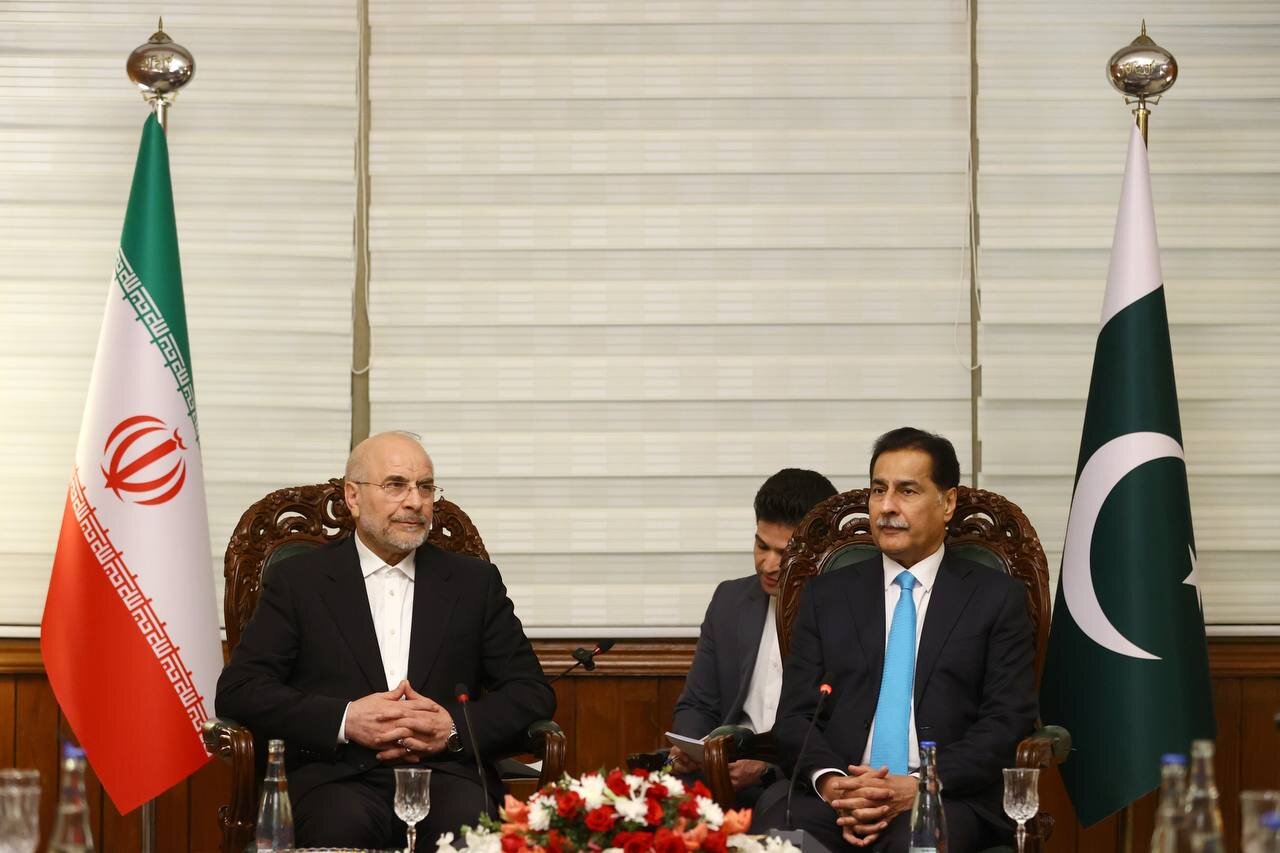
TEHRAN – The speaker of Iran’s parliament has emphasized the importance of the current level of relations between Iran and Pakistan, saying that the three-day official visit is aimed at “deepening bilateral relations and strengthening regional cooperation.”
Mohammad Baqer Qalibaf made this statement to reporters on his arrival at Nur Khan Air Base in Islamabad on Wednesday.
He said Iran and Pakistan are two countries with “deep historical and cultural ties” and currently enjoy extensive economic, political and parliamentary relations. Khalibaf added that Iran and Islamabad are committed to expanding cooperation in trade, politics and security, noting that the implementation and finalization of previous agreements will be one of the key priorities of the visit.
The top lawmaker said the meeting would emphasize the value of neighborhood diplomacy and address key issues in the region and the Islamic world.
During his stay, Qalibaf will meet with the Speaker and members of Pakistan’s National Assembly and Senate, as well as political leaders, including Prime Minister Mohammad Shehbaz Sharif. His program also includes visits to Lahore and Karachi, Pakistan’s cultural and economic hubs, where he will meet with academics, religious figures, business leaders and members of the Iranian community.
Qalibaf is accompanied by several Iranian parliamentarians and members of the Iran-Pakistan Friendship Parliamentary League, including Fada Hossein Maleki, Mohammad Noor Dehani, Rahmadal Bamali, Mehrdad Gudarji and Fazlollah Ranjibar.
Iranian Ambassador to Islamabad Reza Amiri Moghaddam and Pakistan’s Speaker of Parliament Ayaz Sadiq welcomed Qalibaf and his delegation on arrival.
Pakistan, Iran’s most populous neighbor, remains an important regional partner. The trade volume between the two countries exceeds $3 billion, and both sides are determined to increase the trade volume to $10 billion through targeted planning and removal of trade barriers.
The visit follows remarks by Ali Larijani, secretary of Iran’s Supreme National Security Council and senior adviser to Islamic revolutionary leader Ayatollah Khamenei, who said last month that Tehran and Islamabad could elevate their cooperation to the level of a “lasting strategic partnership.”
Larijani was speaking during a meeting with Pakistan’s Interior Minister Syed Mohsin Naqvi in Tehran, highlighting the geopolitical importance of both countries and hailing the recent strategic agreement between Pakistan and Saudi Arabia as a “wise and positive step towards confronting common threats.”
He said today’s regional environment is defined by common challenges that require “coordinated and comprehensive action among Islamic countries,” and stressed the need to deepen cooperation in defense, security, politics and especially the economic field.
Larijani also appreciated Pakistan’s stance during the 12-day US and Israeli invasion of Iran in June, saying it was a sign of “common understanding of regional realities.”
Both Tehran and Islamabad reaffirmed their commitment to deploying a proactive diplomatic approach to promote peace and stability in the region.
In mid-October, Iranian Foreign Minister Abbas Araghchi and Pakistani Foreign Minister Mohammad Ishaq Dar held a telephone conversation to discuss key regional and international developments. The Ministers emphasized the importance of close cooperation, information sharing, and active diplomacy to strengthen bilateral and multilateral cooperation, promote regional stability, and open up new opportunities in trade and transportation.