
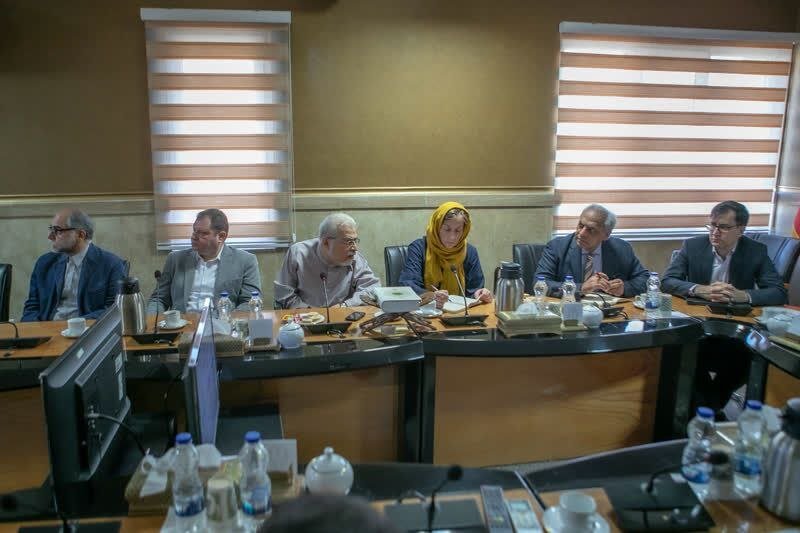
TEHRAN – A World Health Organization (WHO) delegation visited Iran’s Narcotics Control Headquarters on Monday to explore avenues for increased cooperation, especially in the prevention and treatment of drug addiction.
Mr. Afshin Ostovar, Director of Noncommunicable Diseases and Mental Health, World Health Organization Country Office in Iran; Mr. Khalid Saeed, Regional Advisor, Directorate of Noncommunicable Diseases and Mental Health, World Health Organization; Mr. Anja Busse, Director of the Division of Alcohol, Drugs and Addiction Control, World Health Organization; and Mr. Fahmi Hanna, Technical Officer, Directorate of Noncommunicable Diseases and Mental Health, World Health Organization. The health organization visited the Narcotics Control Headquarters in Tehran.
The meeting was attended by representatives and administrators of the anti-drug headquarters, the Ministry of Education, the Ministry of Health, and welfare organizations, dchq.ir reported.
The week-long mission’s main objective is to assess Iran’s achievements in combating drugs, benefiting from technical recommendations and establishing cooperation between the WHO and various departments responsible for mental health and substance abuse in the country, Ostwal said.
Addressing the meeting, Mr. Said said efforts to combat drug abuse are not specific to any single organization or agency. This requires cross-sectoral cooperation not only in the health sector but also in other sectors, including senior policy makers from the judiciary, the legislature, prison institutions, ministries of education, welfare institutions and civil society organizations.
He proposed a range of measures in three key areas: policy development and legislation, including strengthening health systems, strengthening information and research, and ultimately promoting mental health and substance abuse.
The official further said that Iran’s priorities are consistent with international discussions, saying, “The existing institutions of the Islamic Republic of Iran can provide valuable experience to other countries. We are aware of the geopolitical issues, but other countries can also benefit from Iranian expertise.”
Said said it was a good opportunity to share research findings and achievements, noting the cooperation with Iran’s Narcotics Control Headquarters in implementing joint projects, sharing information and focusing on specific groups such as addicted women and their children.
Mr. Busse praised Iran’s adherence to standard principles in preventing addiction and treating addicts. The official noted that the WHO and the United Nations Office on Drugs and Crime (UNODC) are developing a joint package for the treatment of addicts.
Fahmy Hanna praised the role of Iran’s Drug Enforcement Headquarters in the drug war, saying the country plays an important role in the region. He said WHO would use this opportunity to work with the Narcotics Control Headquarters to strengthen prevention and treatment programs.
He expressed optimism that the WHO would join the initiative to implement the response regionally and globally, citing the G5 countries, including Iraq, Afghanistan, Pakistan, Tajikistan, Iran and Uzbekistan.
MT/MG