
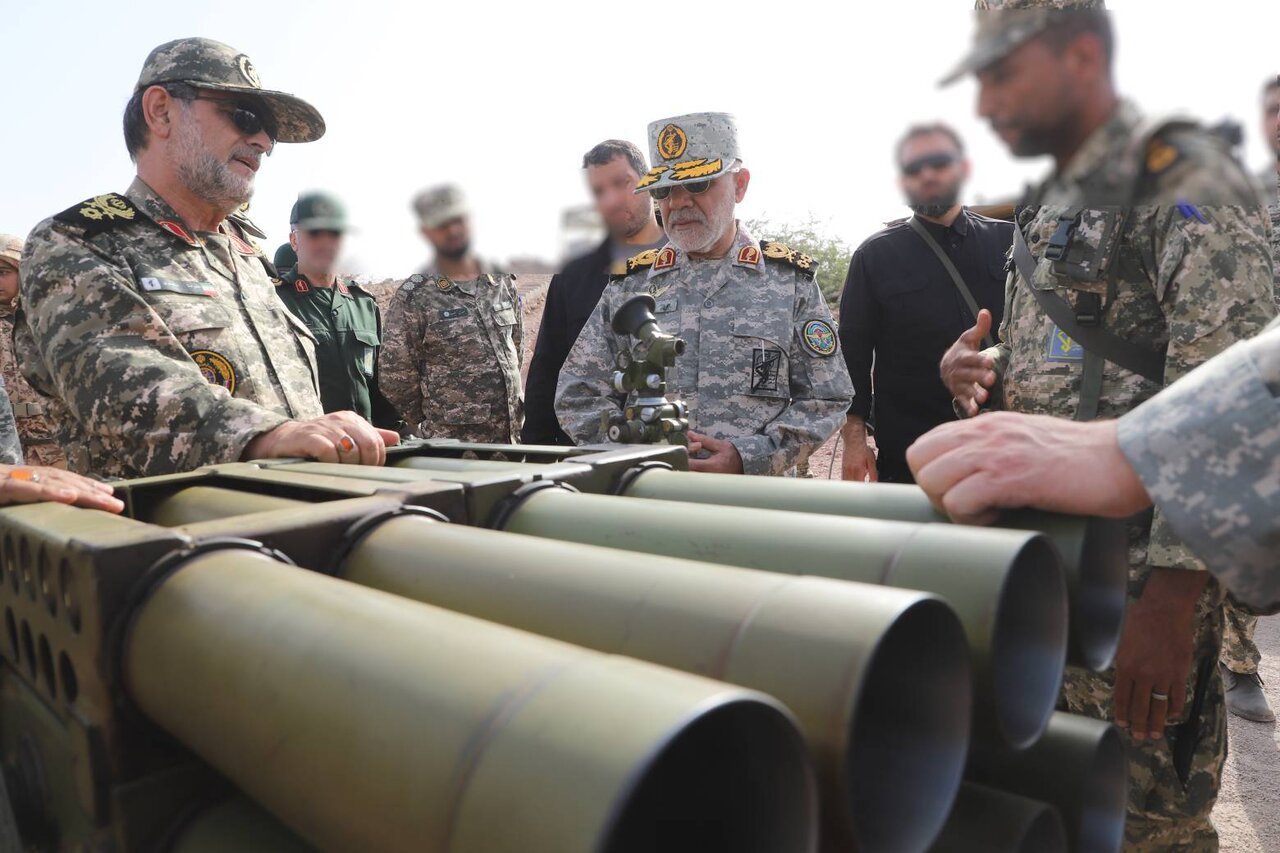
TEHRAN – Iran’s operations chief has stepped up inspections of naval facilities in southern Iran and the Persian Gulf, underscoring Iran’s preparedness to counter any potential invasion amid rising regional tensions with the United States and Israel.
Maj. Gen. Gholam Ali Abdullahi, commander of Qatam al-Anbiya Central Command, the country’s highest war command center, visited Greater Tunbu, Lesser Tunbu, Bu Musa and Siri islands on Tuesday and said that defense preparedness on Iran’s islands and coastal areas has reached an unprecedented level.
“Iran’s island-wide preparedness is higher than ever before, and it is fully prepared to face any threat in defense of its land and sea borders,” he said.
He added that security is now firmly established in Iran’s islands and coastal areas, especially in the strategic Strait of Hormuz and Persian Gulf waters, and stressed that operational forces are “fully equipped to quickly respond to any hostilities.”
Major General Abdullahi noted that the Iranian military has made significant advances in operational and technological capabilities, saying, “The country’s defense capabilities today are greater than ever before.”
His remarks followed a series of high-profile visits by senior military officials to southern Iran.
Last month, Iranian Armed Forces Chief of Staff Maj. Gen. Seyyed Abdulrahim Mousavi visited Hormozgan province to inspect naval assault forces of both the army and the Islamic Revolutionary Guards Corps (IRGC) and review their defensive and offensive capabilities.
On a similar tour, Rear Admiral Mohammad Pakpour, commander of the Revolutionary Guards Ground Forces, visited operational units of the Revolutionary Guards Navy stationed on islands in the Persian Gulf.
“The Revolutionary Guards Navy is fully equipped and fully prepared to counter any hostile moves by the enemy,” Pakpour said during the tour.
Analysts say these successive visits reflect Iran’s close monitoring of regional developments and its readiness to defend its maritime sovereignty amid rising instability in West Asia.
Tensions have remained high since June, when Israel and the United States launched coordinated attacks targeting Iran’s nuclear and defense facilities.
While Iran’s response has established a balance of deterrence, military observers have warned that a flare-up of the conflict could spread to the sea, particularly the Strait of Hormuz.
Located at the entrance to the Persian Gulf, the Strait of Hormuz is the world’s most important energy chokepoint, with approximately 20 percent of the world’s oil (approximately 17 million to 18 million barrels per day) passing through this narrow body of water. It also serves as an important route for liquefied natural gas exports, especially from Qatar.
Experts say any disruption or closure of the strait could cause an immediate spike in oil prices and destabilize global energy markets. Some forecasts estimate that global industry faces shutdowns within days due to reduced energy supplies, and that oil prices could rise by up to 80% in the first week of the shutdown.
Military officials in Tehran stressed that Iran is closely monitoring all movements of U.S. and Israeli forces in the region. Officials also suggested that if the invasion escalates, Tehran may consider restricting navigation through the Strait of Hormuz as part of its defense measures.