
Iraq’s Deputy Foreign Minister praised Iranian Foreign Ministry Spokesperson Esmail Bakaei’s comments regarding the sixth parliamentary elections in Arab countries.
Mohamed Hussein Mohamed Bahar al-Uloom said Bakuai’s comments on Monday were positive and the Iranian diplomat praised the political and electoral atmosphere in Iraq.
“He (Bakuai) also expressed hope about the turnout of the Iraqi people, which will determine the political future of the country,” the Iraqi official explained.
Mohamed Bahar Al-Uloom added: “Mr. Baqai also emphasized that whatever the outcome of the Iraqi elections, it will not affect the good and positive relations between the Islamic Republic of Iran and Iraq.”
Iraqi officials said that stability in Iraq would also contribute to stability in the region and lead to positive outcomes for everyone’s benefit.
Meanwhile, Iranian and Russian ambassadors in Baghdad discussed the latest developments in Iraq hours before the start of the country’s parliamentary elections on Tuesday, stressing the importance of the vote for Iraq’s stability and development.
At the meeting, Iranian Ambassador Mohammad Kazem Al-Sadegh and Russian Ambassador Elbrus Kutrashev exchanged views on the situation in Iraq during the election period.
Both diplomats emphasized that this election could play an important role in strengthening the country’s stability and promoting development.
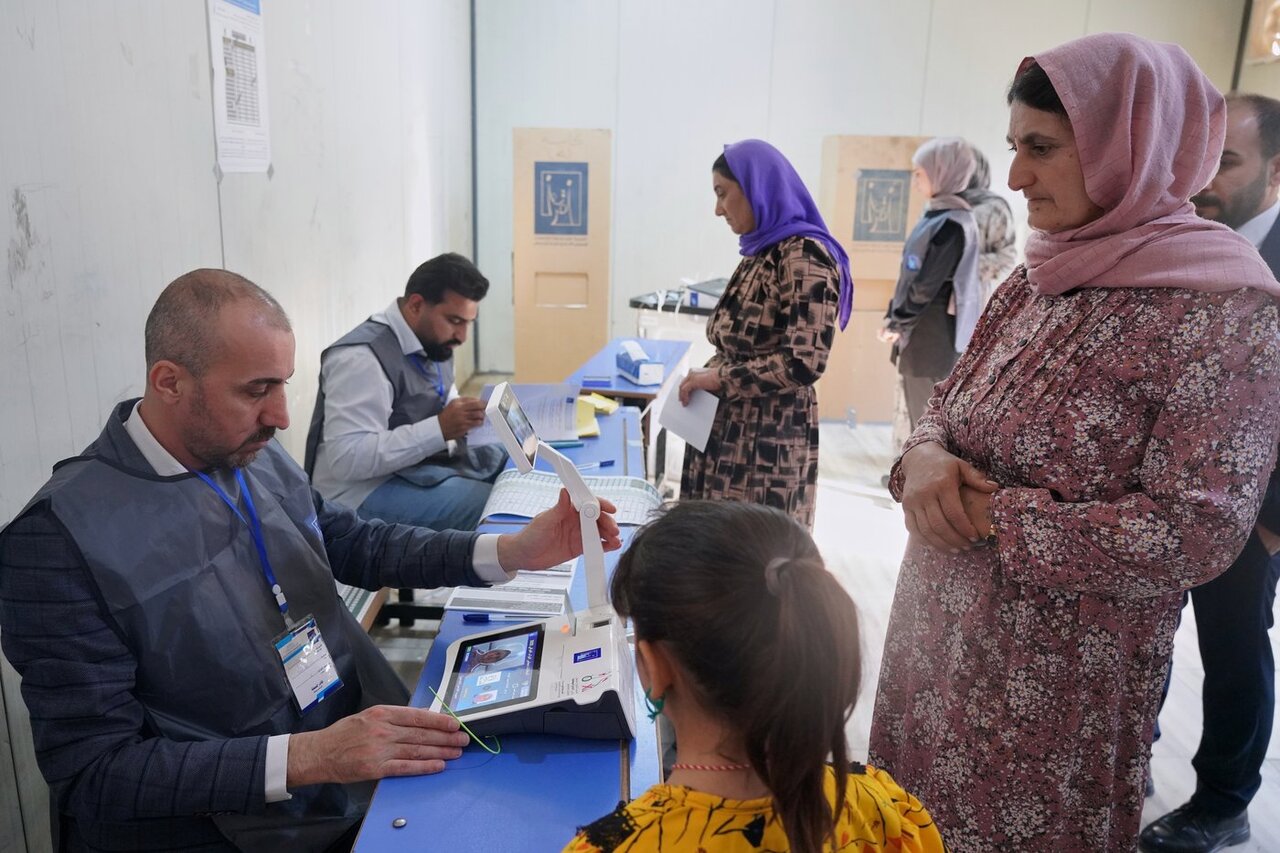
Iraqis went to the polls on Tuesday, November 11, 2025, to elect a new parliament that will determine the country’s political direction for the next four years.
Approximately 21 million Iraqis are eligible to vote for the 329-seat parliament, which will elect the president and give confidence to the incoming government.
On Sunday, members of the Iraqi security forces and internally displaced persons headed to polling stations to vote early.
Election officials said results are expected to be known within 24 hours after voting closes and will be formally approved once all appeals have been reviewed.
Prime Minister Mohammed Shia al-Sudani said the elections were held in a “safe and stable atmosphere” and praised security forces for maintaining order.
“The election confirms the principle of a peaceful transfer of power, and the government is paying great attention to it,” he told reporters after the vote in Baghdad.
He stressed that the elections were held on Constitution Day in the presence of international observers “to present a clear picture of the electoral process.”
Al-Sudani, who will be elected in 2022, is seeking re-election for a second term and is expected to win a significant number of seats.
The current parliament, dominated by Shiite parties and blocs, is scheduled to begin its term on January 9, 2022 and end on January 8, 2026.
By law, Iraq must hold parliamentary elections at least 45 days before the end of the parliamentary term.
The next prime minister will be voted in by whichever coalition can negotiate with allies to become the largest parliamentary bloc.
Iraq’s three branches of government have traditionally been sectarian: the president is Kurdish, the prime minister is Shia, and the speaker of parliament is Sunni, ensuring that all strata of society are represented in government.