
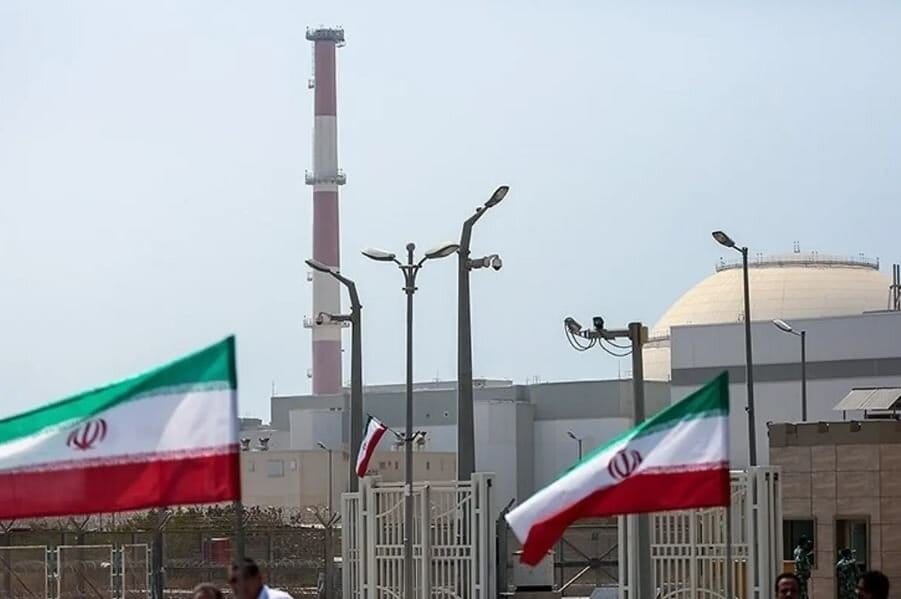
TEHRAN – The Iranian people are reacting strongly to a draft anti-Iranian resolution scheduled to be circulated at the International Atomic Energy Agency board meeting this week.
In a post on the X Platform, Iran’s Deputy Foreign Minister Kazem Ghalibabadi emphasized the need to avoid arbitrary moves and abide by international law.
“Today I spoke with Mr. George Catulgaros, the United Nations Independent Expert on Promoting a Democratic and Fair International Order, who is in Iran to attend the ‘International Law Under Attack: Aggression and Self-Defense’ conference,” Gharibabadi wrote.
“Our discussions focused on how unilateral and arbitrary actions, including aggression and crimes, by the United States and the Israeli regime are eroding international law, destabilizing the world system, and moving the world away from justice, equality, and peace,” he explained.
“I underlined the importance of Mr. Catorgalos’ mission, noting that his strong diplomatic and academic background allows him to play an important role in strengthening international law,” he added.
Iranian parliamentarian Ebrahim Azizi also accused IAEA Director-General Rafael Grossi of bowing to Western pressure.
“The solution to Mr. Grossi’s evil is now a warning. Europe and the United States must know that whatever they sought during the war or in New York cannot be achieved at the Vienna Conference. Iran will not be silent again on the law suspending (the Iranian government’s) cooperation with (the IAEA),” he wrote.
According to diplomatic sources, the United States and the European troika (France, Britain and Germany) are preparing a new resolution against Iran for submission to the IAEA Board of Governors scheduled for November 19-21 in Vienna. The revelations follow Western media quoting Grossi’s confidential report, which seeks to stir alarm over Iran’s nuclear program by stoking fears about the whereabouts of Iran’s enriched uranium.
Iran’s Ambassador to the IAEA Reza Najafi also stressed that the new pressure from Western countries will not affect the implementation of the country’s nuclear safeguards.
Colonel Najafi on Saturday criticized the United States and the European troika for preparing politically motivated resolutions aimed at Iran’s cooperation with the IAEA. He accused the US government and the E3 of trying to manipulate international mechanisms to advance “unreasonable and coercive” demands against the Iranian state.
“Presuring IAEA Director-General Rafael Grossi to submit a report based on an expired UN Security Council resolution is illegal, unjustified and counterproductive,” Najafi said.
“Such actions not only complicate diplomatic efforts but also undermine negotiations. Importantly, they do not alter Iran’s compliance with its safeguards obligations, which have been legally fulfilled under the supervision of IAEA inspectors.”
The current tensions can be traced back to a dramatic escalation in June.
On June 13, 2025, the Israeli regime launched an unprovoked attack on Iranian territory, sparking a 12-day war that claimed well over 1,000 Iranian lives, including military commanders, nuclear scientists, and civilians. The United States also became involved in the war by bombing three Iranian nuclear facilities. The alleged justification for the invasion was to prevent Iran from acquiring nuclear weapons, but neither Israel nor the United States provided any evidence for that claim.
Iranian officials noted that the Israeli attack occurred just hours after the IAEA Board of Governors adopted a politically motivated resolution, and that the attack struck nuclear facilities that are fully monitored under the IAEA safeguards agreement. Last month, IAEA Director Rafael Grossi was forced to admit that the agency had never found any evidence that Iran intended to build nuclear weapons.
Following the June attacks, Iran’s parliament unanimously voted on June 25 to suspend all cooperation with the IAEA. Deputies stressed that the Council’s June 12 directive and related resolutions created the conditions for Israeli aggression. Since then, Tehran has consistently stressed that its nuclear program is peaceful and fully monitored by the IAEA, rejecting Western attempts to politicize the agency’s mission.
Tehran signed a new cooperation agreement with the IAEA in September, but that framework was abandoned after the E3 (France, UK, and Germany) moved to reinstate the mechanism to reimpose pre-JCPOA UN sanctions against Iran.
Iranian Foreign Minister Abbas Araghchi has previously said that Iran’s enriched uranium is currently buried under the rubble of nuclear facilities attacked by Israel and the United States. Tehran had offered to hand over its most highly enriched uranium to Western authorities in exchange for the lifting of UN sanctions. Europe welcomed the proposal, but the US chose to continue pressure on Iran, according to a report first published by the Tehran Times.