
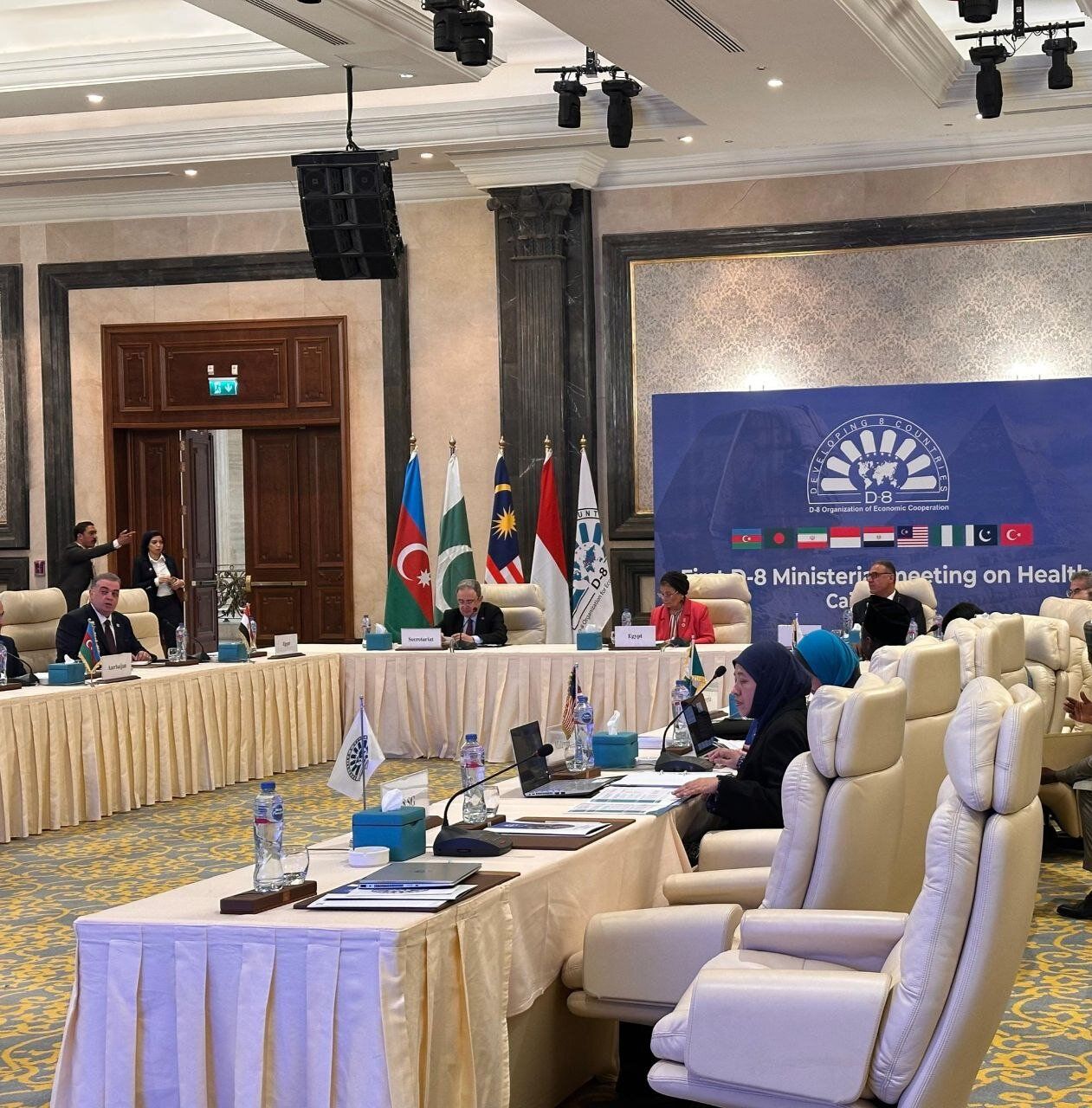
TEHRAN – An Iranian delegation led by Deputy Health Minister Sajjad Razavi is representing the country at the first D-8 Health Experts Conference to be held in Cairo, Egypt on November 17 and 18.
IRNA reports that the D-8 meeting will focus on strengthening public health systems, particularly the control of non-communicable diseases and improving the health of mothers and newborns.
The Iranian delegation will elaborate on the country’s achievements and successful experiences in managing communicable and non-communicable diseases, such as diabetes and cardiovascular diseases.
As the pandemic and chronic disease continue to spread, D-8 organizations have provided collaborative policymaking opportunities to promote equitable access to health care and strengthen local economies through the exchange of medical technology.
By sharing their countries’ experiences, participants aim to identify common challenges and explore ways to foster cooperation in strengthening resilient and sustainable health systems.
Participants will discuss the possibility of establishing a specialized D-8 working group on health.
Laying the foundation for continued cooperation and joint implementation of priority health initiatives, this conference serves as an important milestone in the institutionalization of health cooperation within the D8 framework.
Iran is a regional leader in health systems
The head of the World Health Organization’s (WHO) Eastern Mediterranean Regional Office (EMRO) said in May that Iran is a leading country in expanding its health system and providing access to universal health coverage.
According to the Ministry of Health’s website, Hanan Balki praised Iran’s achievements in recent years, saying that by expanding primary health care services, increasing access to health insurance in rural areas, maintaining high vaccination rates, and reducing maternal and neonatal mortality rates, Iran has been able to become a successful example in the region.
The official said this during a meeting with Health Minister Mohammad Reza Zafarkandi. The conference was held on the sidelines of the 78th World Health Assembly (WHA).
The country’s commitment to providing equal health care to millions of refugees makes its services even more commendable. WHO EMRO is working closely with Iranian regulatory bodies to achieve regulatory maturity level 3 of the drug regulatory system, paving the way for broader export of Iranian health-oriented products to the global market. It will also contribute to promoting global health security, Balki added.
In October 2024, Mr. Balki stated that WHO EMRO is interested in expanding cooperation with the Islamic Republic of Iran.
The official made the remarks during a meeting with Iranian Deputy Health Minister Alireza Raisi and Iranian Deputy Health Minister for International Affairs Mohammadhossein Niknam during the 71st WHO EMRO session.
“During a short visit to Iran a few months ago, I got to know Iran’s capabilities in the health sector. Iran is a role model in the health sector in the region,” Barki said.
“It is essential for us to make the most of the potential available in the (regional) countries and we will not hesitate to support the implementation of health programs,” the official said.
MT/MG