
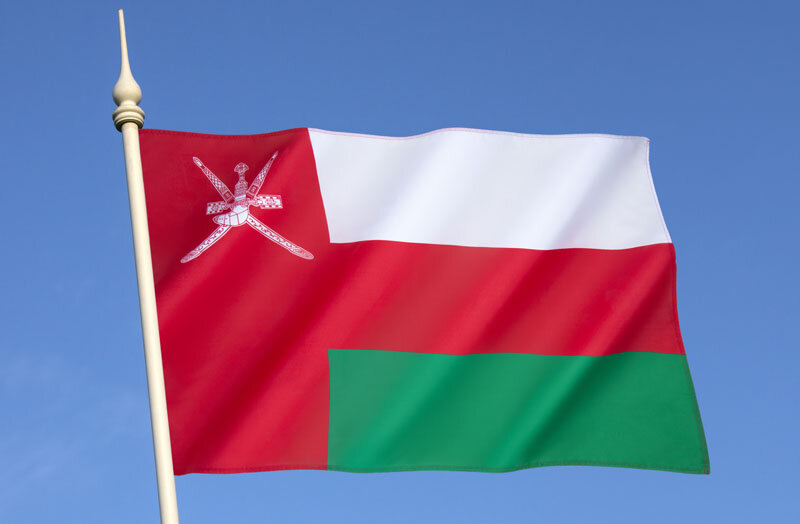
Every year on this day, the Sultanate of Oman pauses in front of a vast historical canvas commemorating the founding of the Al Bu Said state 281 years ago, which laid the foundations for a stable, prosperous and regionally influential nation.
For Oman, National Day is not just a political day. It reaffirms a long-standing path rooted in diplomacy, moderation, tolerance and rule of law governance, combined with a positive vision for national development.
In a region defined by diverse leadership styles, the Omani model stands out for its unique characteristics: a model based on authentic traditional values that continue to shape the country’s political and social direction. Oman recently announced the National Promotion Identity Strategy, which aims to strengthen the country’s competitiveness and showcase the uniqueness of its heritage and people to the world.
Cultural and historical depth are the defining pillars of modern Oman. Contrary to the perception in some parts of the region that equates progress with skyscrapers and towering towers, Oman’s development story is built on balancing modernity and heritage, and embedding sustainability across economic, social and technological sectors.
Omanis take great pride in their civilizational heritage, cultural history and traditional costumes, symbols that form an important part of their national identity. However, alongside this deep cultural foundation, the country has shown an amazing ability to embrace technological advances without compromising its traditions. This harmony between preservation and progress reflects a society that is adept at blending a storied past with a dynamic, forward-looking present.
Heritage remains a central element of Oman’s national consciousness and official policy. This is the basis for Oman’s engagement with the world, shaping a foreign policy characterized by balance, coherence and credibility. This unique approach has enabled the Sultanate to build strong strategic relationships globally while safeguarding domestic stability.
Oman’s position on the Palestinian cause
Since the start of Operation Al Aqsa Flood in the Occupied Palestinian Territories on October 7, 2023, Oman has maintained a principled and transparent position at both the national and societal levels. The Sultanate has consistently stressed that “the legitimate party is the resistance force” and “the aggressor is the occupier,” calling for clear international limits to stop the ongoing bloodshed and protect the rights of the Palestinian people.
Oman’s foreign policy is trusted by opposing parties to regional and international conflicts and views situations through a pragmatic lens. For Muscat, the root cause of the crisis is Israel’s illegal occupation of Palestine, and ending it is the only viable path to restoring regional and global stability.
Following the outbreak of the devastating Israeli war in Gaza, Oman strengthened its support for the Palestinian people through a firm political message. This position was also reflected in Haitham bin Taiksultan’s speech during the opening of the eighth session of the Omani Council, in which he condemned the Israeli occupation as “brutal” and called on the international community to fulfill its obligations and move quickly towards a solution that meets the aspirations of the Palestinian people.
Omani national sentiment reflects the official position. The Palestinian issue remains deeply ingrained in Oman’s collective consciousness, seen as a moral struggle, a question of stolen land, and a people’s quest for legitimate rights. This unwavering national unity lends added strength and credibility to Oman’s official position.
Iran-Oman relations
Since the establishment of the Islamic Republic of Iran in 1979, relations between Iran and Oman have steadily developed. It is well known that the relations between the two countries and the peoples of Iran and Oman are good and positive at all levels, underpinned by common religious and historical ties, good neighborly relations and a mutual desire to strengthen bilateral relations over the past decades. The Iranian government considers the Sultanate to be one of the best among Iran’s neighbors.
Constructive relations and joint cooperation between Iran and the Sultanate of Oman have played an influential and effective role in maintaining security and stability across the region in the past decades and even earlier under various circumstances. This cooperation has become a fundamental and strategic pillar for securing a better future for this sensitive region of the world. Today, these relationships stand as a successful model of bilateral relations that other countries in the region can emulate, forming the basis for comprehensive dialogue and cooperation, and laying the foundations for peace and mutual trust both in the region and the world.
In this light, the wise leaders of both countries continue to emphasize the importance of strengthening these ties and expanding them across all sectors. Despite the many complex challenges facing the region, the Sultanate of Oman’s wise and rational policies have further deepened the relationship between the two countries. It is highly anticipated that these relationships will continue to develop and open new horizons for cooperation in various fields.
Indeed, discussing the brotherly relationship between the Islamic Republic of Iran and the Sultanate of Oman is to narrate a successful journey of constructive and robust cooperation, one that serves not only the interests of both countries but also the interests of the entire region. Enhancing security and stability in this strategically sensitive region has always been the overriding goal and aspiration of the leaderships of both countries.
The Iranian leadership attaches great importance to the Sultanate of Oman and believes in its ability to play an important, influential and reassuring role in the interests of both countries and all countries in the region. As a result, relations between Iran and Oman are currently at the highest level, and joint efforts to strengthen and expand ties are ongoing every day.
In response to the brutal US and Israeli aggression against the Islamic Republic of Iran, the Sultanate of Oman has put aside diplomatic solutions and stressed the need for the international community to take a clear and firm stance to stop this dangerous path that threatens to undermine regional security and stability. Oman condemned attacks on Iran’s sovereign territory, including targeting public facilities and resulting in martyrs and injuries to Iranian citizens, a reckless escalation, a blatant violation of the United Nations Charter and international law, and an ongoing act of aggression that destabilizes the region.
As always, His Excellency Badr bin Hamad Al Busaidi, Oman’s Minister of Foreign Affairs, is not afraid to call things by their names. At the 2025 Manama Dialogue, he made it clear that Israel, through its aggressive policies, is the main source of security in the region. He emphasized that repeated attacks on Iranian civilians, bombings of consulates, and assassinations of diplomats are illegal acts that must be condemned without hesitation. The Omani foreign minister also noted that Iran has shown remarkable discipline and restraint, reinforcing the need for a comprehensive diplomatic approach rather than a cycle of retaliation.
It is also important to remember that Oman itself is not immune to such aggressive policies.
Oman felt the shock deeply when Israel targeted the Islamic Republic of Iran during diplomatic talks between Tehran and Washington in Muscat, viewing the attack as a blow to Israel’s level-headed diplomatic approach and sincere efforts to build bridges.
Anyone who listens to Oman’s discourse understands that this country does not have a visionary political vision and speak for immediate political gain. Rather, it is spoken to remind all parties of their historical responsibility for the region’s collective security. Oman does not take sides. It is in line with the principle of dialogue and remains strongly convinced that peace is born at the negotiating table.
What makes Oman’s position particularly compelling is that it derives from its genuine experience in active neutrality and its long history of mediation and reconciliation. Muscat has repeatedly served as a bridge to calming crises, a voice of reason when noise prevails, and a compass that always points in the right direction: humanity first and always peace.