
TEHRAN – The recent 12-day attack on Iran by the United States and Israel has reignited debate over whether the world’s legal systems retain real authority or are crumbling under the weight of great power politics. For Thomas G. Weiss, a leading thinker on international governance and a longtime observer of the United Nations, the crisis portends a deeper collapse.
In an interview with the Tehran Times, Weiss argues that international law today survives more as rhetoric than as a deterrent. He warns that the United Nations is paralyzed by geopolitical divisions and decades of neglect, moving further away from its founding purpose of keeping peace and preventing aggression. From the abuse of claims of self-defense to the almost complete lack of accountability for war crimes, he outlines a system in which impunity is endemic. As the United Nations approaches a pivotal leadership transition, Weiss argues that the next few years may be the last window to restore some semblance of credibility to global governance.
The text of the interview is below.
Many observers believe that the 12-day war between the United States and Israel against Iran marks another moment in which international law is completely ignored. From your perspective, what does this tell you about the current state of the global legal order?
The world’s legal order is always determined by nations. This is especially worrying at the moment, as international law appears to be being enforced everywhere. In fact, it has always been that way. When it comes to international law, there is much more rhetoric than actual respect for international law. And with no enforcement mechanisms aside from the occasional Security Council resolution or World Trade Organization ruling, there is virtually no way to compel states to act. Today, many states are cheating at the same time.
The United States and Israel justified their operations based on the concept of anticipatory self-defense. Does this concept have a legitimate basis in international law, or is it simply a political narrative used to justify invasion?
As with many provisions of international law, states interpret provisions to suit themselves. The concept of self-defense in Article 51 of the UN Charter has been invoked by many countries to justify decisions that have nothing to do with true self-defense. Anticipatory self-defense is even less justifiable when the threat is not imminent. This essentially means eliminating potential threats before they grow. This is the weakest legal argument possible, and it’s no surprise that the US and Israel regularly rely on it.
You write at length about the illusions of global governance. Has the United Nations become more symbolic than functional in maintaining peace and preventing aggression?
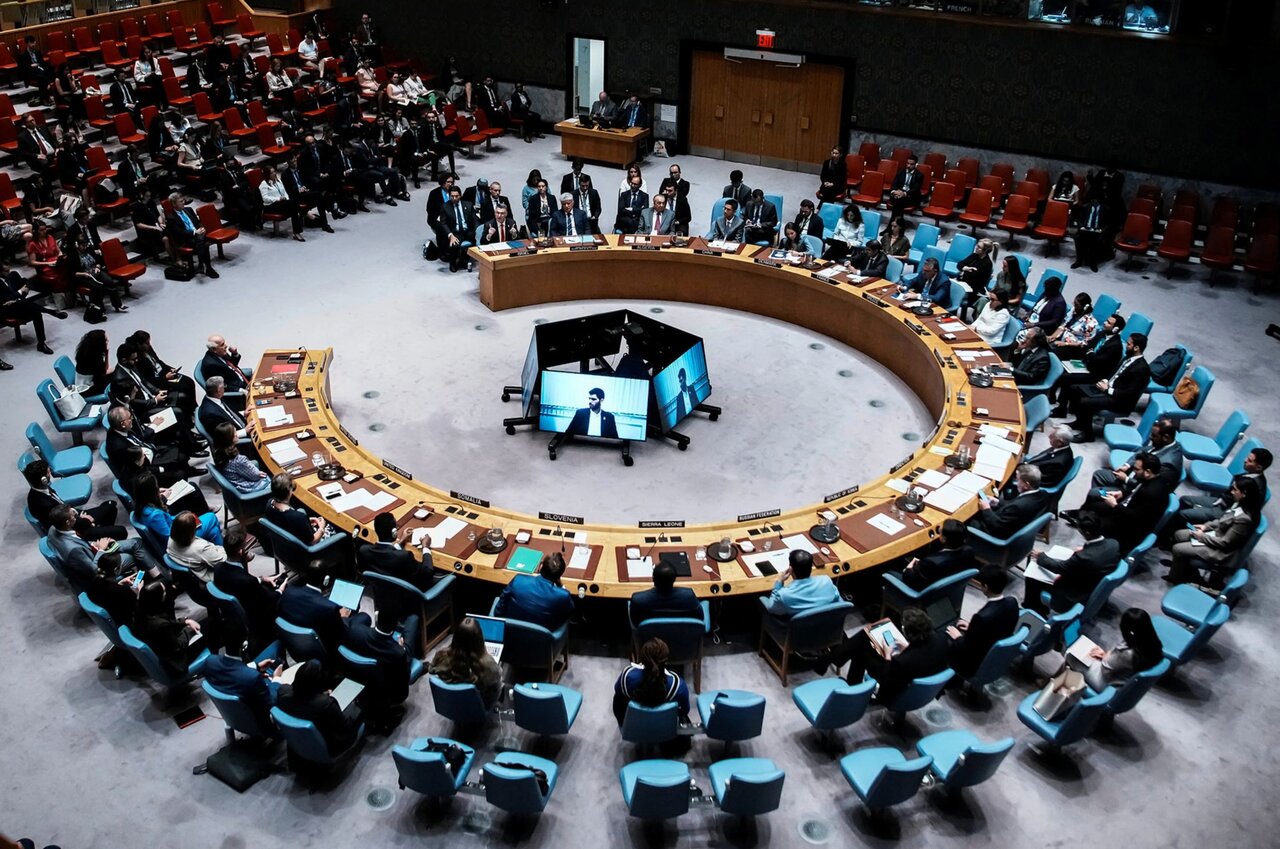
(Some would argue that it’s been that way since 1945. Respect for the law and the UN’s ability to act waxes and wanes over time. But this may be the worst moment of my professional career. When it comes to international peace and security, the UN is essentially a bystander. The Security Council is paralyzed, only making occasional lamentations.
The United Nations is an intergovernmental organization based on national interests. It only works if the state wants it to work. And today there is no consensus, especially within the Security Council, on what to do. The General Assembly may condemn Russia in Ukraine or Israel in Gaza or the West Bank, but that’s about it.
Compared to organizations such as NATO and the EU, these organizations generate tangible benefits from cooperation. The United Nations is currently struggling to identify such incentives. And this paralysis extends beyond safety. Watch the climate change debate at COP 30 in Brazil. Even though the environment is rapidly deteriorating, there is precious little movement.
Do you think international law was ever truly universal, or has it always functioned as a political instrument shaped by power and privilege?
International law has always been shaped by great powers. After major global conflicts, such as the Napoleonic Wars, World War I, and World War II, victorious nations sometimes act with common sense and try to create better legal and institutional arrangements.
But in the end, I often quote Thucydides. The weak suffer what they deserve. It is power, not norms or morality, that largely determines outcomes. There were moments when international law attempted to go beyond this, such as the Nuremberg and Tokyo trials, but these were rare. Our current situation is not an exceptional situation.
Given reports of civilian infrastructure being targeted in Iran, could such actions constitute a war crime under the Geneva Conventions or the Rome Statute?
Although I was not directly involved, public reports indicate that these actions clearly violated international law. Whether bombing military and nuclear facilities constitutes a war crime will be debated for years to come. But it certainly violated basic rules against declaring war or attacking across borders without a declaration of war.
However, we do not take any responsibility. The case at the ICC involving Mr. Netanyahu and Mr. Putin is already stalled, and charges against the United States or Israel are even less likely to proceed. Impunity is the rule, not the exception.
Based on your years of research on UN reform, do you think there is still a viable path to restoring the credibility of international law, or has the system entered a phase of irreversible collapse?
My life pretty much coincides with the United Nations. I’m almost 80 years old, and the United Nations just turned 80 years old. Approximately every five years, a flood of academic and diplomatic proposals for reform is produced. There is usually some noise, some debate, and then some calls to “reform, reform!”
But now, with the Trump administration’s assault on multilateralism and deep U.S. funding cuts, the push for reform may have a greater impact than in the past. The UN’s incompetence revealed in places like Gaza, Ukraine, Sudan, and Myanmar has exposed it as a hollow shell of what it was originally intended to be.
The new Secretary-General will take office on January 1, 2027, and elections will begin next year. This may create space for significant changes that are modest and necessary rather than transformative. The easiest area to reform (though still difficult) is the structure of the organization and its international civil service. Several general secretaries, including Dag Hammarskjold, have attempted this. Next time you won’t have a choice. Resources will become even more limited and the UN’s inability to act will become too obvious to ignore. The first few months of the next Secretary-General’s term may provide a rare opportunity for more dramatic action. Let’s hope so.