
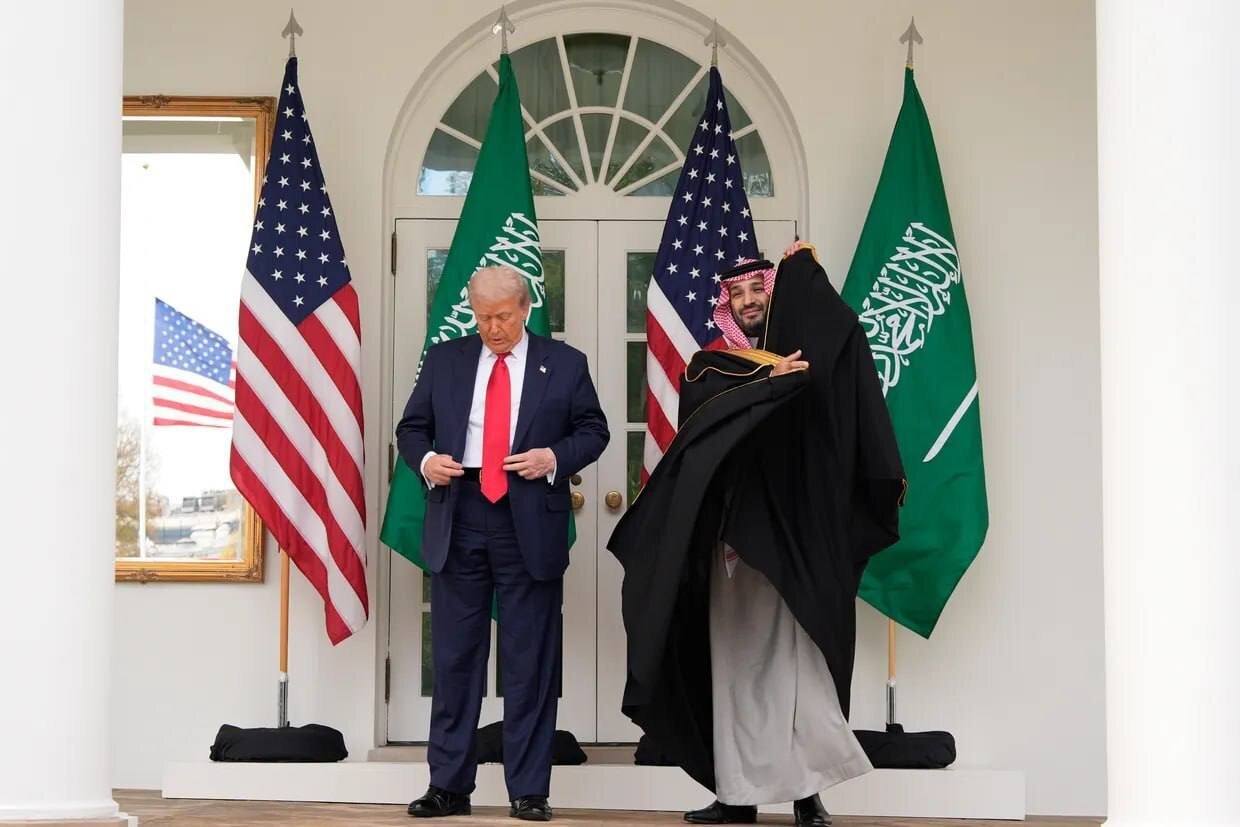
TEHRAN – U.S. President Donald Trump told reporters one lie and one half-truth about Iran during an Oval Office meeting with Saudi Crown Prince Mohammed bin Salman. The lies were terrible, and the partial truths had little persuasive power.
That lie was his claim that the United States was actively negotiating with Iran over its nuclear program.
Asked if he thought Iran wanted a new deal with the United States, he said: “We are talking to them.”
Efforts were underway earlier this year to develop a new nuclear deal to replace the 2015 Iran deal that President Trump abandoned during his first term. Iranian officials have indicated they are prepared to reassure Americans that they are not pursuing nuclear weapons once sanctions reimposed after the U.S. withdrew from the JCPOA are lifted. They also insisted that Iran would not stop enriching uranium. However, reports suggest that the Iranian government is willing to offer greater concessions than it made under the JCPOA, which would result in President Trump striking a better deal than the one he abandoned.
These negotiations were abruptly halted and mooted on June 13, when the United States helped Israel launch a 12-day bombing campaign against Iran’s nuclear, civilian, and military infrastructure. The sixth round of nuclear negotiations was scheduled to be held in Oman just a few days later, on June 15th. President Trump later admitted he was “in charge” of the war and said he had done the “right thing” in meeting bin Salman.
President Trump’s claims that he was talking again with Iranian officials were almost immediately denied by Iranian Foreign Ministry spokesman Esmail Baghaei. “There is no negotiation process between Iran and the United States,” Baghai told reporters in Tehran. “As Foreign Minister Abbas Araghchi has said many times, there is no logical justification for dialogue with a side that does not believe in mutual respect and is proud of its military aggression against Iran,” he added.
The half-truth presented by President Trump on Tuesday was that the Iranians want a deal. “It would be great to get a deal with Iran,” he said, adding that Tehran’s government is “very keen” for a deal.
Indeed, it is clear that Iran supports the deal, said Amir Ali Abolfas, an expert on American affairs.
“Iran signed the JCPOA, asked the US to return to the JCPOA after Trump withdrew, held several rounds of reinstatement negotiations with the European signatories, and even started new negotiations with the US government this year. It would not have done this much if it had not wanted a deal,” he explained. “The difference between Iran and the United States is not whether the deal should be signed, but rather what provisions should be included in the deal.”
“The United States continues to insist that Iran stop enriching uranium and is now demanding that Iran negotiate limits on its missile program. None of these demands are a start for Iran,” Abolfas said.
But why does President Trump feel the need to lie about his contacts with Iran and present the obvious as a diplomatic victory? The answer may lie in his frustration and realization that he can’t change the situation. We cannot bring the Iranians to their knees or modify Iranian policy to ensure a truly win-win outcome.
“When it comes to West Asia, US policy is dictated by Israel. Israel wants to maintain pressure on Iran and hopes that one day Iran will overthrow the Islamic Republic and divide the country,” Fouad Izadi, professor of American studies at the University of Tehran, told IRIB News. “It may not be in the U.S. government’s interest to confront and maintain a hostile relationship with Iran, but President Trump cannot change course even if he begins to believe this.”