
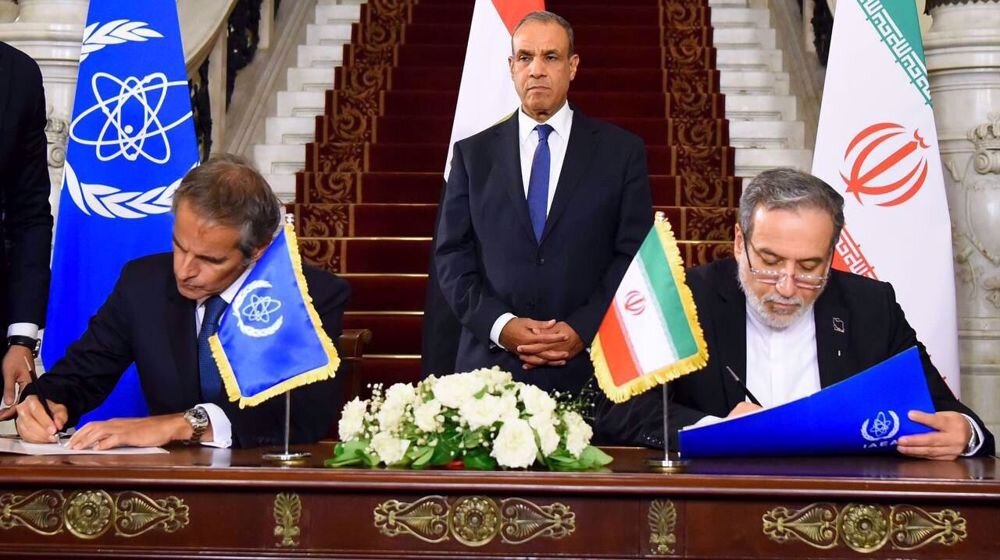
TEHRAN – Iranian Foreign Minister Abbas Araghchi accused the United States and the three European countries in the nuclear deal – Britain, France and Germany – of effectively “killing” the Cairo accord, saying their recent actions had made it impossible to continue.
Aragushi said Washington and the E3 were following “the same pattern” of weakening diplomacy in early June when Israel and the United States carried out military strikes on Iranian nuclear facilities. Araghchi wrote in X that at the time of the attack, Iran was preparing for the sixth round of talks, and subsequent developments made continuation of the Cairo agreement impossible.
Arraguchi outlined a “sneaky series of events”. After the June attacks, the Iranian government suspended some cooperation with the IAEA, but later reached a technical agreement with IAEA Director-General Rafael Grossi in Cairo to resume inspections under certain conditions. He said that even though Iran had granted access to certain sites, the United States and the E3 had called for a council resolution requesting additional information and access, a move that Tehran views as inconsistent with the Cairo deal.
On Wednesday, the IAEA Board of Governors adopted a resolution drafted by the E3 and the United States, calling on Iran to provide detailed information on its enriched uranium stockpile “without delay” and to allow access to facilities affected by June’s hostilities. The bill was passed with 19 votes in favor, 3 votes against, and 12 abstentions. The Iranian mission and senior officials said the draft resolution omitted any mention of Iran’s previous cooperation or the impact of the attacks on Iran’s ability to conduct inspections.
Domestically, Iran’s parliament earlier this year passed a measure suspending cooperation with the IAEA in the wake of the June airstrike, giving the Supreme National Security Council (SNSC) a central role in overseeing future relations with the agency. In September 2025, Iran and the IAEA reached an agreement in Cairo to resume inspections of nuclear facilities affected by the June attacks, establishing a framework that would allow inspectors to access specific facilities while addressing technical and safety considerations.