
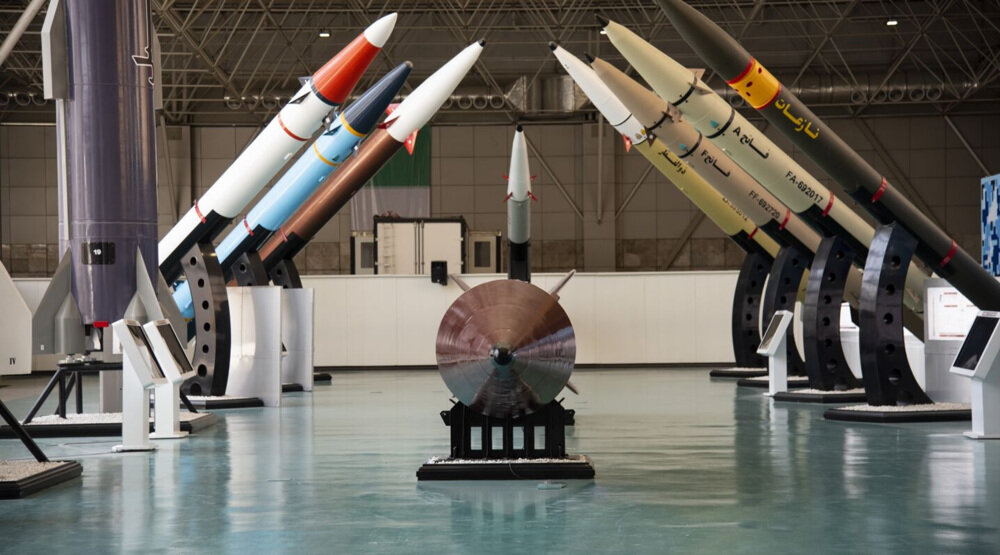
TEHRAN – Iran’s Defense Ministry says the country’s missile program continues to advance despite decades of foreign pressure, and officials attribute its resilience to domestic innovation and the legacy of a commander-in-chief who shaped the industry.
Brigadier General Reza Taraei Nik, a spokesperson for the Ministry of Defense and Armed Forces Logistics, said Iran’s missile capabilities have survived 45 years of sanctions because they are completely indigenous and rooted in the expertise of Iranian scientists.
“If Iran’s missile capabilities were not indigenous, not knowledge-based and built on domestic capabilities, they would never have been able to grow under such extensive defense sanctions,” he told Iranian media.
Tarainik said the program was developed through the efforts of key figures, including Martyr Hassan Tehrani-Moghaddam, widely considered the father of Iran’s modern missile program, as well as Martyr Hajizadeh and other military engineers and experts who contributed to the expansion of the country’s missile arsenal. He noted that Tehrani Moghaddam played a fundamental role in establishing, indigenizing, and developing Iran’s missile force.
The missile industry’s dependence on foreign resources is already minimal, the spokesperson said, so relying on domestic expertise means sanctions will have “no meaningful impact” on the sector.
Iran’s comments come months after the country used domestically produced missiles in response to the June 13 attack on Israel, an unprovoked act of aggression. The attack sparked a 12-day conflict that left at least 1,064 people dead in Iran, including military leaders, nuclear experts and civilians. The United States then joined the fight, attacking three Iranian nuclear facilities in serious violation of international law.
In retaliation, Iranian forces fired a massive volley of missiles at strategic sites across the Israeli-occupied territory, targeting the US Al-Udeid Air Base in Qatar, one of the US’s most important military bases in West Asia.
Despite extensive interception attempts by the United States, Israel, and several European and regional partners, Iranian missiles still managed to hit numerous military and strategic targets. Iranian officials and analysts say the unprecedented scale of the conflict was a major factor in prompting Israel and the United States to call for a ceasefire.
Subsequent US media reports revealed that the US military had spent about a quarter of its stockpile of advanced THAAD interceptor missiles during the conflict, launching more than 100 and possibly up to 150 missiles aimed at intercepting Iranian ballistic attacks. Two of the seven US THAAD systems were deployed to defend Israel.
The rapid depletion of interceptors has raised concerns in Washington about the strain on U.S. missile defense preparedness, especially at a time when public support for military aid to Israel is declining.
The outbreak of conflict also halted the latest nuclear negotiations between Tehran and Washington. U.S. officials are currently pressuring Iran to include missile range limits in any future deal, a request that Iranian officials have publicly rejected.
Iran’s top security official, Ali Larijani, said that the US government currently wants Iran to limit the range of its missiles to 500 kilometers, but this limit is unacceptable because it would prevent Iran from retaliating against future attacks on Israel.
After the war, the United States imposed additional sanctions targeting Iran’s missile industry, but Tehran argues that these measures are ineffective given Iran’s domestic infrastructure.