
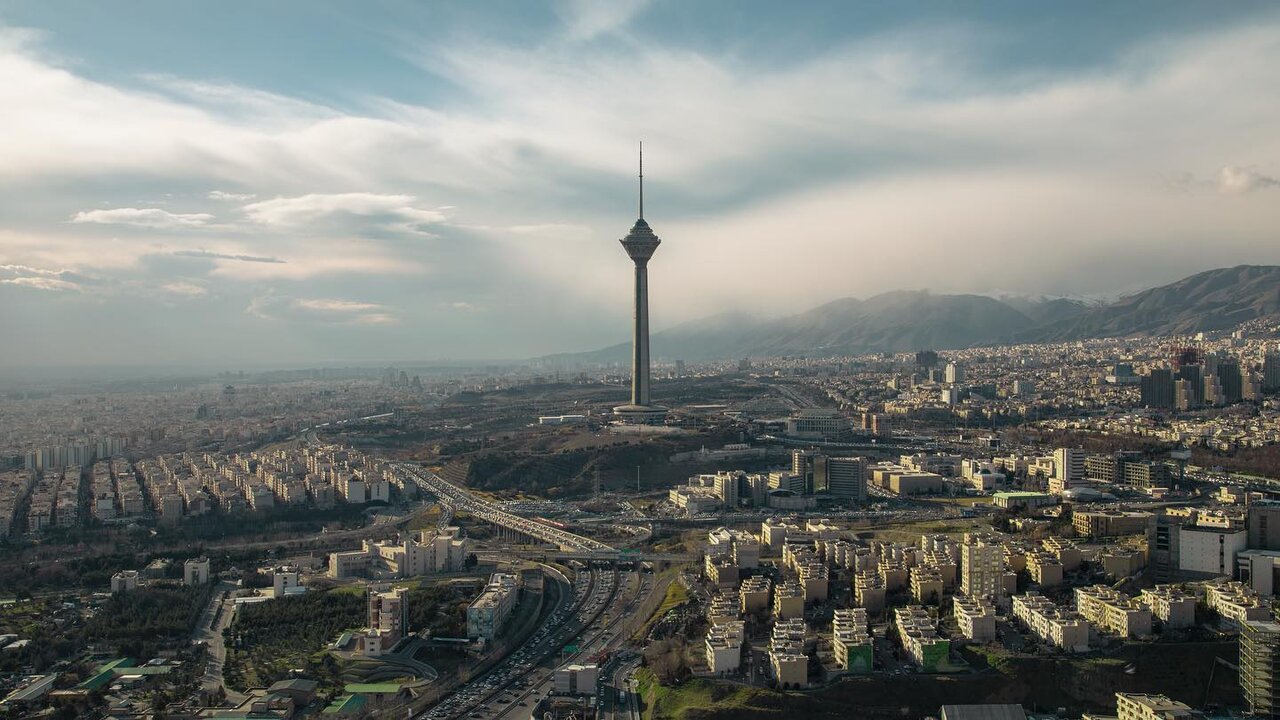
A recent Foreign Affairs article on Iran’s future clearly illustrates the deep gulf between the real Iran and the imagined Iran created by Western think tanks.
For many years, the dominant current in American foreign policy has sought to present an analysis of Iran that relies on a preconceived mental framework rather than data, history, society, and reality on the ground. In other words, Iran must be portrayed as a country in crisis, crumbling, and permanently stuck. This is because analysis outside this framework will disrupt the spiritual order of American foreign policy.
This recent article titled “Autumn of the Ayatollahs” follows the same idea. It feels as if the story was written first and only afterwards were the scattered events, assertions, and selective comparisons forced into it. Its future predictions are more like geopolitical aspirations than scientific analysis.
But Iran cannot be explained with just a few simple analogies and clichés. As living, dynamic, complex, and historical societies, external narrative formation cannot be reduced to pre-prepared templates.
In this environment, it is essential to compare the real Iran with the imagined Iran in order to understand why this kind of analysis distorts reality and why its conclusions reflect political aspirations rather than an accurate understanding of this country.
From exaggeration to oversimplification
Much of the situation presented in the Foreign Affairs article is based on escalating Iran’s crisis and minimizing its strengths. Societal complexity, depth of national experience, historical resilience, and structural capacity are ignored. Instead, a few selective examples are amplified and transformed into general claims.
The story depicts Iran as a country with a deeply mistrusted society, a government on the verge of collapse, a devastated economy with no path to recovery, a political structure nearing its end, and impending collapse or forced change.
However, none of these claims reflect the whole picture of Iran today, even if they contain partial truth in some areas. Iran is neither in an ideal state nor in a state that is said to be “on the verge of collapse.”
The central problem is that the authors deliberately cut off all analytical paths that might lead to a different, more balanced understanding.
The reality is that Iran is a multi-layered, diverse, resilient and adaptable society. It is a nation with a history that lasts for a thousand years. It has a complex governance structure that is not simple or monocentric. It also holds geopolitical positions rooted in history and reality, not slogans.
This American analyst chose not to see these realities. Because to admit them would be to dismantle the entire frame of mind built for “America’s desired future in Iran.”
One of the most puzzling parts of the Foreign Affairs article is how it tries to shoehorn Iran’s future into completely contradictory models, from Russia to China to North Korea to Pakistan to Turkey. These comparisons unintentionally reveal the main weaknesses of the authors’ perspectives. It means seeing Iran not as a historical and political reality, but as a spiritual project that needs to fit into some template.
Iran is not Russia. Russia is a country of oligarchy. No such economic class exists in Iran.
Russia is built on the remnants of the Soviet Union. Iran has been a state for thousands of years.
A single political party holds the majority in Russia. In Iran, elections and elite turnover are rapid.
Iran is not China. China benefited from decades of U.S. support against the Soviet Union. Iran has faced sanctions, pressure and economic warfare for four decades. China’s economy is export-driven. Iran is financially and commercially restricted. China has a centralized communist structure. Iran is multi-layered and polycentric.
Iran is not North Korea. Comparing Iran to an isolated, closed, family-ruled country reveals more a lack of familiarity with reality than analysis. Iran has an extensive university network, a vibrant civil society, a complex urban life, media, digital culture, and global connections.
North Korea is suffering from hunger and isolation. Iran is the region’s second largest economy.
Iran is not Pakistan. Pakistan faces numerous ethnic and sectarian divisions. Iran has a consistent identity structure. Pakistan has a long history of coups. Iran is not like that.
Iran is not Turkey. Türkiye’s political dynamics are shaped by the imposed secular Atatürkian legacy. Iran has never had such an experience. The geopolitical and social histories of the two societies are also quite different.
In other words, all these comparisons show that the authors are trying to fit Iran into every available template, not realizing that Iran doesn’t match any of them.
Reality must be seen as it is, not as someone wants it to be
The real Iran is a country with vast capabilities, a dynamic society, a complex structure, serious challenges, and undeniable strengths. The fictional Iran is a country in crisis, unstable, and crumbling, the version needed by some in U.S. foreign policy to justify a strategy of pressure, sanctions, and confrontation.
These two images are completely different.
The real Iran is a country that adapts without bowing to external pressures, develops a regional path within a sanctions-hit economy, has a young urban society that promotes social, cultural and technological activity, has a political structure too complex to be explained by simple comparisons, and, most importantly, shapes its future based on internal dynamics rather than think tank papers.
A proper analysis of Iran requires historical, social, cultural, and political understanding, rather than sorting through scattered claims to confirm existing assumptions.
Stories like the Foreign Affairs article don’t bring us closer to reality, they take us further away from it.
Iran’s future will be built on the reality of Iran, not on scenarios written from outside.
Understanding Iran means understanding its history, people, social diversity, political and cultural energy, and geopolitical position, not the image painted from behind the window of U.S. foreign policy.