
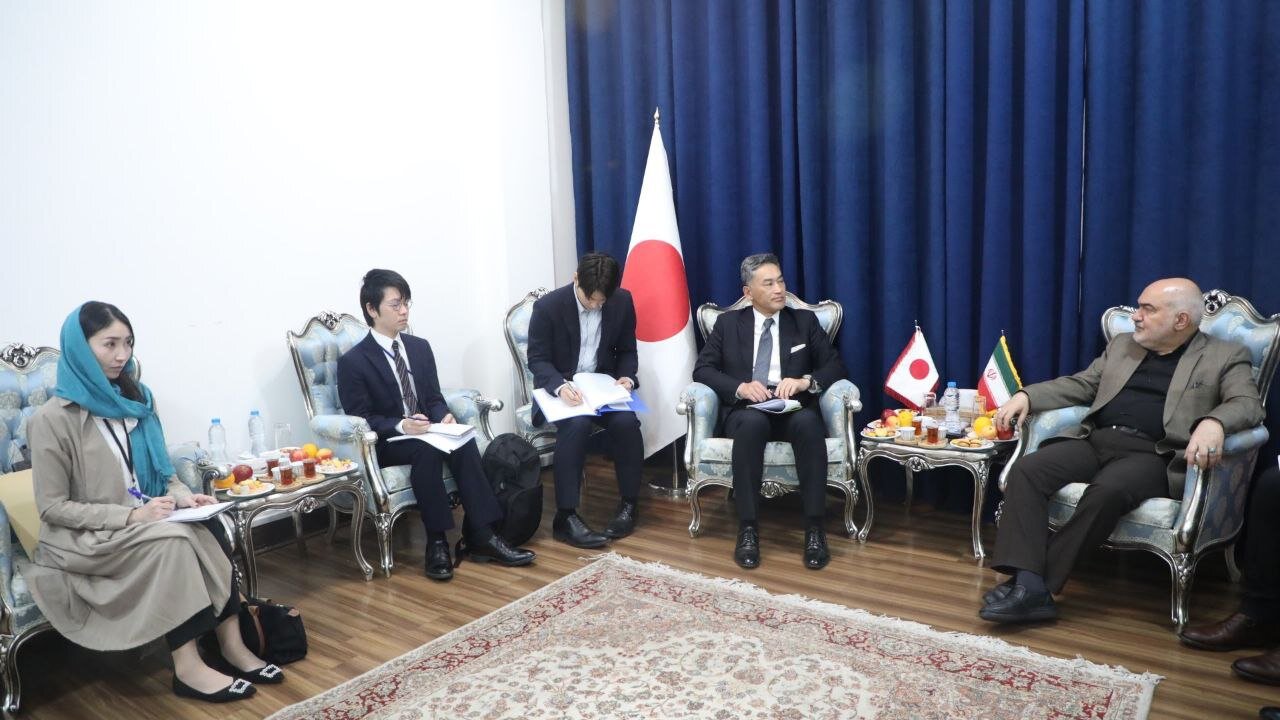
TEHRAN – Japanese Ambassador to Iran Tamaki Tsukada expressed his country’s readiness to implement environmental protection projects in the southwestern province of Khuzestan, especially in areas related to water and waste management.
Environmental problems in Khuzestan province, such as waste accumulation, water shortages and transport of high concentrations of sediment to urban and rural areas, are manageable, Mehr News Agency quoted Tsukada as saying in a meeting with Khuzestan Governor Mohammad Reza Mabarizadeh on Tuesday.
By leveraging the latest technology and successful experience in the field of environmental engineering, Japan can provide sustainable, low-cost and viable solutions to improve the situation in the state, he added.
Environmental cooperation between Iran and Japan is one of the top priorities of both countries. Japan stands ready to support cooperation in water resource management, pollution control and recycling. The official further said that the country welcomes Khuzestan province’s active participation in sustainable development programs.
Japan supports national efforts
Over the past decade, Japan has made significant contributions to help Iran address its environmental challenges. State financial assistance has supported the implementation of various projects to restore wetlands and Lake Urmia.
In October, with financial support from the Japanese government, the Food and Agriculture Organization of the United Nations (FAO) and the United Nations Development Program (UNDP) signed a memorandum of cooperation aimed at supporting the restoration of Urmiyah Lake in northwest Iran, which is drying up.
Lake Urmia in West Azarbaijan Region began drying up in the 2000s. The lake was once the largest salt lake in Western Asia and the sixth largest in the world, with a water surface area of 5,000 to 6,000 square kilometers.
The signing ceremony took place during President Massoud Pezeshkian’s visit to West Azarbaijan, the FAO website announced in a press release on October 23.
The document was signed by Reza Rahmani, Secretary of the National Committee for the Rescue of Urmiyah Lake, and Ali Nazaridoust, FAO Representative to the Islamic Republic of Iran.
The initiative, titled “Strengthening Lake Urmia Restoration Activities through Effective Use of Agricultural Water,” aims to promote sustainable agriculture and support the restoration of Lake Urmia, one of the most important ecosystems in the country.
The Urmiyah Lake Basin plays an important role in ensuring food security and agricultural productivity in Iran. However, in recent years, the basin’s water resources have decreased significantly due to rising temperatures, changing precipitation patterns, and unsustainable water use.
Recognizing the urgency of these challenges, FAO is implementing this project to promote integrated water resource management and climate-smart agricultural practices across the basin.
The Urmia Lake portion of the project will be implemented jointly by FAO and the Urmia Lake Rescue National Committee (ULRNC). The aim is to scale up and operationalize agricultural water efficiency and productivity improvements to protect livelihoods and reduce pressure on water resources.
The project will help farmers and rural communities become more resilient to water scarcity, while contributing to restoring the lake’s ecological balance through capacity building, introducing efficient irrigation techniques, and promoting sustainable farming practices.
This project represents a strong example of collaboration between the Government of the Islamic Republic of Iran, FAO, UNDP and the Government of Japan in supporting national efforts towards sustainable agriculture, water management and environmental conservation.
MT/MG