
For centuries, the relationship between what is traditionally called “the West” and the rest of the world has been a monologue.
A single voice, shaped by Europe’s industrial and philosophical revolutions and later amplified by the geopolitical power of the United States, has defined the terms of progress, modernity, sovereignty, and international morality. Although its monologue is often presented as benign universalism, it has actually functioned as a project of cultural and political assimilation.
But today, that story is starting to fragment. A chorus of previously silenced or ignored voices is becoming more prominent, more coherent, and more intellectually sophisticated. This is not an instinctive rejection of the established order, but the articulation of alternative worldviews with enough confidence to challenge hegemonic narratives and claim legitimacy on the world stage.
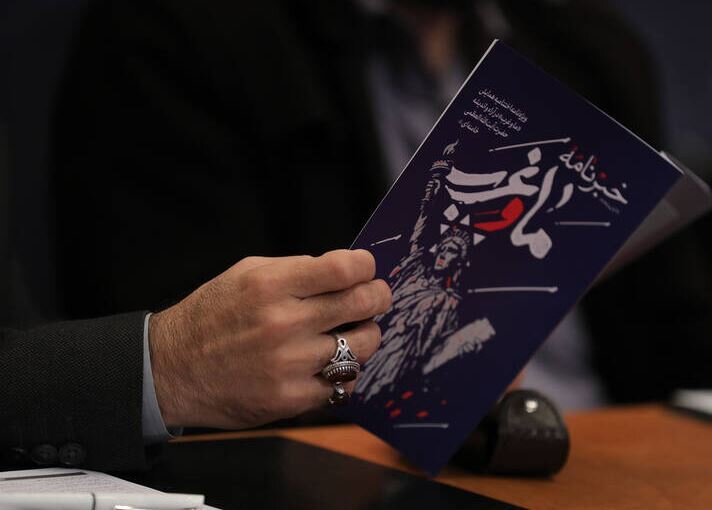
The recently held “West and Us” conference in Tehran should not be seen as just an academic gathering. It represents a concrete manifestation of an intellectual shift that is reshaping global debate. Far from confrontational rhetoric, the event served as a forum for high-level reflection, examining the underlying assumptions of modern Western thought and exploring the conceptual underpinnings of a potentially more pluralistic international order, not only in the distribution of power but also in the generation of ideas.
The conference’s starting point was a critique of Western universalism. The speakers argued that so-called universal values, such as liberal democracy, human rights interpreted through a particular lens, and secularism as an inevitable horizon, are actually historically and culturally located constructs. Their elevation to world standards reflects less a philosophical consensus than an expansion of power projects.
This project, which culminated in the famous “end of history” thesis after the Cold War, relied on binary logic. That is, a society can be modern, that is, Western, or it can remain rooted in tradition. Alternative births were not allowed. What is emerging today, and what the conference was increasingly confidently trying to articulate, is precisely that ‘third way’, the pursuit of a modernity based not on imitation but on the assertion of a distinct civilizational framework.
The conference examined in detail how this conceptual framework has, in practice, justified military intervention, crippling economic sanctions, and systematic interference in the internal affairs of sovereign states. However, this argument went beyond traditional geopolitical criticism. It went into epistemology. From what authority can the Western powers (whose institutions themselves show signs of fatigue and structural crisis) claim the right to define the political and moral trajectory of the rest of the world?
Western claims to universality are undermined by social polarization in the United States and Europe, tensions within continental integration projects, and an inability to respond effectively to global challenges. In this new vacuum, the periphery no longer seeks recognition but is beginning to assert its own voice. It is not a plea for permission to participate in history, but a reclaiming of the ability to write history.
Reclaimed subjectivity: “we” as subjects rather than objects
The term “we” in the conference title is fundamentally epistemological. It is not a reactive or victimized “us” but a historical subject who claims the right to think and define itself based on its own experiences. This “we” primarily refers to the Iranian civilization, which has thousands of years of cultural and intellectual continuity and is able to engage with the West on an equal, rather than subordinate, footing. However, this pronoun extends beyond Iran to encompass societies that have historically been objects rather than interlocutors of the West’s homogenizing project.
The new proposition is not naive isolation, but a true dialogue between civilizations, a dialogue that can only exist not between translators and translated voices, but between sovereign voices. Thus arose a critique of what one speaker called “forced translation,” the requirement that all political or moral aspirations be expressed within a Western conceptual and legal framework in order to be considered legitimate. A question arises. Can Islamic concepts of social justice and systems of governance rooted in religious authority such as velayat-e-faqih be understood through the categories of Rousseau’s social contract theory? The answer, although a bit nuanced, is no. These are distinct rationalities, each with an internal logic and standards of correctness.
Within this framework, the Islamic Republic of Iran presents itself not as an export model but as a case study, an example of institutional resilience in the face of four decades of sanctions, isolation, and military pressure. Its perseverance is interpreted as an expression of the collective political will that developed a form of governance consistent with its history and civilizational identity. This is not a closed option, but rather demonstrates that other paths are possible: non-Western, non-liberal.
The horizon of a multipolar world: from geopolitics to geoculture
The dominant Western discourse tends to interpret the rise of great powers such as China and Russia as simply a rebalancing of power. The West and Us conference asserted that what is currently underway is a deeper change, from strategic multipolarity to true cultural multipolarity. It is not simply a redistribution of economic and military power, but a redefinition of the normative and symbolic framework that has underpinned the international order since 1945.
Seen from this perspective, new cooperation structures such as the Shanghai Cooperation Organization, enlarged BRICS, or the Connectivity Corridor promoted by China and Iran are more than just pragmatic agreements. These are attempts to build alternative geocultures, with their own languages of legitimacy, security mechanisms, and development standards. A space where Western influence is limited and principles such as non-interference, sovereignty, and respect for internal diversity prevail.
Iran, geopolitically located between Central Asia, the Caucasus, and the Persian Gulf, sees itself as a key node in this emerging network. The experience of overcoming external pressures provides a kind of political capital, the ability to act as an intermediary between civilizations rather than simply as a peripheral actor.
But this is not a utopia of global harmony. The vision expressed in Tehran recognizes that conflict and competition are endemic to the international system. What it proposes is a demoralization of the powers that be and a departure from the idea that a single civilization can claim moral superiority. In this new scenario, interaction between civilizations is understood not as a struggle for dominance, but as a negotiation between different rationalities.
Ultimately, the conference served as an intellectual laboratory. The aim was not to prescribe doctrine, but to cultivate an elite capable of thinking independently of inherited Western frameworks, constructing its own narrative, setting common priorities, and forming alliances based on strategic affinities rather than ideological adherence.
Resistance as a strategic and ethical concept
Few concepts better encapsulate contemporary Iranian political logic than resistance (mokhavemat). At the conference, the term was treated not as an ideological slogan, but as an integrated strategic principle for building sovereignty across military, economic, cultural, and technological dimensions. Its strength lies in its breadth. Resistance is not a negation of power, but an alternative concept to power.
Economically, it manifests itself as a “resistance economy” aimed at reducing structural vulnerability to sanctions. This approach prioritizes self-sufficiency in strategic areas, regional innovation, and diversification of trading partners, essentially turning survival into an endogenous modernization program.
Culturally, resistance is understood as the defense of symbolic space against global homogenization. Protecting our education, media, and arts systems from the pressures of consumerism and moral relativism is framed as civilizational self-defense. Struggles are fought not only on battlefields and markets, but also in language, imagination, and storytelling.
Technically, this doctrine is particularly specific. Iran’s nuclear and missile programs, often interpreted externally as a military threat, were presented in Tehran as a symbol of scientific autonomy, affirming the isolated country’s ability to independently acquire advanced knowledge.
Taken together, these aspects position resistance as a principle of legitimacy. Material hardships such as sanctions, blockades, and shortages are reframed as purposeful sacrifices, the spiritual costs of sovereignty. Reversing this narrative, turning scarcity into a political virtue, enabled the system to exhibit resilience and continuity under intense pressure.
More than a defensive strategy, mokabemato functions as an epistemology of power, a way of autonomously thinking about the world. Its effectiveness lies in its ability to not only resist coercion, but to redefine what it means to resist.
Events like the “West and Us” conference can be interpreted as reflecting a long-term historical readjustment. The era of uncontested Western hegemony appears to be coming to an end. What is emerging is not necessarily an anti-Western order, but a post-Western world in which history is no longer written from a single center or dictated by a single grammar of power.
The challenge for Western countries is to hear these new voices not as distorted echoes of their own ideas or threats to be contained, but as legitimate participants in a truly pluralistic global dialogue for the first time in centuries.
It is a difficult challenge for Iran and for other civilizations that claim intellectual and political autonomy as well. It is about transforming resistance into effective governance and demonstrating that sovereignty and national dignity can coexist with social justice, material prosperity and technological innovation. The legitimacy of an emerging order ultimately depends not only on its narrative of liberation but also on its ability to deliver concrete results.
The conference did not provide simple answers, but reframed the discussion. The future is not simply a continuation of the Western present. It will be the product of a long and complex negotiation between competing worldviews, each claiming its own memories, its own scars, and its own universality.