
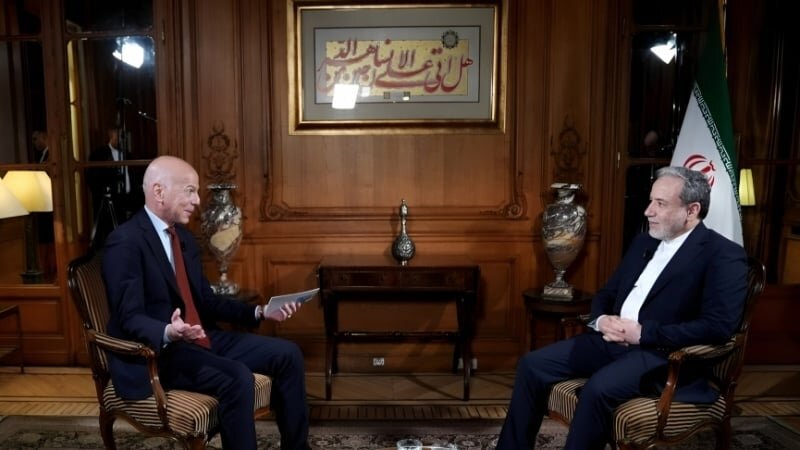
MADRID – Abbas Aragushi’s recent interview with France 24 during his visit to Paris provides a clear window into how Iran projects power, manages international relations and balances domestic interests with complex regional dynamics.
The topics discussed, including the prisoner exchange with France, nuclear negotiations with the United States and Europe, dealing with Saudi Arabia, the situation in Syria, and the recent 12-day war, reflected a planned and strategic approach that combined solidity of core principles with tactical flexibility.
First, the prisoner exchange with France shows how Iran handles sensitive issues under national law and strategic interests. Aragushi stressed that the release of Cécile Kohler and Jacques Paris after three and a half years in detention is part of a process regulated by the Supreme National Security Council and framed within the national interest. At the same time, Iran demanded the release of Iranian national Mahdiye Esfandiari, who is being held in France, turning the exchange into a carefully managed mechanism of reciprocity. By stressing that all legal procedures will be completed according to each country’s schedule, Araghchi reinforced the perception that Iran is an actor that acts with strategic clarity while respecting domestic processes and projects order and predictability to the international community.
This approach not only protects domestic legitimacy but also projects an image of international realism. The argument that “the exchange will take place once the judicial process in France has been completed” shows a balance between robustness and flexibility. The constructed narrative reinforces the perception that Iran consistently acts lawfully and predictably, despite Western propaganda that frames such incidents as political kidnappings.
Regarding nuclear negotiations, Araghchi has made it clear that Iran remains open to dialogue, but on equal terms and respecting Iran’s interests. He points out that there is currently no active negotiating channel with the United States due to Washington’s reluctance to commit on fair terms. Nevertheless, the message is unmistakable: Iran remains open to serious discussions that lead to mutually beneficial outcomes. This reflects a mature strategic approach to defending its position without closing the door to a diplomatic solution. Reference to previous negotiations, including those in 2015, establishes continuity and coherence and counters Western frameworks that view Iran as an unpredictable actor.
A recent letter from the Iranian president to Saudi Arabia’s crown prince, Mohammed bin Salman, was treated with particular care by Araghchi. He stressed that the letter is solely about pilgrimage and cultural cooperation and is not related to nuclear mediation between the United States and Iran. Iran emphasizes that resolving the nuclear issue does not depend on regional intermediaries. The blame lies directly with Washington.
This subtle nuance is important. Although Saudi Arabia has significantly improved relations with Iran and is participating in a strategic approach mediated by China, it does not play the role of a mediator in the nuclear negotiations. Araghchi’s interpretation strengthens the narrative of Iranian autonomy and control over the negotiation process and prevents external actors from limiting its scope of action.
The normalization of relations between Tehran and Riyadh represents a wide range of strategic adjustments. Bilateral trust is growing, especially regarding regional stability and security cooperation, but Iran is careful to define the limits of such cooperation. The Iranian government’s priorities are to strengthen immediate environmental stability and reduce tensions and direct risks, while maintaining its independence from external pressures. This approach reflects a sophisticated understanding of regional dynamics in which historical conflicts are managed through pragmatic accommodation rather than unilateral concessions.
Exchanges with the International Atomic Energy Agency (IAEA) highlight the complex aspects of Iran’s strategy. Araghchi points out that although the agency bills itself as a specialized agency, its decisions actually reflect a political orientation aligned with Israel and the United States. In this light, the recent resolution does not take into account previous attacks on Iranian nuclear facilities carried out by these countries. The Iranian government’s response aims to balance technical compliance with strategic defense, demonstrating its intention to protect its interests and sovereignty without violating international law.
Defense and security occupy a central place in the debate. Aragushi highlighted the effectiveness of Iran’s defense systems during the recent 12-day war with Israel, highlighting Iran’s success in defending its territory and critical infrastructure. He pointed out that the war had not only been contained, but had resulted in a de facto strategic victory. Although Iranian missile systems operated accurately and efficiently, limiting the impact of Israeli attacks, Israel and its allies suffered heavy losses and failed to achieve their objectives, forcing them to call for a ceasefire. Araghchi’s story highlights that Iran’s ability to withstand direct aggression strengthens its position in the region and demonstrates resilience and deterrence.
In Syria and Lebanon, Iran’s strategy remains at the level of active surveillance and indirect support. Aragushi stressed that Iran does not interfere in Lebanon’s sovereign decisions and that Iran’s goals in Syria are stability, national unity, and an end to the Israeli occupation. This stance reflects a diplomacy of containment and risk management, with Iran prioritizing strengthening its stable state structure rather than directly engaging in conflict.
The interview also revealed economic and energy aspects of Iran’s strategy. Despite continued Western sanctions, Iran has developed mechanisms to maintain economic resilience, diversify trade relations, particularly with China, and secure influence over energy transport routes. This would relieve pressure on the Iranian government and allow it to leverage its regional economic power. The combination of its energy influence, negotiating capacity, and institutional resilience makes Iran a mobile actor capable of resisting sanctions and diplomatic pressure without compromising its sovereignty or strategic objectives.
Iran’s foreign policy is therefore built around an adaptive balance that combines the solidity of principles such as sovereignty, civilian nuclear program, and defense capabilities with tactical flexibility and diplomatic realism. This “balanced diplomacy” allows Iran to assert stability and legitimacy while navigating a complex and changing international environment. The narrative created by Araghchi reinforces the perception that Iran recognizes its limitations and opportunities and is acting strategically with a long-term vision that combines security, diplomacy, and economics.
Iranian diplomacy is characterized by a calculated approach to timing and opportunity. Araghchi’s statement that “they are in no hurry” reflects a strategic understanding of international rhythms and the use of negotiating space to strengthen their position. This temporal caution, combined with tactical flexibility, allows the Iranian government to respond effectively to changes in the international environment without compromising its fundamental principles.
From a narrative and perception perspective, Iran has learned that managing its strategic image is just as important as having material capabilities. The combination of effective defense, calculated diplomacy, and legitimacy-building can create a strong, resilient, and credible actor that can negotiate from a position of relative strength while protecting national and regional interests.
Finally, this interview demonstrates the learnings Iran has accumulated over decades of sanctions, international pressure, and regional conflict. Modern strategies combine organizational resilience, alliance diversification, and asymmetric capability development to increase the costs of direct confrontation and ensure realistic risk management. Iranian diplomacy in 2025 thus emerges as a model of adaptive state behavior. This means being strong in our principles, flexible in our tactics, and capable of managing complexity to achieve sustainable impact in a changing world.
In short, Araghchi’s interview not only reveals Iran’s position on pressing issues, but also projects a long-term vision of an Iran seeking regional stability, international recognition, and the ability to act autonomously. The strategy combines diplomacy, defense, economics, and narrative into a coherent framework of resilience and realism, demonstrating that in the complex geopolitical landscape of the 21st century, strength is measured not only by military or economic presence, but also by the ability to negotiate and adapt.