
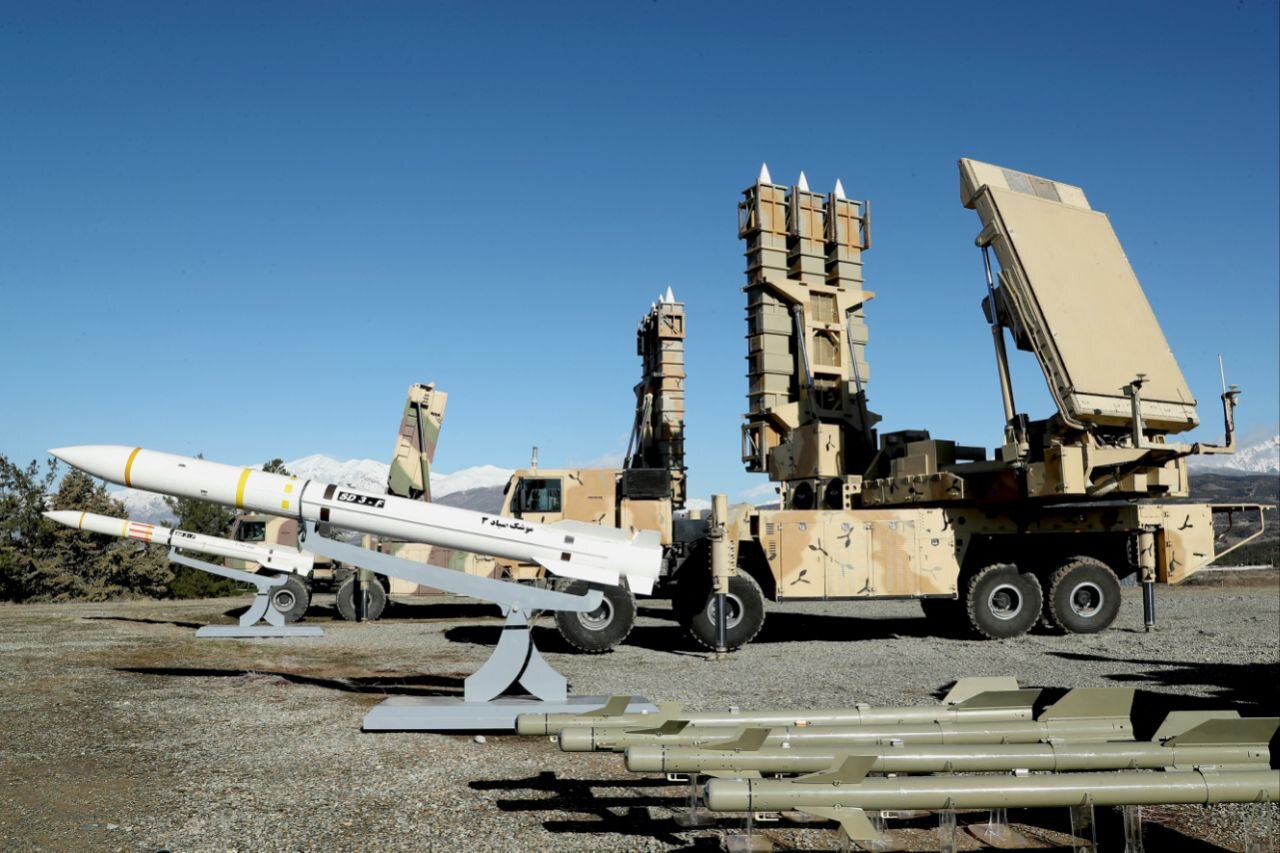
TEHRAN – Iran has begun implementing a major upgrade of its domestic air defense system following the recent 12-day conflict with Israel, a senior military official announced, saying the upgrades are aimed at strengthening the country’s readiness and filling operational gaps exposed during the fighting.
Work is already underway to improve system performance, resolve technical vulnerabilities, and integrate improved platforms into Iran’s combat posture, Reza Kageh, the Army’s deputy for air defense operations, said in an interview with IRIB on Friday. “Many of the weaknesses in our system have been addressed, and once the process is complete, the upgraded system will join the Army Air Defense order of battle,” he said.
On June 13, 2025, the Israeli regime launched an unprovoked attack on Iranian territory, sparking a 12-day war that claimed well over 1,000 Iranian lives, including military commanders, nuclear scientists, and civilians. The United States also became involved in the war by bombing three Iranian nuclear facilities. The alleged justification for the invasion was to prevent Iran from acquiring nuclear weapons, but neither Israel nor the United States provided any evidence for that claim.
Calle stressed that Iran faces a broader coalition during the conflict, not just the Israeli military. “We were not only fighting the Zionist regime, we were confronting NATO and the West,” he said, citing claims that more than 33 countries supported Israel.
He added that despite intense pressure, the country’s integrated air defense network “did not stop functioning for a moment.” Although several Iranian systems were attacked and Army and Revolutionary Guards personnel were killed, Calle insisted that the network remained fully operational throughout the entire period.
During the 12-day conflict, Iranian air defense forces shot down more than 196 enemy aircraft and unmanned systems, Khajeh said. Most were advanced Israeli-made unmanned aerial vehicles, including Heron and Hermes models, used for command and control, target acquisition, and battle management.
He rejected claims by foreign commentators that Iran was caught by surprise with the first attack. “All commanders and system operators were at their posts several hours before the attack began,” he said, adding that all systems assigned to western Iran were in full operational mode.
Calle said the conflict is a “hybrid war” involving cruise missiles, ballistic missiles, standoff weapons, loitering weapons and stealth platforms. He said many retired air defense personnel had contacted the force to voluntarily return to operations, underscoring a “national sense of duty”.
Khajeh noted that due to years of military sanctions, Iran continues to operate older platforms, “second-generation equipment against fourth- and fifth-generation enemy aircraft.” Many air defense units were hit by standoff munitions, but the operators “did not abandon their systems even though they knew the missiles were seconds away.”
Calle said 35 air defense personnel were killed during the 12-day war. He described them as “martyrs who defended Iran’s skies,” adding that their sacrifices accelerated efforts to modernize the air defense infrastructure.
Khajeh said Iran’s long-term goal is to develop the ability to detect and destroy enemy advanced fighter jets, which is the “ultimate goal” of its current modernization efforts. “Given our capabilities, we will achieve it,” he said, comparing the effort to previous leaps in missile technology.
He added that the 12-day conflict demonstrated the potential of Iranian-built air defense systems and highlighted the complexities of modern air warfare. “Air defense is a sophisticated and evolving field,” he said. “With continued upgrades, we will protect our skies even more strongly.”