
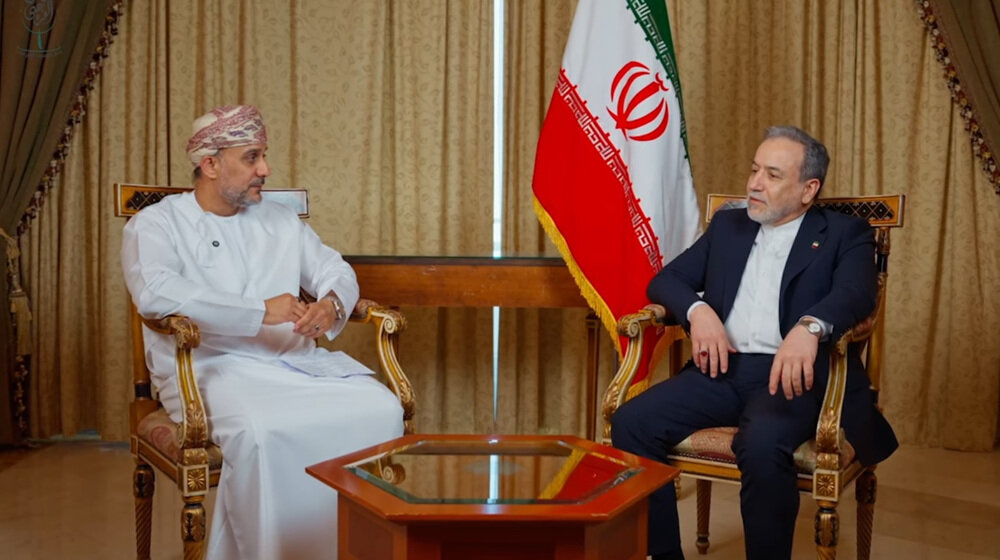
TEHRAN – Iran’s Foreign Minister Abbas Araghchi said Iran came very close to reaching an agreement with the United States in Oman-mediated talks held earlier this year, but the process was marred by the United States’ failure to accept any of Iran’s many solutions, and subsequent Iranian attacks further eroded confidence in U.S. diplomatic efforts.
In an interview with Omani media, Iran’s foreign minister said, “We came very close to reaching an agreement, and in five rounds of talks mediated by Oman, a number of solutions were discussed and we came up with solutions that could solve the problem. However, these solutions were rejected in Washington, and in the end, hawks on the ground gained the upper hand, pushing the country and the region down an unfortunate path.”
Iranian officials said the United States has consistently blocked efforts toward a deal, despite Tehran’s willingness to negotiate and find a diplomatic solution. They have repeatedly emphasized that Iran will work on an equal footing with the United States to resolve outstanding issues, but will never give in to excessive and unreasonable demands.
Even after the recent war, Araghchi reiterated many times that Iran will always support diplomacy and be ready to negotiate with the United States, as long as the United States acts in good faith.
“We have never had a positive experience with the United States, even though we have come forward honestly every time and paved the way. But even without trust, it is possible to engage cautiously,” the foreign minister said in a separate interview last month.
“We will never give up on diplomacy if Americans are prepared to engage in serious talks with an honest approach and on an equal footing to secure mutually beneficial rather than unilateral agreements based on mutual respect in order to arrive at a solution that satisfies both sides,” the top diplomat added.
Recently, the secretary of Iran’s Supreme National Security Council rejected outright demands for the country to reduce the range of its missiles, saying this was one of the latest conditions for a detente by the United States.
Ali Larijani said that “demanding that the range of missiles be reduced is tantamount to demanding obedience and stripping away national security.” “Reducing missile range is tantamount to undermining this country’s most important means of defense.”
Elsewhere in his remarks in an interview with Omani media, Araghchi referred to the U.I.-Israel invasion of Iran, saying that this attack undoubtedly caused great damage and losses to Iran, but at the same time was a blessing for the country.
“The most important blessing is that our missiles and weapons have been tested in a real war for the first time,” he explained.
“We have made the most of this potential and all our points of strength and testimony have come to light,” he said.
The Israeli regime launched a blatant and unprovoked military invasion against Iran on June 13, 2025, sparking a 12-day war that left well over 1,000 people dead in the country, including military commanders, nuclear scientists, and civilians. In flagrant violation of international law, the United States bombed three Iranian nuclear facilities, further escalating the conflict. US President Donald Trump later admitted that he was “in charge” of the invasion from day one. Meanwhile, he had scheduled the sixth round of nuclear negotiations with Iran for June 15th.
In response, Iranian forces attacked strategic locations throughout the occupied territories and the largest US military base in West Asia, Al Udeid Air Base in Qatar. The massive destruction caused by these attacks prompted the United States and Israel to call for a ceasefire.