
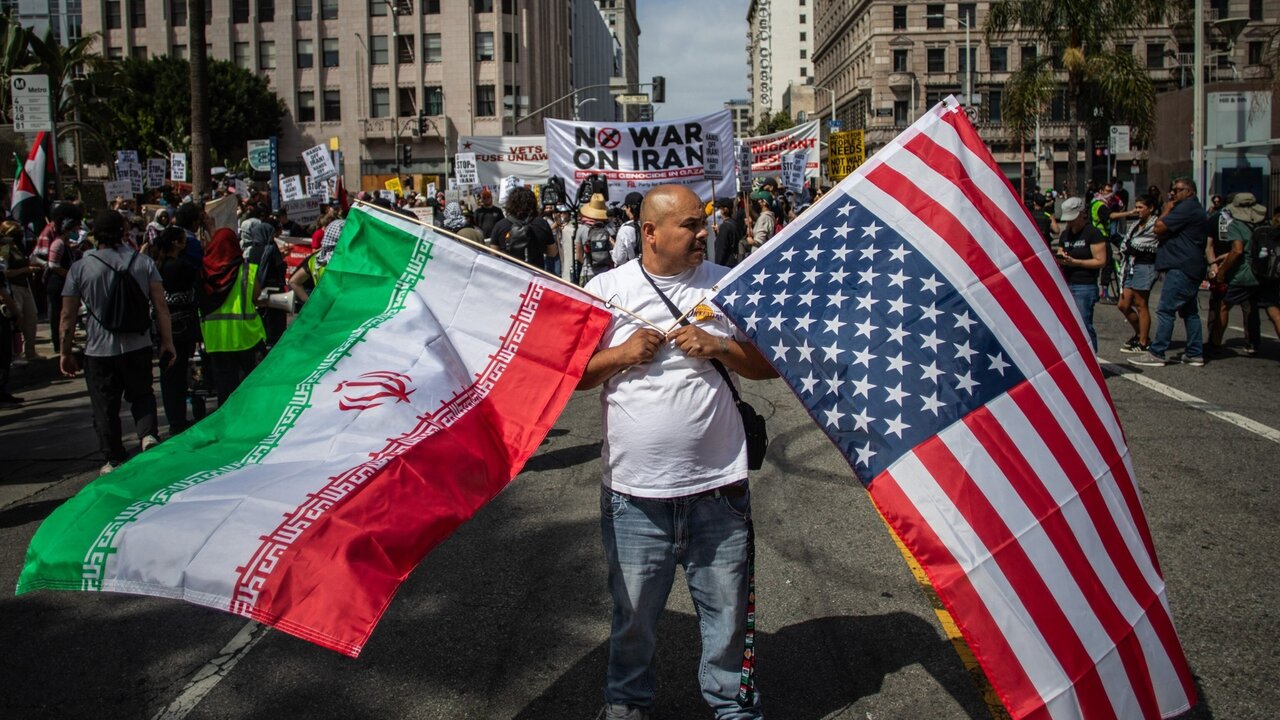
TEHRAN – Hopes for a new diplomatic breakthrough between Iran and the United States have persisted since their last round of talks was dashed by Israeli and American airstrikes in June. The airstrike was an unprecedented airstrike that targeted Iranian nuclear, civilian, and military facilities, killing approximately 1,100 people and raising serious questions about the United States’ choice to bomb a country with which it is negotiating.
The recent frenzy of reporting that all diplomatic contact between Iranian officials and third countries is a hoax may be an expression of this global yearning. The biggest such story was attached to a letter delivered by Alireza Bayat, the head of Iran’s Hajj and Hajj organization, to Saudi Arabia’s Haj minister last month. The letter, written by President Massoud Pezeshkian, expressed his gratitude to Saudi Arabia’s Crown Prince Mohammed bin Salman for taking note of the president’s previous actions and facilitating travel for Iranian pilgrims. Nevertheless, several media outlets claimed that the letter actually asked bin Salman to act as a mediator between Iran and the United States during a visit to Washington where he was scheduled to meet with President Donald Trump. The story became so widespread that Islamic revolutionary leader Ayatollah Khamenei personally denied it in a televised address to the Iranian people.
The report may have upset Oman, which played a mediating role in five rounds of U.S.-Iran talks between April and early June. Iranian Foreign Minister Abbas Araghchi praised Oman’s “professional, honest and constructive” response to the indirect negotiations in an interview in Muscat last month. His remarks also appeared to refer to a number of other countries, which some sources say are seeking to replace Oman in future negotiations.
“The door to negotiation and mediation is always open and the possibility always exists,” Arraguchi said. “But the first principle of diplomacy is that both sides come to the table with a genuine intention to seek a fair and equal exchange. If one side’s goal is to impose their demands, such negotiations will be formless and yield no results.”
How do President Trump and the US view negotiations?
Negotiation is considered to be a collaborative communication process between two or more parties with different interests and aiming to reach a mutually acceptable agreement. It’s not about winning or losing, it’s about finding a solution that all parties can agree on, even if it’s not the ideal outcome. Successful negotiations result in both parties making concessions and ultimately reaping the benefits of a win-win agreement.
But when it comes to the United States and the Trump administration, negotiations seem to have a different meaning. It ends up defining conditions and projecting power. President Trump is treating the negotiations as a unilateral imposition of demands. The other party must simply comply and become an exasperated stakeholder in an unwanted agreement. For Trump, there needs to be a clear winner in the negotiations, and that winner should always be him.
Araghchi argued in a recent interview that the core issue is America’s own distrust of negotiations, which is in stark contradiction to the American leadership’s frequent assertions that Iran is a reluctant party to pursue diplomacy.
“The main obstacle to negotiations is the US approach, which is based on imposing excessive demands,” Araguchi explained. “Unfortunately, we have seen this pattern repeatedly. If the American side shows that it is willing to reach a fair and balanced agreement based on mutual interests, the Islamic Republic of Iran will certainly comply. We have never left the negotiating table. Diplomacy remains essential to our principles.”
During his first term, President Trump withdrew from the 2015 Iran nuclear deal, an agreement that limited Iran’s nuclear activities in exchange for sanctions relief, and when he reimposed sanctions, he declared that sanctions would only be lifted if Iran signed a new agreement to completely dismantle its nuclear program. But what he got was an acceleration and unprecedented expansion of Iran’s nuclear activities.
After the war began in June, President Trump not only promised that Iran would never pursue a nuclear program, but also insisted that Iran should cut ties with resistance groups and limit the range of its missiles. Iranians have once again announced that they will not yield to his demands, but it is unclear what their ultimate response will be.
Those hoping to mediate between Iran and the United States, and those spreading sensational stories about it, should look to Washington, not Tehran, argues American affairs expert Amir Ali Abolfas.
“The lack of flexibility and insistence on intransigence on the part of the United States is what currently prevents us from accessing new negotiations,” he said. “It is not a lack of mediators that could permanently derail diplomacy for the foreseeable future.”