
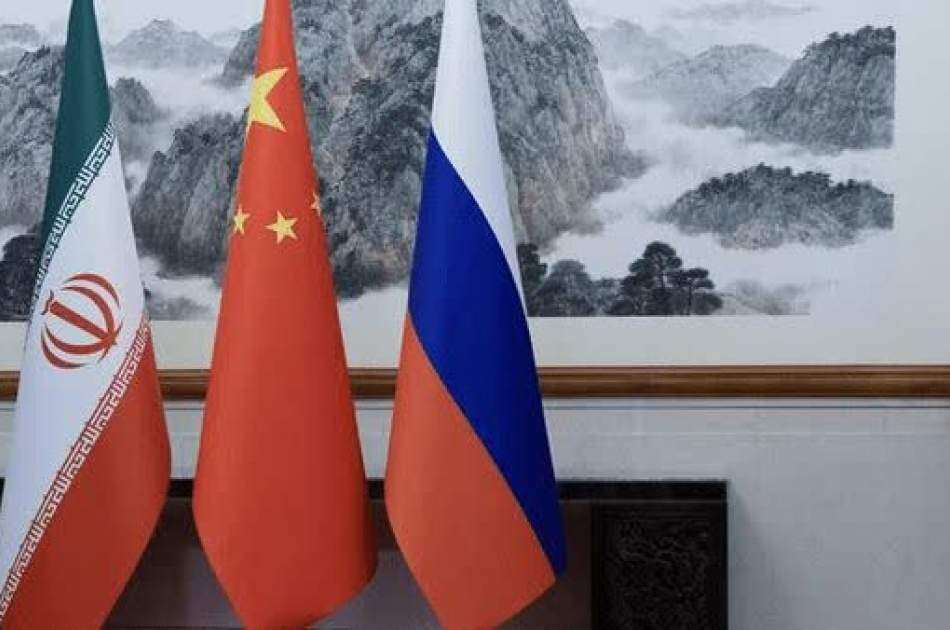
TEHRAN – Iran, Russia and China appear to be reacting to the West’s continued attempts to use the already tattered and expired JCPOA as a means of pressure against Iran, with their UN ambassadors reminding in a joint letter that all provisions of Security Council resolution 2231 (the resolution supporting the JCPOA) expire after October 18, 2025 under the resolution’s operational paragraph 8.
The letter, sent on Tuesday to the UN Security Council and the UN Secretary-General, also reiterated the three countries’ commitment to continue cooperating with Council member states.
“The Islamic Republic of Iran, the People’s Republic of China, and the Russian Federation remain committed to continuing their constructive diplomatic partnership with all Council members and announce their readiness to support joint efforts to safeguard the peaceful character of Iran’s nuclear program,” the top three diplomats wrote.
For nearly two decades, Iran’s peaceful nuclear program has faced relentless opposition from the West. Pressure came in many forms, punishing endless negotiations that went nowhere, sanctions and even military aggression.
When the United States attacked Iran’s nuclear facilities during the illegal American-Israeli military invasion in June, three European countries, France, Germany, and the United Kingdom, intervened with their own strategies and activated the so-called snapback mechanism.
“Snapback” is a mechanism based on UN Security Council Resolution 2231 designed to automatically reinstate UN sanctions against Iran if the country violates the terms of the JCPOA, the nuclear deal signed in 2015 by Iran, the US, the UK, France, Germany, Russia and China. Under that provision, Iran promised to limit its nuclear program in exchange for sanctions relief. However, the United States unilaterally withdrew from the nuclear deal in 2018 and reimposed sanctions. The European signatories said Iran must remain in compliance with the JCPOA, even though it cannot force the U.S. back or mitigate the debilitating effects of sanctions.
E3 triggered a countdown to an automatic return to UN sanctions on Iran in August. Although welcomed by Washington and Tel Aviv, the move never materialized as Russia and China declared they would not accept a snapback of UN sanctions. This position was echoed by over 120 other countries, who expressed support for Iran during the Non-Aligned Movement (NAM) conference in Uganda. The legal basis for reimposing pre-JCPOA UN sanctions was further undermined by the formal expiration of Resolution 2231 in October. Iran, Russia and China pointed to the deadline in separate letters to the UN Security Council and the UN Secretary-General.
In a recent joint letter, the three countries’ ambassadors also called on all parties concerned to remain committed to arriving at a “political solution that allays the concerns of all parties through engagement and political dialogue based on principles of mutual respect” and to avoid resorting to force or other actions that could escalate the current situation.