
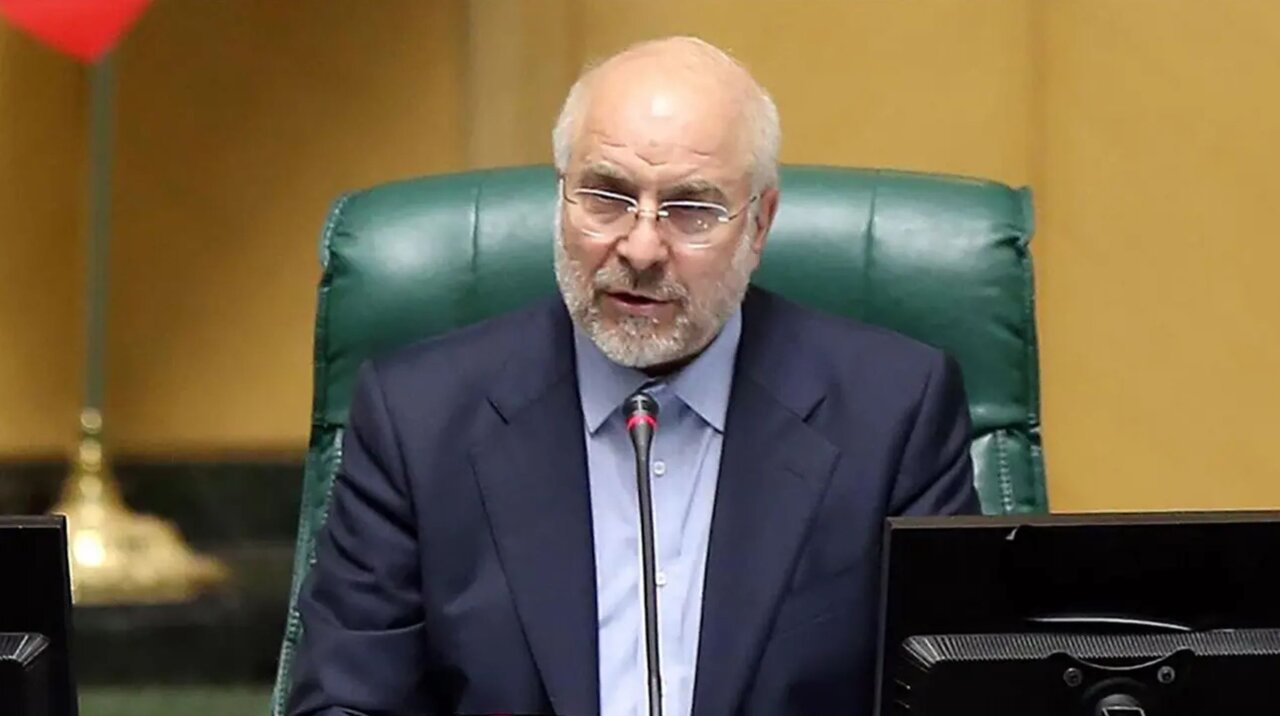
TEHRAN – Parliament Speaker Mohammad Baqer Qalibaf called on Iran’s neighbors not to test the Iranian people’s resolve to protect the country’s territorial integrity, including the three islands of Greater Tunb, Lesser Tunb and Bumosa in the Persian Gulf, reiterating that these islands are “an integral part of Iran.”
In a recent statement released by the Persian Gulf Cooperation Council (PGCC), top members of parliament once again condemned Iran’s alleged ownership of three Persian Gulf islands by the United Arab Emirates (UAE).
“These baseless and ridiculous claims, which are generally made as a result of provocation by other countries, violate the principles of respecting each country’s territorial integrity and good neighborly relations,” he said.
Mr. Khalibaf reiterated that Iran supports calm in the region.
“We have always strived to establish stability, promote peace and respect the principle of good neighborliness. We expect our neighboring countries to follow suit,” the top lawmaker said.
A day earlier, Ali Akbar Velayati, an adviser to the leader of the Islamic Revolution, said in a statement that regional countries should not “provoke” Iran, adding that political statements will not change the reality on the ground.
Bu Musa Island and Greater and Lesser Tunbu in the Persian Gulf have historically been part of Iran, evidence of which has been discovered and supported by countless historical, legal, and geographical documents from Iran and other parts of the world. Some of the documents date back more than 2,000 years. UAE was established in 1971.
Previously, Sheikhdom was under the control of Brittan, who occupied many Persian Gulf islands, including this trio, from 1921 to 1971. Iran regained sovereignty through an operation that took place two days before the UAE announced its establishment.
Abu Dhabi has claimed the three islands for several years, drawing consistent reactions from Iran. But Mr. Qalibaf and Mr. Velayati’s recent statements are their strongest yet and suggest that Tehran may be growing impatient with the UAE’s actions. The only realistic scenario for the UAE to take the lead is a military attack, but that is a highly unlikely option given the country’s naval power, which remains significantly less dependent on the United States.
Recent naval exercises by the Islamic Revolutionary Guards Corps (IRGC) are believed to have been aimed at preparing for a potential confrontation with the United States, which attacked Iran in June and has signaled it may do so again. But analysts say it could also serve as a warning to regional countries that may seek to undermine Iran’s sovereignty and territorial integrity.
Several advanced weapons were tested during the exercise. They included missiles with a range “longer than the length of the Persian Gulf,” said Brigadier General Alireza Tansiri, commander of the Revolutionary Guards Navy, who oversaw the exercise.
Abu Dhabi’s stance has also upset Iranians, who have organized several online petitions calling on the government to move towards liberating the Iranian islands of Ariana and Zarkhu, which are claimed by the UAE.