
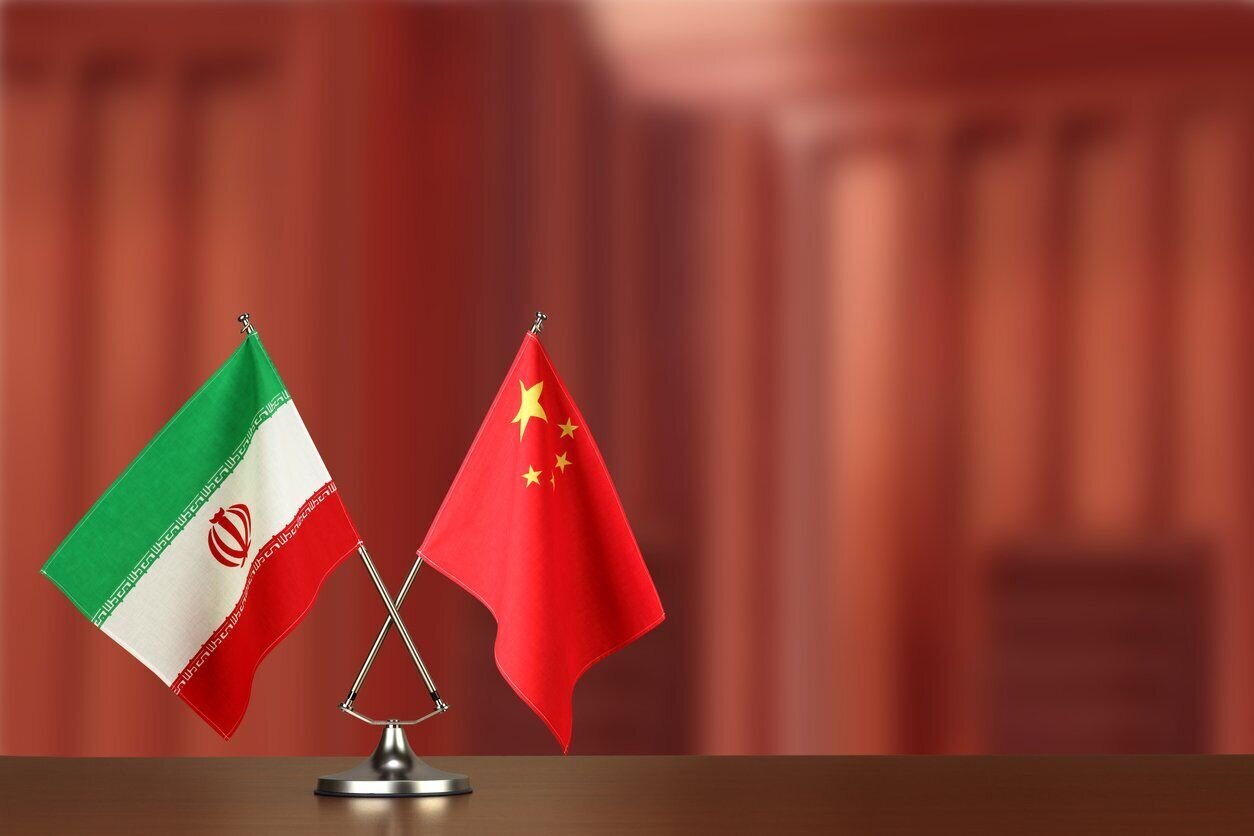
TEHRAN – Iran and China share a long history, and on paper a 25-year cooperation agreement strengthens their strong strategic partnership. However, under the rhetoric of mutual friendship and common opposition to Western unilateralism, this relationship is characterized by unrealized potential.
Hossein Kaheri, director of the Iran-China Institute for Strategic Studies, said in an interview with Tehran Times that sanctions are not the only thing preventing the full development of Iran-China relations.
He argued that while sanctions are an important factor, some of the core obstacles lie within Iran. In his view, Iran could put more effort into building a framework for effective engagement with its eastern partners.
The interview also explored the limited scope of military cooperation, misconceptions about the Belt and Road Initiative, and possible steps Iran could take to increase its strategic weight.
Below is the full text of the interview, edited for clarity and brevity.
Has the restoration of UN sanctions affected Iran-China relations? If so, to what extent?
Sanctions can be understood along two dimensions. The first concerns the sanctions already in place, which are undoubtedly having a considerable impact. China’s leading companies operate in global markets, including the United States, China’s largest trading partner, accounting for about 14% of trade. Understandably, these companies are expected to be cautious and refrain from certain activities as they seek to avoid exposure to sanctions risks.
Regarding the recently imposed snapback mechanism, it has not had any further impact on Iran-China relations. Whatever influence existed, it was already there. It is natural to expect that once sanctions are lifted, investment will increase accordingly. But for now, an estimated 90% of Iran’s potential relationship with China remains untapped. Previously established engagement channels still exist. It’s just that the style has changed.
Beyond sanctions, what are the main challenges in Iran-China relations?
A key challenge is that Iran lacks clear mechanisms and the necessary political will to establish a long-term, coherent framework for relations with China. We have not given this relationship a strategic identity. We don’t have a comprehensive strategy or long-term program. A comprehensive agreement was signed for 25 years, of which nine years have already passed, but no substantive implementation has taken place.
Equally important, Iran does not have a single responsible authority overseeing its relations with China. This institutional gap is the main reason why we are unable to obtain concessions from the Chinese government. Furthermore, Japan lacks the management ability to utilize the credit facilities extended by China. Despite being provided with funding and ample time to utilize it, we are still not even half of it. However, we express dissatisfaction with China’s lack of further funding.
The question is not why China is holding back, but why we are not taking advantage of what is already on offer. The central problem is that there is no designated authority responsible for managing this relationship.
Although China is important to Iran’s economy, Iran accounts for only 0.24% of China’s economic structure. In these circumstances, it is unreasonable to expect China to pursue us. The onus is on Iran to get involved.
Do you think China’s involvement in Iran will increase once sanctions are lifted?
yes. As sanctions are eased, the financial environment becomes more open and less dependent on state-mediated channels. Without sanctions, the private sector can engage directly with Chinese partners, attract investment, and collaborate more freely through banking institutions.
What do you think about military and security cooperation between Iran and China? How far can it expand in the current situation?
At present, it is unlikely that China will conduct joint military exercises with Iran. The Chinese government seeks to avoid actions that increase unnecessary costs or regional sensitivities among countries with which it maintains important cooperative relationships. China is already active in the Persian Gulf. From that perspective, there is little basis for any activity that could increase tensions.
No country would incur additional costs on behalf of another country without a compelling strategic rationale.
China is not allied with Iran or any of the Persian Gulf states in terms of loyalty. Its approach is driven by economic interests and economic weight.
How can Iran increase its strategic weight?
Some argue that we have not included China in our long-term national plans. Whenever the opportunity arises, the Iranian government tends to pivot toward the West. China has never been treated as a true strategic opponent.
Consider China’s “Malacca Dilemma,” or its historic competition with India. What has Iran accomplished in southeastern Iran to address China’s concerns? Conversely, what have the Indians achieved in the area over the years? Very little. From a strategic perspective, Iran could have assigned a role to China. What was given to India in return?
We have unrealistic expectations of China, expectations that ignore the absence of a comprehensive partnership, even though they are not aligned with China’s strategic priorities.
Will Iran be able to gain the desired weight if UN and US sanctions are lifted? Or is it achievable even without sanctions relief?
Such a weight is achievable even without sanctions relief. Iran’s potential economic weight could be significantly higher. It is possible that it will reach at least Iraq’s status, which would mean that Iran’s share of China’s economy could rise to 1%, four times its current level. If this can be achieved, it will have a significant positive impact on the domestic situation.
What steps should I take to achieve this?
We need to assign real strategic importance to this relationship and develop committed leadership, organizational authority, and long-term planning structures to support it.
But if major Chinese companies avoid Iran due to sanctions concerns, what options do they have?
Consider the large number of Chinese cars flowing into Iran. All of these companies maintain partnerships with European companies. Name a major Chinese car manufacturer that has no ties to Europe. There is no such thing. Chinese companies seek profit and will find legal means to pursue it. European companies similarly pursue profits. Iran needs to establish conditions that prevent such companies from becoming entangled or exposed to undue risks.
As for the Belt and Road Initiative, some argue that it is a geopolitical tool, a Chinese version of Western imperialism, or a new form of American-style domination. what is your view?
What is the evidence to support this claim? This is frequently repeated by Western media and individuals who are not familiar with China’s historical actions. Consider the past 1000 years. Which countries did China colonize? The 19th century, when China was weak, is not an appropriate standard. Before that, China was an empire, but colonialism was not part of its political or cultural tradition.