
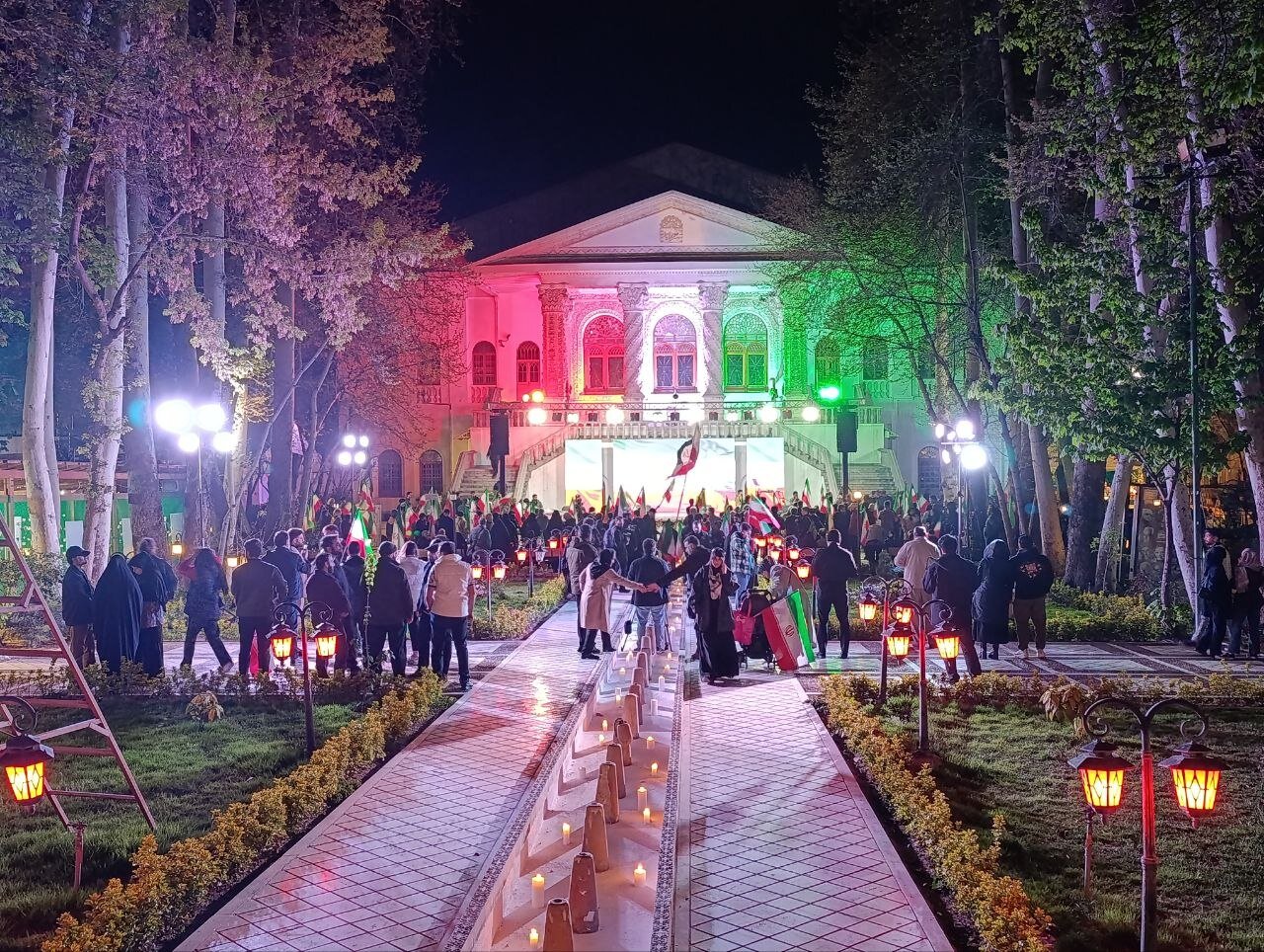
TEHRAN – On a calm Monday night, around 8 p.m., people arrived one after another, drawn by a common need to gather. They included artists, actors, filmmakers, and ordinary citizens, all of whom gathered to pay their respects to those who died, to express solidarity, and, perhaps most notably, to show that they are not confined to their homes by fear of the ongoing airstrikes.
As the gathering gradually grew, the atmosphere in Bagh-e-Ferdowz, north of Tehran, took on a quiet but deep emotional weight. Their presence sent a quiet but unmistakable message that bombs and missiles would not empty the city or weaken its ties to the homeland.
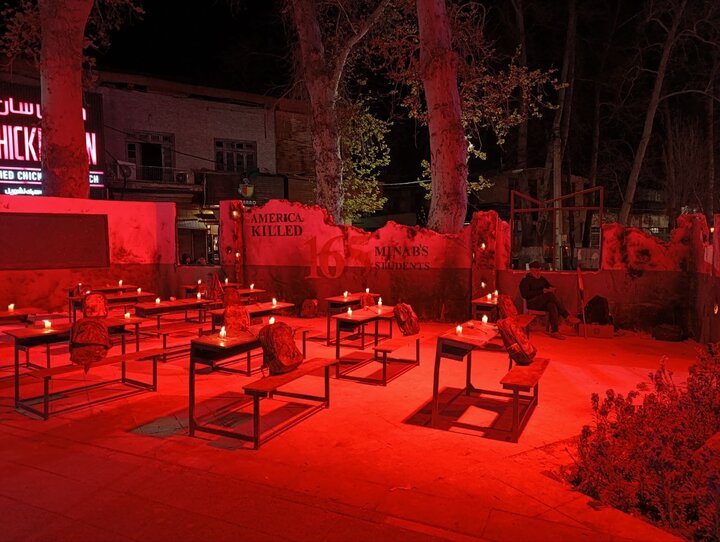
At the entrance to the garden, just off the street, a symbolic classroom was carefully placed to commemorate the children of Minab, some 165 students, who were martyred early in the war. The desks at the school were neatly lined up, some covered in dust and bearing marks that suggested they had been destroyed. Backpacks litter the ground, evoking absence rather than presence, silence rather than sound.
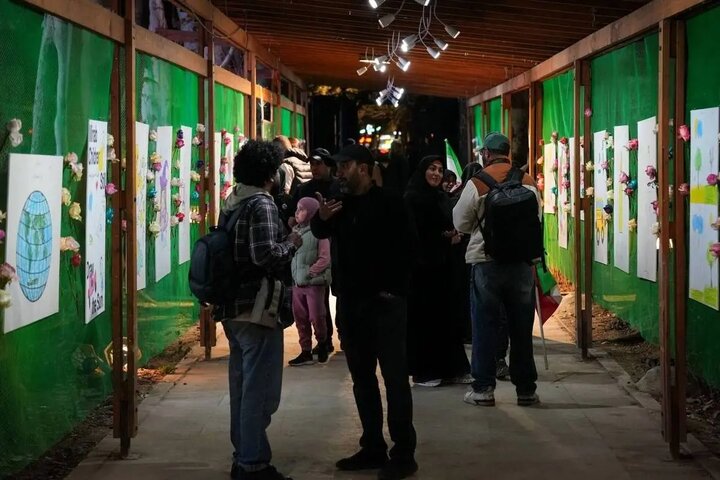
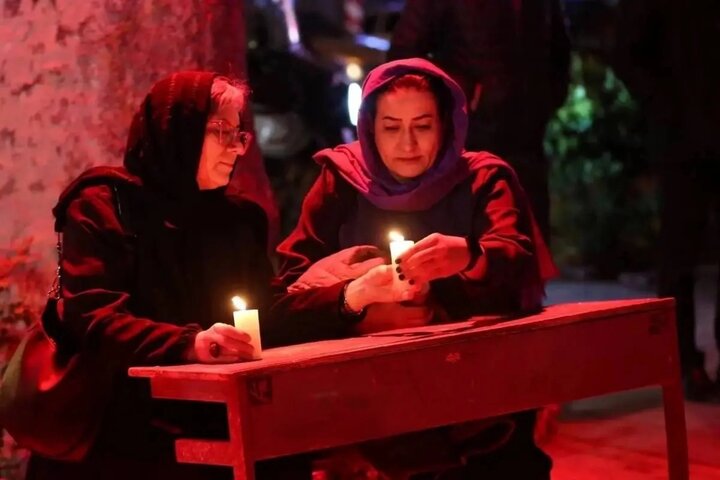
Visitors approached the space with a visible change in appearance. Some stopped and sat for a moment behind their desks, as if momentarily stepping into their suddenly interrupted lives. Candles were lit, flowers were gently placed, and people moved forward in silence. It was one of the most powerful scenes of the night, a visible expression of grief but shared without the need for words.
Then I spoke to a middle-aged woman who had flowers next to her desk. Her voice was trembling slightly. “I’m a mother,” she said quietly. “Words cannot describe what I felt.”
Her few words seemed to capture the emotional core of a space trying to grasp the magnitude of what has been lost.
Nearby, a retired teacher gently brushed the dust off a bench before lighting a candle. Speaking in modest tones, she reflected on accountability and the role of international organizations and expressed a quiet hope that such tragedies should not be met with silence.
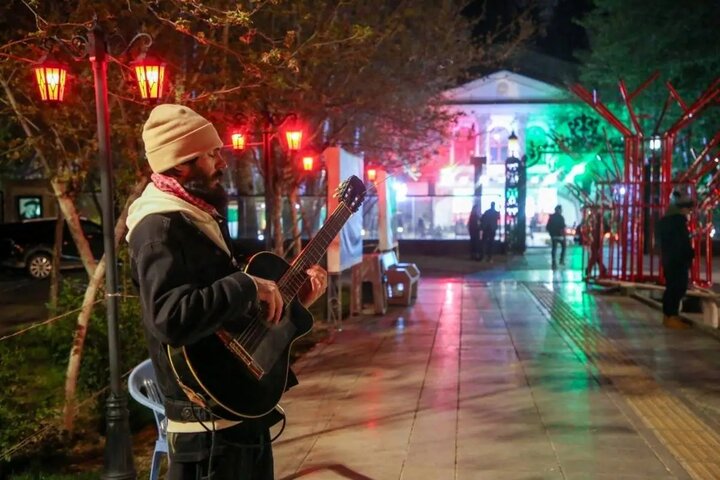
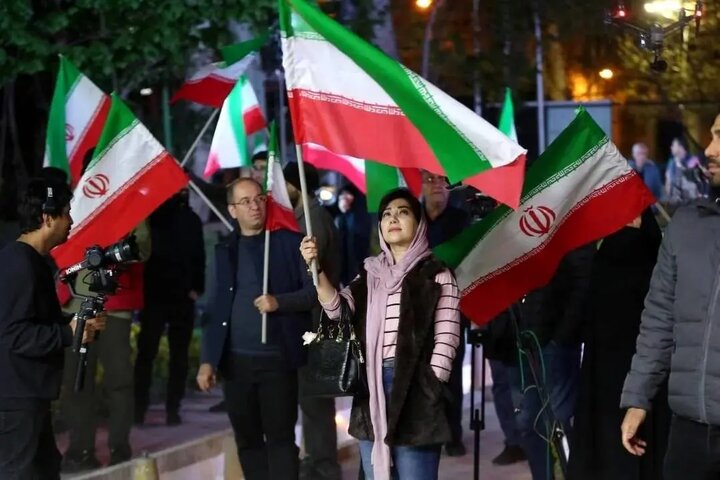
In a garden next to the massive white building where the core of the rally will take place, one patriotic song after another began to flow quietly through the crowd, taking on themes such as Iran, patience, dignity and collective memory.
What stood out most was the diversity of the people gathered. People from all walks of life stood side by side: older men and women, young couples, and groups of teenagers.
Women appeared with and without headscarves, some in black chadors and others in more casual attire. In that shared space, visible differences seemed to recede and be replaced by a broader sense of belonging.
One of the most heart-wrenching moments was when they sang “Yi-Ilan” in unison, as the crowd harmonized with gentle waving of flags, silent tears, and hushed voices. The song is famous for being sung by the late Iranian singer Mohammad Nouri, and has long existed as an expression of attachment to the nation. Some of the lyrics can be expressed in English as follows:
In my soul and in my life, you remain, O my Motherland.
A heart that does not tremble for you is destined to fall at your feet.
This love story cannot be expressed in words.
The world itself is worthless to your sublime love.
A separate area for children was set up not far from the memorial, a deliberate contrast to create a sense of continuity in the loss. Here, children drew, wrote and took part in small activities around the theme of unity and hope. Their presence added a positive dimension to the evening, even though memories remained its central theme.
Among them was Ali, a boy of about 10 who shyly smiled before speaking. “I’m happy to be here…Me and my mother, we’re here for Iran…because we love Iran so much,” he said. His simple words cut through the heavy atmosphere of the night and brought a moment of clarity.
Documentary filmmaker Javad Mogui then addressed the gathering and shared recent observations from the battlefield, particularly from the strategic Strait of Hormuz. he
He described the moment of the collision, the missile launch, and what he described as a courageous act by Iranian soldiers. The audience listened intently and listened to his explanation in silence.
In another corner of the garden, a man in his 60s was standing holding an Iranian flag. When I asked him how he felt, he quickly replied: “Pride. Honor. Love for the motherland,” he said of his position with the country’s defenders, expressing strong criticism of what he described as war crimes committed by the enemy.
But this gathering was not an isolated event. Similar scenes have played out nightly across the country, from Tehran to Tabriz, Mashhad to Isfahan, since the war broke out on February 28. Each has its own tone, but all seem connected by a common impulse: to remember, to endure, and to continue to exist.
Bagh-e Ferdows itself reflects the traditions of UNESCO-listed Persian gardens, with greenery, symmetry, and softly lit paths, thoughtfully arranged in a section dedicated to memorials. In its center is a historical mansion, currently the Iranian Cinema Museum, usually dedicated to the memory of art and culture.
As I stood there, surrounded by candlelight, voices, and a quiet but steady determination, it became clear that this gathering wasn’t just about grief, it wasn’t just about defiance. It was also about identity, how individuals and communities understand themselves in moments of uncertainty and in the shadow of inhuman invaders.
morning