
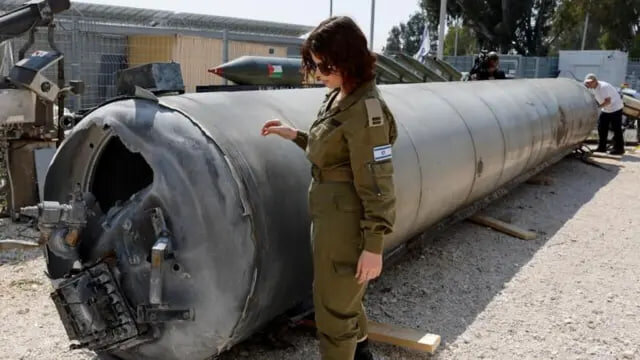
Beirut – US-led Israeli invasion of Iran has imposed a complex landscape that gradually becomes clearer.
Clearly, Iran has managed to maintain the interests of its sovereignty and relies on a cohesive system of defensive strategies and indigenous capabilities that exceed the expectations of its malicious enemy.
Despite the serious blows and the strength of Iranian military, security, diplomacy and popularity, Tehran was able to demonstrate an unprecedented deterrence that brought the enemy to unexpected costs.
This was achieved through carefully considered operational performance that efficiently disrupts calculations, while maintaining constant preparation for potential future surprise attacks.
Tehran avoided falling into the trap of depleting its strategic capabilities.
The legitimacy of the Islamic Revolution, its institutions, and its alliance strategic vision (not weapons, as the enemy promotes).
The victory of the Islamic Revolution in Iran compensated for the settlers suffered by Western Asians, particularly after Egypt’s departure from the resistance front and subsequent normalization with the Zionist regime.
Over 40 years since the blessed Islamic Revolution, Iran was able to shake the foundations of non-Gi Sexual Zionist organizations. Thus, the project of David Ben Gurion, one of the founders of the colonial Israeli organization, collapsed.
This imperialist project was based on developing strategic alliances with surrounding states (i.e. Iran, Turkey) to curb the surrounding states (i.e. Syria, Lebanon, Jordan, Egypt).
Since the 1990s, despite the heavy blows of the Iran-Iraq war of 1980-88, Tehran’s support for Hezbollah defeated the 2017 Takfiri project, along with the liberation in May 2000, the victory in the war in July 2006, and the successive victory in Gaza from 2008 to 2021.
“One million Arabs are not worthy of Jewish claws. We must stop Iran’s attacks on Israel,” US Senator and AIPAC member Jay Sullivan wrote in X.
What Tehran has established as a solid principle is that by embracing so-called “peace” concessions, as evidenced by the experiences of Egypt, the PLO, the Jordan and several Persian Gulf sheikhdams, it produces only more humiliation, obedience and degradation.
Despite events following the Al AQSA flood project, including ongoing attacks on Gaza and Lebanon, and the collapse of Damascus, Tehran demonstrated the unity and resilience of the resistance project.
Most importantly, Iran demonstrates its institutional depth, structural aggregation, and a very solid foundation.
It has become clear that the enemy as an Iranian “project” has been revealed to Iranian people and local people. It is also evident in the colonial colony’s flocks as Tehran managed to undermine trust between them and their vulnerable beings who were unable to provide security to the entire occupied Palestine.
In Lebanon, Italy took over the command of Unifil from Spain before the director of the committee overseeing US General Michael Renny, who is the director of the committee overseeing the implementation of the ceasefire agreement.
Since assuming his position, after successor Jasper Jeffers, Renny will chair a meeting of the committee (which has been suspended since March 11) to review the implementation of UN Resolution 1701.
Given the ongoing Israeli occupation of tens of thousands of metres of land along the southern border, including five points, UNIFIL’s most challenging challenge is whether and how it will be renewed at the end of August next year.
This adds to its military and civilian personnel and equipment, the value of its general budget and, most importantly, to its scope of power that has not yet been determined. Rather than pursuing a renewal of Unifil’s mission, the Lebanese government is obsessed with condemning Iran’s legitimate response to U.S. air force bases in Qatar.
Meanwhile, the Lebanese military has arrested one of the most prominent ISIS leaders “following a series of security surveillance and surveillance operations,” and owns “a large amount of weapons and ammunition, in addition to electronics and equipment for manufacturing drones.”
The Lebanese Army “surmised that the detainees took on leadership of Lebanese organizations after the arrests of his predecessor (Lebanese caliph) and many terrorists.
The impact of Iran’s resistance and legendary resilience on people