
TEHRAN — The fragile two-week cease-fire that went into effect around April 8 was clearly not a victory for Washington or Tel Aviv, but it is forcing Iran’s adversaries to confront the limits of military pressure and the limits of a domestic conflict that has fomented war and is now being reshaped by the possible fallout.
Signs of this reality are becoming increasingly evident, including market manipulation to stabilize the U.S. economy and the Trump administration’s desperate search to restore poll numbers ahead of the 2026 midterm elections.
This shift is highlighted by high-profile fissures within the US security state, particularly the resignation of Joe Kent, director of the National Counterterrorism Center.
A series of planned leaks to media outlets, including the New York Times, have revealed widening rifts among elites, with political leaders and their supporters leaking purported dissent to avoid being locked into a failed war.
In addition, President Trump’s recent harsh verbal abuse on Truth Social against Tucker Carlson, Candace Owens, and Alex Jones, expressing skepticism about intervention and labeling them as “troublemakers,” reveals that the political scene is in great turmoil.
Economic reaction and interim financial results
The economic impact of the war extended domestically, hitting Americans’ wallets directly. Oil prices have soared from their prewar lows of $67, and the resulting rise has fueled a cost-of-living crisis that Democrats are now using as a political cudgel against Republicans.
The billions of dollars pocketed by arms manufacturers and energy interests is a stark reminder that while conflict enriches a small class of corporate financiers, ordinary Americans bear the burden.
The elite wing of the Democratic Party primarily adheres to traditional pro-Israel and anti-Iran positions. Just as they enabled the Gaza massacre during the Biden administration, they did not present a serious challenge to war powers when Trump launched the invasion.
But the same political parties are now running ads linking war to domestic priorities such as health care.
Progressives such as Sens. Bernie Sanders, Jeff Merkley, and Alexandria Ocasio-Cortez have condemned the war as “unnecessary” and “illegal,” while others, such as Sen. John Fetterman, have praised it as “necessary.”
Party leaders are focused on economic messaging ahead of November’s midterm elections, but the unpopularity of the war and its impact in swing states in the Midwest could flip Democrats’ seats in the House and Senate.
Polls and prediction markets are already treating this as a potential reckoning, especially as independents resent foreign entanglements that contradict their “America First” pledges.
Mapping the Republican Civil War
This war has sparked an open succession battle within the Republican Party with an eye toward 2028.
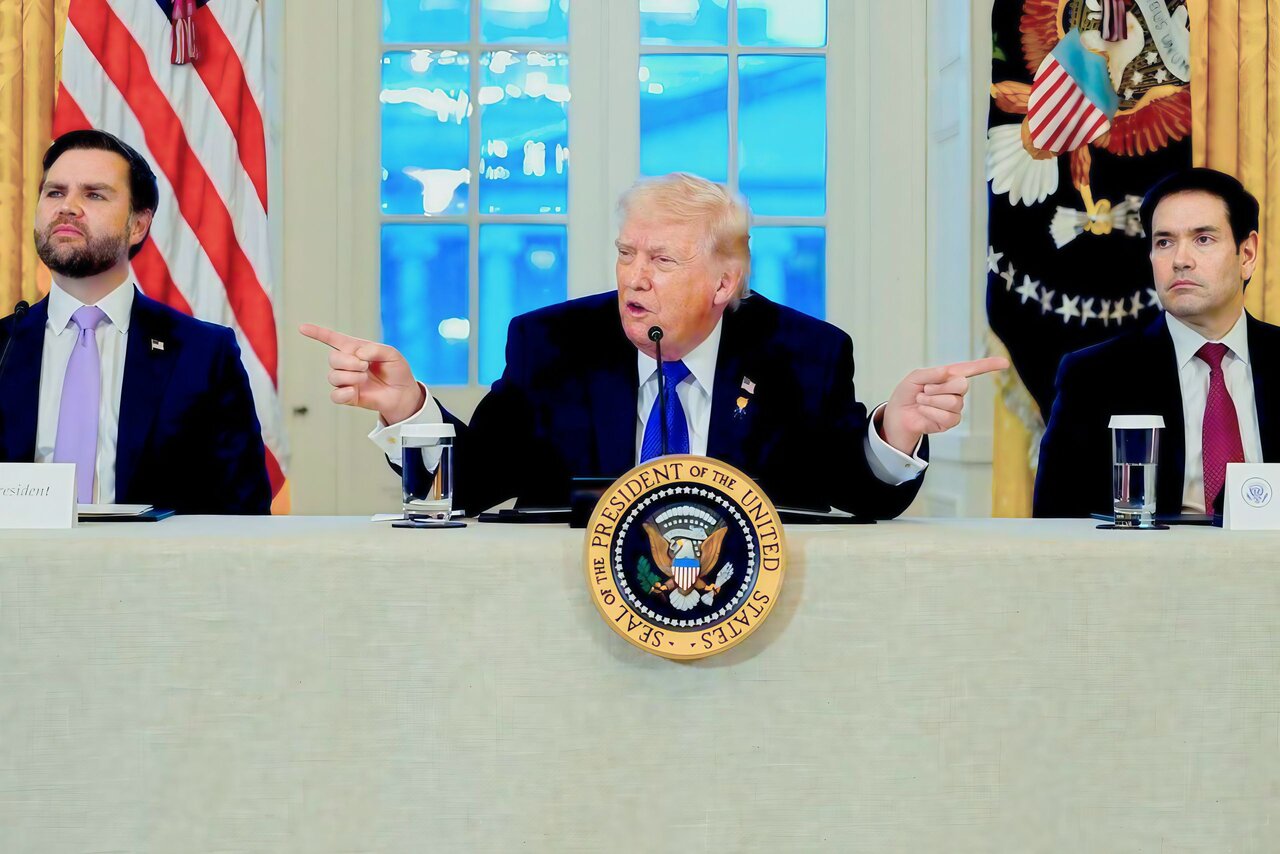
The two factions were separated. Team A, a post-liberal realist camp centered around the network of Vice President J.D. Vance and billionaire Peter Thiel, draws strength from a circle of influential podcasters, realist scholars, and even some, including the Rockbridge Network, 1789 Capital, Tucker Carlson, the Mercer family, Steve Bannon, former Congresswoman Marjorie Taylor Greene, Candace Owens, Joe Kent, Megyn Kelly, Alex Jones, and Joe Rogan. Crossover voices such as Max Blumenthal and Anna Kasparian.
Kent’s resignation as head of the National Counterterrorism Center was as much a power move as it was an act of protest. Although he insisted that Iran was not an imminent threat and that Israel had drawn the United States into an unnecessary fight, his activities since leaving office suggest he is auditioning for higher power.
The group appeals to a growing constituency that opposes Israel on moral and strategic grounds, as well as those who see the endless Middle East wars as a distraction from China and its technological superiority.
This group of elites is not motivated by solidarity with Iran or opposition to Israel. They remain pro-Israel for practical reasons. Their skepticism is purely tactical.
Thiel’s Palantir remains deeply embedded in the military intelligence apparatus that enables military atrocities in the Middle East and beyond.
Mr. Vance has signaled an openness to diplomacy while defending his early actions in the recent war against Iran.
Now leading negotiations in Islamabad with Steve Witkoff and Jared Kushner, he calls ceasefires “always messy” and dismisses Iranian opposition over Lebanon as a “misunderstanding,” even though Pakistani officials have reiterated that Lebanon was actually part of the ceasefire.
President Trump has publicly joked that he takes full credit for successful negotiations, but blames Vance for failed negotiations.
Team B, the evangelical ultra-Zionist faction embodied by Secretary of State Marco Rubio, relies on an old foundation of Christian Zionists, including the Adelson family, Paul Singer, Bill Ackman, Sen. Lindsey Graham, Ambassador Mike Huckabee, Mark Levin, Laura Loomer, and Ben Shapiro.
For them, this war has almost Biblical weight. Mr. Rubio surged in the polls in early 2028, positioning himself as a bridge to the neoconservative tradition.
Public clashes, including President Trump’s recent “Truth Social” rant labeling Carlson, Kelly, Owens, and Jones as low-IQ troublemakers, suggest that President Trump is relentlessly wary of Team A’s position.
good cop and bad cop routine
But these factions also play out the familiar good cop/bad cop routine.
When Israeli actions attract criticism, Team A voices sometimes shift the blame to Prime Minister Netanyahu and the Israel lobby, painting the United States as a victim of Israeli manipulation and infiltration.
The reality is that any Israeli attack is completely dependent on US weapons, aircraft parts, funding, intelligence, and unparalleled US regional military infrastructure.
Without its constant support, Israel cannot maintain its stance and continue its military atrocities.
The anti-Iranian agenda itself is an ongoing bipartisan project that extends beyond the administration, driven by arms manufacturers, big oil companies, and financial interests that benefit from U.S. dominance.
What looks like division is compartmentalization, a way to spread responsibility so that the results of dirty work can flow to one political front while keeping the overall strategy intact.
Prime Minister Netanyahu’s survival strategy and race to the bottom
In Israel, war has become Prime Minister Benjamin Netanyahu’s personal lifeline.
The corruption trial on charges of bribery, fraud, and breach of trust in Cases 1000, 2000, and 4000 will resume on April 12 after a wartime hiatus.
He has used the potential to justify early elections, listening to stories of victory to distract from legal problems and the October 7 failure.
Opposition leader Yair Lapid denounced the ceasefire as a political disaster, saying Netanyahu had failed to achieve the war’s objectives.
Liberal intellectuals and centrists have warned that a new right-wing coalition could be deadly and decide that Prime Minister Netanyahu has overstayed his welcome.
Opinion polls show mixed wartime votes, but there is strong skepticism about whether a clear victory was achieved.
Prime Minister Benjamin Netanyahu’s coalition government has been strained over issues such as the ultra-Orthodox draft, but he has skillfully exploited the security crisis to consolidate power and delay accountability. Many have suggested that a continuation of the ceasefire could hasten his political and legal downfall.
This interaction is mutual and cynical. While American factionalism shapes the tempo of pressure on Iran, Israel’s survival strategy is pushing for extremist outcomes that prolong the conflict until its domestic interests are secured.
Vance’s role will test his 2028 viability as a dealmaker, but it will also expose the limits of Team A’s pragmatism. Both administrations remain committed to hostilities against Iran, even as they bicker over their severity and methods.