
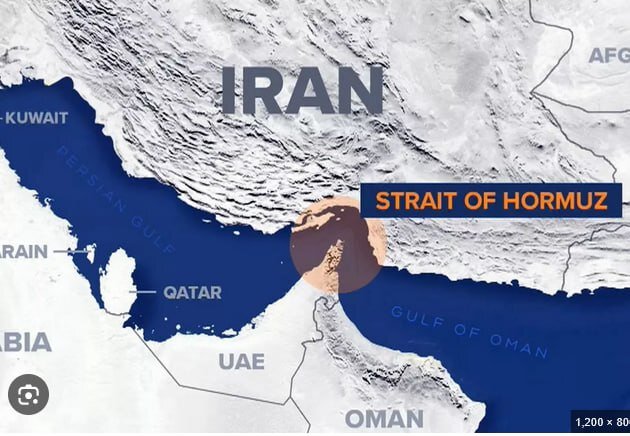
TEHRAN – A senior expert said Iran’s control of the Strait of Hormuz, the world’s key energy corridor, is an “unimaginable strategic success.”
Saeed Leilers made the remarks as Iran and the United States agreed on a two-week ceasefire plan on April 8, after the two launched an unprovoked and illegal war against Iran on February 28, with the aim of quickly overthrowing the Islamic Republic.
In response to the war, which began on February 28, Iran closed the strategic Strait of Hormuz to commercial shipping from the United States and its allies.
This is the third war waged against Iran since the start of the Islamic Revolution in 1979. The first war was imposed by Saddam Hussein’s Iraq in September 1980, and the second by the United States and Israel in June 2025.
The Pakistan-brokered two-week cease-fire is intended to give Iranian and U.S. negotiators time to work on a 10-point plan proposed by Tehran, which includes an end to U.N. sanctions resolutions against Iran, a permanent agreement between Iran and the U.S., guarantees of non-aggression against Iran, and Iranian control of the Strait of Hormuz, among other things.
The United States says Iran’s 10-point plan is “viable” and tacitly acknowledges Iran’s control of the Strait of Hormuz. The strait, which connects the Gulf of Oman and the Persian Gulf, is shared by Iran and Oman and is not part of international waters.
Iranian and U.S. negotiators are scheduled to meet in Pakistan’s capital Islamabad on Saturday to work on the blueprint. However, analysts believe that two weeks is not enough time to find a solution. Experts and officials in Iran and around the world, especially in the West, fear that Israel will even break the ceasefire rather than force the negotiators to agree.
The 2015 Iran nuclear deal, which was scrapped by President Donald Trump during his first term in 2018, was the result of two years of intensive negotiations between Iran, the five permanent members of the United Nations Security Council, Germany, and the European Union.
But Leilaz says the situation today is somehow different than it was back then.
Leiraz told IRNA that negotiations were easier because “first of all, the number of negotiating partners has been significantly reduced.”
Supporting his opinion, he says that Europe as an economic and political power is actually losing its importance, as demonstrated by the Ukraine war. Europe’s influential role was probably in the period that led to the Iran nuclear deal, formally known as the Joint Comprehensive Plan of Action (JCPOA), Leilaz added.
“Second, the United States has used almost every means possible over the past few years to weaken and overthrow the Islamic Republic of Iran, from maximum economic pressure, which in my opinion is unprecedented in history, to efforts to create unrest and destabilize Iran’s economic, political, and social structures. The United States has even tried internal divisions,” Leilers emphasizes.
It is not yet clear whether the April 11 meeting between Iran and the United States will take place face-to-face.
“These negotiations are bilateral, and I would like them to be direct, because the smaller the number of interlocutors, the more transparent the negotiations and, of course, the shorter the time needed to reach an agreement,” opines Leiraz, a history graduate primarily known as an economic theorist.
The expert also said that the US and Israeli invasion of Iran was planned in advance and all its details were well researched.
“In the first days of the war, events took place that are unprecedented in the history of the world, such as direct attacks on political leaders of countries and at the same time targeting of certain sensitive centers…These moves appear to have been carried out with calculation and full knowledge.”
“They imagined that the Islamic Republic had been under pressure for years and faced serious domestic challenges, and that it would collapse in the first hours of the war, similar to what happened in the June 1967 war between Israel and the Arab states, and that the fate of the war would be decided in a short period of time. But this scenario failed miserably.”
Leyraz, a history professor at Shahid Beheshti University, said Iran did not even allow the invaders to profit from the storied war. “In fact, Iran won the war of words in this conflict.”
U.S. Central Command said it had independently conducted more than 13,000 military operations against targets in Iran before the ceasefire was announced. Israel has also carried out more than 10,000 airstrikes against Iran using state-of-the-art fighter jets supplied by the United States.
“In my opinion, this strategic victory is far beyond the imagination of many observers. I myself have always been one of the most optimistic analysts about Iranian resistance and believed that Iran would resist all kinds of pressure, but I never imagined that this resistance would be so ‘swift and decisive.’ To a certain extent, it can also alleviate the bitter memories of the Battle of Chardiran,” he said.
The Ottoman Empire defeated Iran’s Safavids at the Battle of Chardiran in August 1514.
The wall of mistrust between Iran and the US is high
Many analysts and politicians believe there is a lack of trust between Iran and the United States.
“Given the current situation and differences, it may perhaps be easier to reach an agreement between Tehran and Washington this time than in the past. However, it should be noted that two weeks is a very short period of time.
“Given the huge differences between the two countries and the high wall of mistrust between Iran and the United States, the talks will probably last several weeks or even months. In the meantime, there will be a kind of ceasefire between the two countries,” he said, adding that the talks would likely be extended.
Iran’s control over the strategic Strait of Hormuz, through which 20% of the country’s oil and gas supplies pass, is “beyond imagination,” a history professor said.
“In my view, this success for Iran is beyond imagination, even more so in terms of military operations. Some imagined that closing the Strait of Hormuz would be the most important move, but the crowning achievement of the Iranian military was the complete control and inspection of the strait.”
Leiraz points out that closing a strait is much easier than controlling it.
“Today, Iran’s great power has elevated it to a position where it can monitor the passage of ships through this route, something even many Iranian analysts did not expect.”
We need to transform the Persian Gulf and the Strait of Hormuz into regions of peace and stability.
But he suggested that Iran should strive to transform the Persian Gulf and the Strait of Hormuz into “an area of peace, friendship and cooperation” between its littoral states.
“In other words, the objective should not be to replace American imperialism with Iranian imperialism. If the countries in the southern Gulf feel threatened, they may withdraw in the short term, but in the long term they will lean towards foreign powers to create some kind of balance. In such a situation, extra-regional powers will find a foothold in the region.”
Iran attacked U.S. military bases in Persian Gulf Arab states because they were used as launching pads for attacks against Iran. Unfortunately, some Arab countries have become complicit in an illegal war against Iran by allowing the United States to use these military bases against Iran.
However, Iranian officials are sending a conciliatory message to these countries.
“Therefore, the best approach for Iran to protect its power and control is to transform the region into a region of cooperation and participation. We should live with our neighbors and not repeat the mistakes that some regional countries have made in the past,” Leilas suggested.
He believes cooperation with Persian Gulf states will benefit Iran.
“Those who claim that now is the time for revenge and blackmail from the southern Gulf states are not paying attention to Iran’s long-term interests. It is millions of times more beneficial for Iran to transform the Persian Gulf and the Strait of Hormuz into a region of peace, cooperation and stability,” Leilas argues.
He said moves such as imposing tolls on ships from these countries are not a good idea. “We need to prove that we are true friends of these countries.”
Possibility of sanctions being lifted
Regarding Iran’s proposal to lift all sanctions, including non-nuclear ones, during the scheduled negotiation period, he said, “Lifting sanctions is certainly possible, especially since the United States is not in a position to completely impose its demands on Iran.”
He added that the lifting of primary and secondary sanctions against Iran is very important.
“Iran’s economic problems would largely be resolved if sanctions and restrictions related to the international financial system and SWIFT were lifted.