
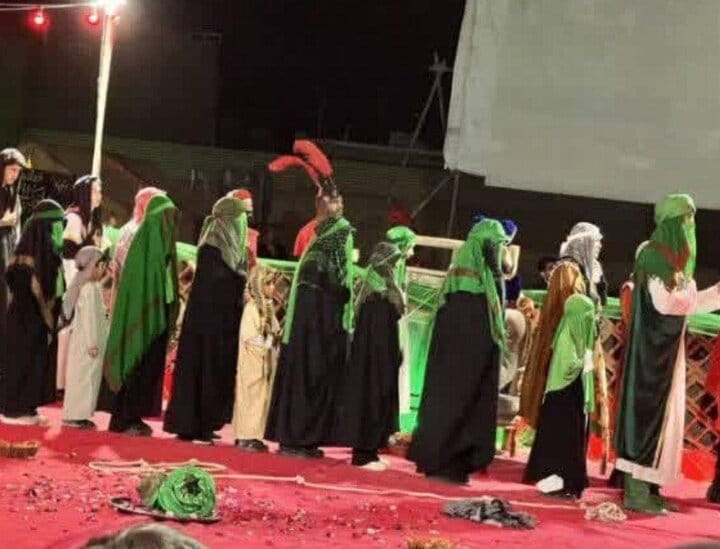
Tehran – With the arrival of the month of Muharam, accreditation of Asura-related rituals for the Passion Play of the Karizno Village, Torbat-e-Jam, Korasan Razavi Province, has been issued.
According to Miras Arya (CHTN), Faramarz Sabermoqaddam explained that Tazieh’s performance in Karizno Village was one of the largest religious gatherings in the region.
He also said the event will be held for three days a year with the participation of Karizno and other people from urban and rural areas. It begins before Tasua and continues until the night of Asura, the anniversary of Imam Hussein’s martialism.
“With the announcement of a policy by the Ministry of Cultural Heritage, Tourism and Handicrafts to register events on the national tourism calendar, we are identifying, documenting and preparing files of Torbat-e Jam’s most important cultural and religious opportunities to realize the issue of organizing and specializing event tourism.”
Given the importance of Torbat-e Jam’s tourism events and public interest in these intangible issues, he said that registering cultural and religious values, especially in the country’s tourism calendar and national heritage list, is a priority.
Iranian Tajie designates a genre of traditional religious theatre that essentially commemorates Imam Hossein’s martialism (as) and the passion of Ahlbeit (members of the Islamic prophet family). In this theatrical genre, the lyrics reading, which is almost always in poetry, takes precedence over director and action.
Tajie, listed on the UNESCO list of Intangible Cultural Heritage in 2010, is a kind of drama about the brave war and martism of the grandson of Prophet Muhammad (Pbuh), and the other events that occurred in Ashura are the king mart, whose hair was removed by Imam Hussein (AS) and his 72 companions, and other events that occurred in Ashura. Tazieh’s performance began in the Safavid era (1501-1736) and flourished in the Qajar era (1794-1925).
Tajie presents religious events, historical and mythical stories, and folk tales. Each performance has four components: poetry, music, song and movement.
KD