
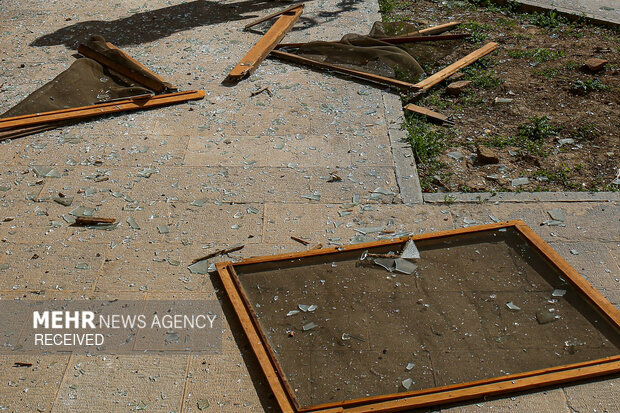
TEHRAN – Iran has formally asked international cultural organizations to take urgent action to protect historic sites, citing growing threats to some of the country’s most important cultural monuments.
According to Mehr News Agency, Deputy Minister of Cultural Heritage Ali Daravi sent an open letter to ICESCO Director Salim M. Al-Malik on Tuesday, calling for immediate legal and diplomatic measures to protect Iran’s cultural assets.
“As one of the world’s oldest civilizations, Iran possesses a vast tangible and intangible heritage,” Dharavi said in the letter, adding that much of it forms part of humanity’s shared historical memory, according to the report.
According to official figures cited in the report, more than 34,000 historical sites are included in Iran’s national heritage list. In addition, more than 100 Iranian archaeological sites are included in UNESCO’s World Heritage List, with 29 listed.
Places highlighted as particularly vulnerable include Golestan Palace, Naqsh-e-Jahan Square, Shah Mosque, Falak-ol-Aflak Citadel, Chehel Sotun Palace, and Safiabad Palace.
Experts warn that damage to such sites, some of which are listed by UNESCO, could have far-reaching cultural and international implications.
In his letter, Dharavi referred to several international legal frameworks, including the 1954 Hague Convention for the Protection of Cultural Property in Times of Armed Conflict, the 1972 World Heritage Convention, and UN Security Council Resolution 2347, all of which emphasize the protection of cultural heritage in times of crisis.
He outlined four key demands: a formal international warning against any attack on Iranian heritage sites, the establishment of a legal deterrence mechanism, the pursuit of international claims against those responsible for potential damage, and the use of diplomatic channels for immediate preventive measures.
Cultural heritage experts say the complaints highlight the global dimension of the problem.
“When Iran, which has a deep history, faces such a threat, it is important not only to protect some monuments, but also to maintain its regional and global historical identity,” said one expert.
He added that international organizations such as ICESCO and UNESCO can play an important role through public statements, monitoring mechanisms and the deployment of experts, which in past cases has helped prevent destruction.
Analysts say many of Iran’s most important archaeological sites are located in densely populated or strategically sensitive areas, adding to the complexity of protecting them.
morning