
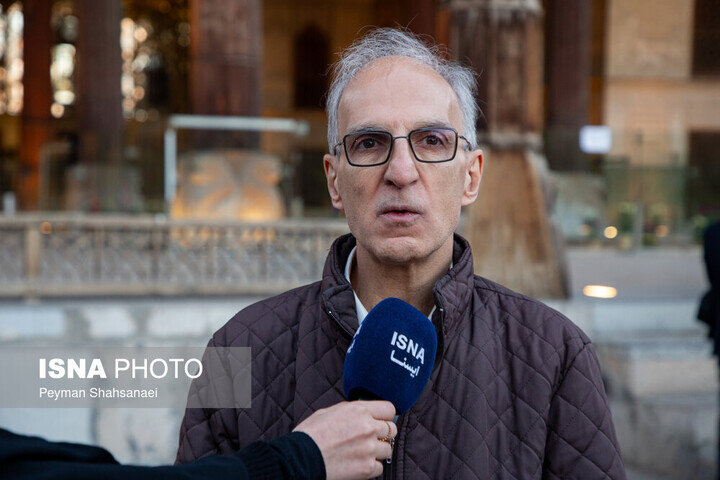
ISFAHAN – A senior Iranian academic affiliated with UNESCO said it is not yet possible to provide an accurate assessment of the damage to historical buildings in Isfahan from recent air strikes and a detailed investigation is needed once the situation stabilizes.
Mehrdad Hejazi, director of Iran’s UNESCO University Network, made the remarks during a visit to several historical sites in central Iranian cities, ISNA reported.
Mr Hijaz said the scale of destruction caused by the US and Israeli invasions was enormous and expressed hope that the damaged structures would be repaired as soon as possible.
“It is currently not possible to accurately assess the tangible and intangible damage,” he said, adding that a comprehensive and standardized assessment would be needed to make reliable estimates.
Hijazi said preliminary observations suggest that damage to heritage sites falls into two main categories: structural and decorative.
“The damage to the structural components does not appear to be as extensive as the decorative elements, but this requires further detailed investigation,” he said.
He added that decorative features, including tilework, wooden ornaments, glass elements, and similar artistic details, are particularly vulnerable because of their lower resistance compared to the core structure.
Experts are particularly concerned about these elements, which are often central to the artistic and historical value of Islamic architecture in Iran.
Hijazi added that restoration work should follow a phased approach, starting with a detailed survey, followed by reconstruction and conservation work. He warned that the process would likely require significant funding.
“Iranian experts, especially those in Isfahan, are capable of meeting this challenge,” he said, adding that international assistance could also be sought if necessary.
He stressed that while medium- and long-term planning would likely be needed to repair the damage, the destruction of nationally and internationally important sites remains unacceptable.
Hijazi also cautioned against prematurely estimating the cost of damages.
“It’s complicated to determine which sites have been hit the hardest,” he said. “In some cases, the restoration of small but complex decorative elements may take longer than the restoration of larger sections. Estimates based on figures at this stage may lead to poor decision-making.”
One of Iran’s most historically important cities, Isfahan is famous for its Islamic architecture, bazaars, gardens, and museums. The city has long been known by the nickname ‘Nesf-e-Jahan’, or ‘Half of the World’, reflecting its historical importance as a center of culture, trade and diplomacy.
Hijazi said that across multiple sites, the level of damage appears to be “significant” compared to the structures themselves, but expressed optimism that repairs are possible with the support of skilled Iranian experts and adequate national resources.
“We hope that by mobilizing qualified experts and domestic support, these damaged monuments will be restored to their original condition at the appropriate time,” he said.
Once a bustling center of international trade and diplomacy in Iran, Isfahan has transformed into one of the country’s top tourist destinations due to unavoidable reasons. Brimming with architectural wonders, including unparalleled Islamic architecture, a vibrant bazaar, a wealth of museums, tranquil Persian gardens, and picturesque tree-lined streets, Isfahan invites visitors to immerse themselves in its charms. Stroll through the maze-like bazaars, relax in the enchanting gardens, and mingle with the friendly locals, offering a glimpse into the rich tapestry of life in this special destination.
morning