
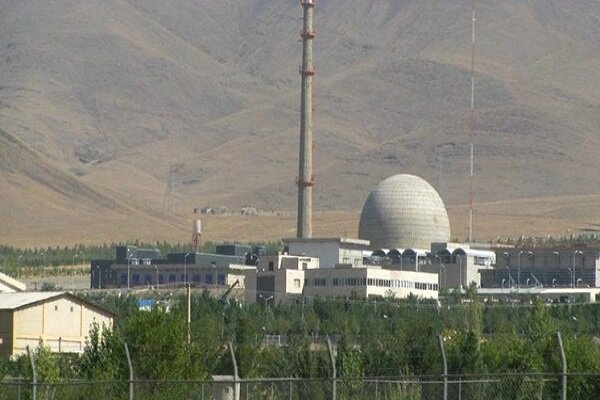
TEHRAN – In an interview with the Australian Broadcasting Corporation (ABC), a scholar specializing in security and nuclear policy in the Middle East, they said they failed whether Israel and the United States were meant to destroy Iran’s nuclear program.
“If the US and Israel’s purpose was to eliminate Iran’s nuclear program, I’m sure they’d failed,” says Sayyed Hossein Mousavian.
Mousavian, a visiting research collaborator currently in charge of Princeton’s science and global security programs, says attacks on nuclear sites are “counterfect.”
The interview text will look like this:
Question: What are you hear from Iran’s ground contacts about the rest of Iran’s nuclear program after the US attack over the weekend?
Answer: There is no doubt that Iran’s nuclear facilities have been attacked, bombed and damaged. Buildings, utilities, and perhaps even some centrifuges were destroyed. In particular, it’s not perfect. But if the US and Israeli goal was to eliminate Iran’s nuclear program, I am sure they have failed. Even if they launch another attack, or another 100 people, they will still fail – because you cannot destroy knowledge and technology. You can destroy buildings, but in the end it will have the opposite effect. Iranians have the expertise and technical know-how to rebuild everything, whether it’s a month, five or six months. So, what is the ultimate purpose of the United States and Israel? Knowledge is already there, so they cannot destroy Iran’s nuclear capabilities. Iran’s goal is to rebuild and return to its previous state. The facts remain. Since the revolution, Iran’s nuclear program has remained peaceful. Iran is a member of the Non-Proliferation Treaty (NPT) and has granted access to the IAEA more than any other member in its history.
Q: The IAEA dives there as it discovers that Iran is in violation of its obligations and that 400 kilograms of uranium is enriched to 60%. What about the peaceful program?
A: What you just said is exactly the story made from the kind of fake we constantly hear in Western media.
Q: This is not from the media. This is directly from the IAEA, the organization you just mentioned.
A: Let me explain. Yes, the IAEA said Iran violated some of its commitments and currently owns 400 kilograms of uranium, enriched at 60%. But that’s only half what the IAEA said. Western media often present half the truth, but the big picture is rare.
Q: So, what are all the stories about 60% 400 kilograms of uranium enriched?
A: I’ll explain it. Finish the first point. Since 2003, the IAEA has issued more than 100 reports and statements over the past 20 years, consistently confirming that there is no evidence of a change in Iran’s nuclear program against weaponization. That’s the number one fact.
Fact 2: Even if such evidence exists, it should be addressed by the UN Security Council, not by a single country. The United States violated UNSC Resolution 2231 and the IAEA protection agreement. In response, Iran reduced its level of cooperation with the IAEA. Increased US sanctions and pressure have led Iran to expand its nuclear program as a negotiation tool rather than building bombs. Enriching uranium to 60% is part of that strategy and aims to bring the US back to the negotiation table.
Iran and the United States had agreed to “maximum transparency, international testing and verification measures.”
Q: So 400 kilograms are essentially a negotiation tip. Do you know if that stockpile moved last weekend before the US attacked?
A: Everyone knows that President Trump withdraws from Iran’s nuclear deal during his first term, laying the foundation for the current crisis. Then, in his second term, he invited Iran to return to diplomacy. Iran accepted. Steve Witkov represented the United States, and Abbas Aragut represented Iran. They held three meetings in Oman and Rome and agreed to the key principles of new nuclear deals. I was informed by an Iranian source that four key principles had been agreed.
Q: Let’s focus on that. What can you tell us about the terms agreed between the US and Iran before the Israeli strike began?
A: First, both parties agreed to maximum transparency, international inspections and verification measures. Iran has accepted the highest standards available worldwide.
Second, they agreed that a 400 kilogram stockpile would be diluted or exported, and to eliminate the potential risk of using it to build nuclear weapons.
Third, Iran has agreed to lower enrichment levels to below 5%. This is within the restrictions on civil use and excludes 60% or 90% enrichment.
Fourth, Iran will work fully with the IAEA to resolve all remaining technical issues.
These four principles were agreed in the first three rounds of talks. Displeased with its progress, Israel launched an attack on Iran.
Q: So let’s ask this. In your view, will Iran remain in a non-proliferation treaty or will it remain?
A: If the US is committed to international rules and norms, respects the NPT, and supports Iran’s rights as with other members, it depends on the US. Iran will also continue to work with the IAEA at the highest level of transparency to demonstrate the peaceful nature of its nuclear program.
Q: If Iran leaves the NPT, will there be an incentive to accelerate its efforts to develop nuclear weapons?
A: Again, that’s why should Iran consider pursuing nuclear weapons if the United States continues to hostility, assassinate, terrorism, and cyberattacks?
Q: That sounds like a threat!
A: It’s a response to a threat, primarily an Israeli threat. Why are you reversing the story? Iran was attacked. Iran did not launch an attack. Israel attacked Iran. The US attacked Iran. Still, are you asking about the “Iranian threat”?