
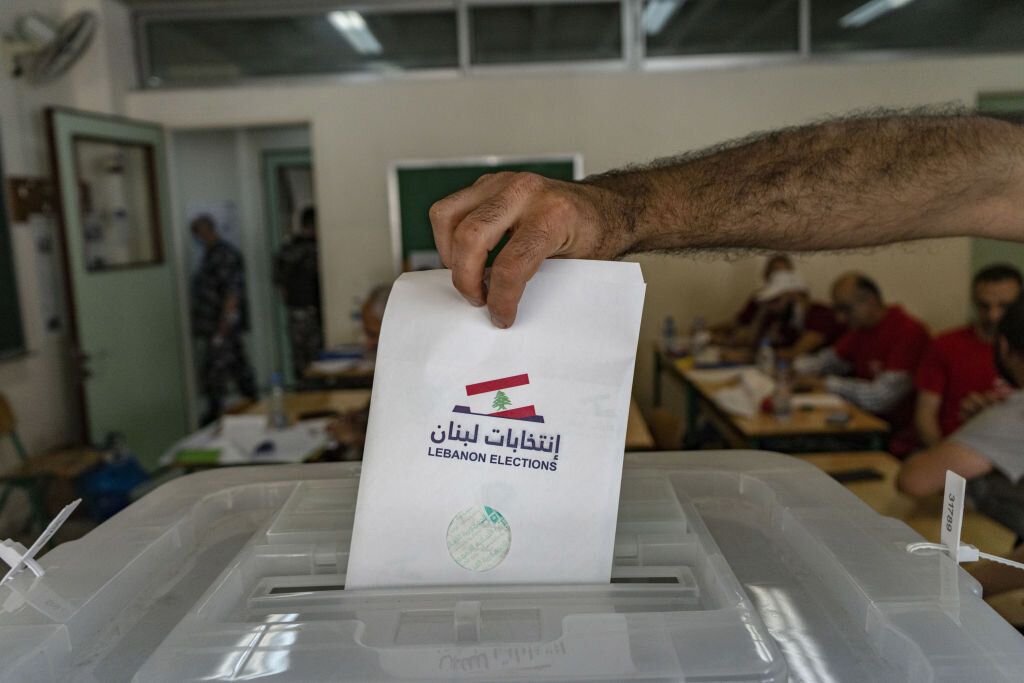
BEIRUT – An anti-resistance team led by the Lebanese military party failed to include it on Monday in an emergency duplication law aimed at allowing expatriates to vote for six seats (all the entire parliament assigned to non-residents on six continents under the current parliamentary election law.
The Lebanese army not only tried to politicize the Parliamentary Election Act (one year before the May 2026 schedule), but also challenged the power of Congressional Speaker Navi Beli to invest in what they consider to be a decline in the axis of resistance in the region.
The Lebanese military is attempting to amend the Election Act 144/2017, which was held in parliamentary elections in 2018 and 2022, in line with political interests. This adds six expatriates (distributed across six continents) to 128 seats, bringing the total number of representatives to 134.
However, as the principle of equal political rights does not extend to overseas Amal Movement voters, particularly as Hezbollah is listed as a terrorist organization in some Arab and Western countries, several parliamentary blocs oppose the Lebanese military monopoly over expatriate votes, as the principle of equal political rights does not extend to voters in the overseas Amal Movement.
Socialist lawmakers have expressed their refusal to change election laws as they are “internal targeting of major sects,” which is “in relation to what is said about the regional peace process that needs to change the reality of Shiite parliamentary representatives.”
They also warned of the risks the proposal would raise in Lebanon, saying, “Changes in election laws must satisfy the aspirations of the Lebanese people, improve representation, not targeting political developments or Lebanese elements, but improved expression.”
During the 2022 session, expatriate votes had a major impact on the outcome of parliamentary elections in favor of anti-resistant candidates, but voters from the Shia duo withdrew for fear of losing their jobs, harassing or harming them.
Political sources representing the US Lebanese diaspora commented on the exploitation of votes by the Lebanese military.
Pressure from the Lebanese army is consistent with a brave call to disarm Hezbollah, which could exacerbate political conflict and derail parliamentary elections!
Before the return of the US Special Envoy to Lebanon Tom Barracks (within the next two weeks), consultations between the Republic’s president, Congress president and three presidents focus on presenting a unified position on the US proposal.
They also emphasize that no additional commitments should be made until Israel takes measures to respond.
Sources warned that Washington would cite many reasons for rejecting this Lebanese response. Perhaps the escalation of the ongoing Israeli attack and the terrorist operations led by the HTS-led regime under the pretext of securing the eastern border between Lebanon and Syria are by securing the eastern border between Lebanon and Syria amid the talk of impending normalization with Mandantel’s demands with Israel.