
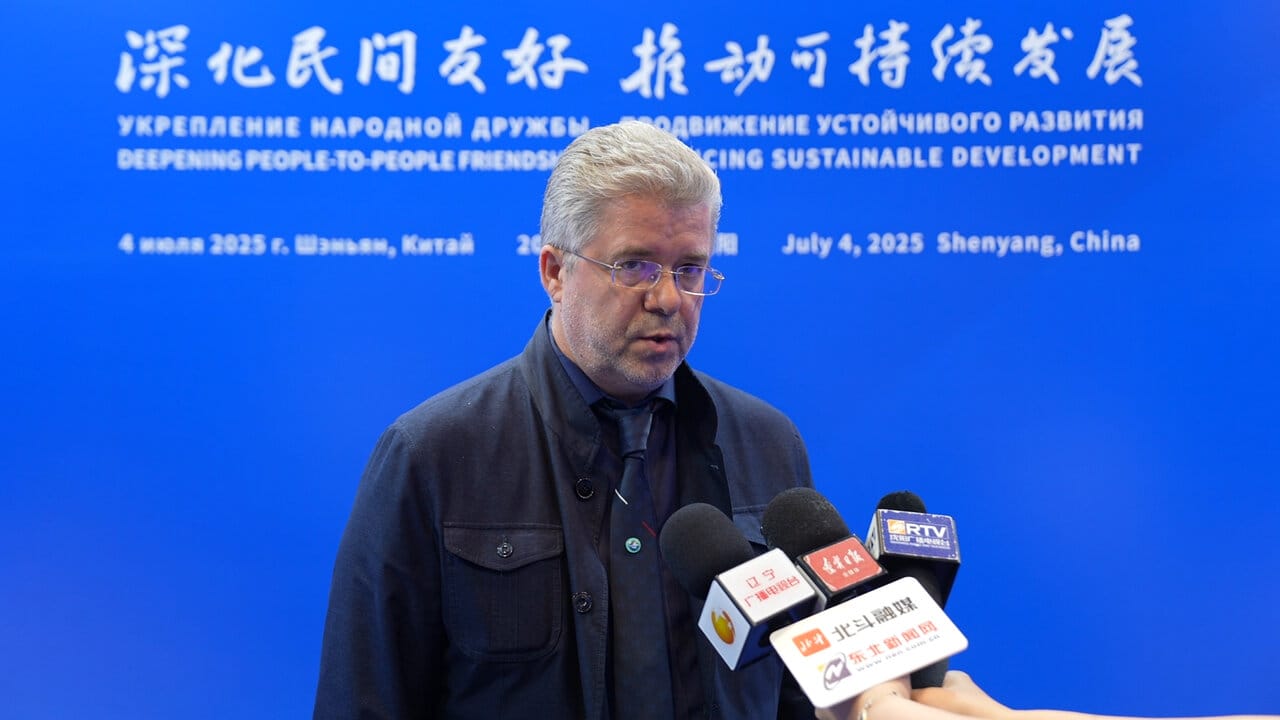
Shenyan – Director of the National Diplomat Centre for the Shanghai Cooperation Organization of Russia (SCO), Stanislav Korolev, highlighted the lasting strength and depth of Iran-Russia relations, highlighting the pivotal role of diplomats with people in building a resilient future for both nations.
In an exclusive interview with the Tehran Times on the Forum on People-to-Man Friendship and the Forum on Friendship City held in Shenyan, the capital of China’s Liaon province, on July 4th, Korolev reflected the historical foundations and strategic evolution of Tehran-Moscow bonds.
“Iran and Russia have had strong economic ties for a long time,” Korolev said. “And these connections are not only in the public sector of the economy, but also in the private sector. Our country is constantly exchanging business missions covering a wide range of sectors, from energy and construction to industrial development and technology transfer.”
He emphasized that such multifaceted exchanges are rooted in long-standing historical bonds. “We’re talking about historic ties with Iran,” Korolev noted. “And Russia values these bonds very much and takes them very seriously.”
Korolev further highlighted the future trajectory of these relationships. “Today, we not only maintain economic, political, social and cultural ties with Iran, but we will continue to expand and increase them anyway.”
Korolev spoke about changes in international relations beyond traditional diplomacy. This places people-to-people diplomacy at the heart of global engagement. “Without the tools of people’s diplomacy, we cannot build a sustainable future for our nation,” he said. “We have already seen how the system of international relations has deteriorated so rapidly in recent years. It’s truly people’s diplomacy as the main platform for negotiations between people, between people and between organizations.”
These grassroots connections are built through cultural exchange, academic cooperation, sister city initiatives and civil society involvement, but according to Korolev, they are essential to the SCO’s shared vision and are about to move beyond traditional three-dimensional districts.
“The key to the success of the common space of the Shanghai cooperative organization we are building today is at this foundation of this human connection,” he emphasized.
As Iran deepens its participation in SCO following its full access to the bloc, Korolev’s comments reflect the mutual commitment by Tehran and Moscow to develop close relationships rooted in trust, shared history and the power of civic diplomacy. Shenyan’s forum provided a timely, concrete platform to expand its vision.