
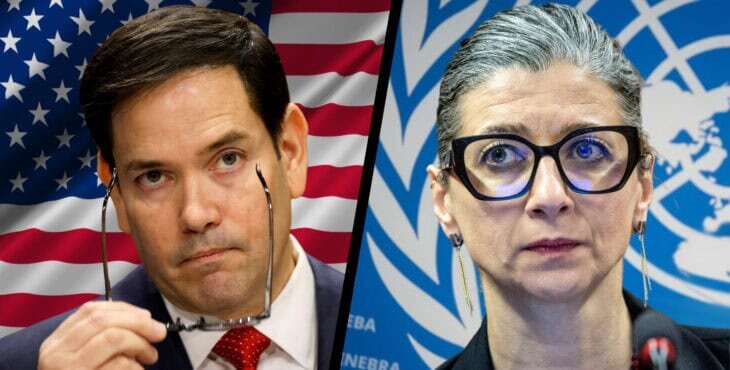
Tehran – The US decision to impose sanctions on UN Special Rapporteur Francesca Albanese on the human rights situation in occupied Palestinian territory sparked global protests and escalating debate over international justice, the independence of the UN mechanism and restrictions on state power.
The sanctions, announced by Secretary of State Marco Rubio on July 9, mark an unprecedented punitive action against senior UN officials due to investigations and outspoken criticism of Israel’s military actions in Gaza.
A ridiculous accusation
Italian human rights lawyer Francesca Albanese is a critic of the voices of Israel’s 21-month military campaign in Gaza, which she characterized as “genocide” and a violation of international law. In a recent report to the UN Human Rights Council, she has appointed more than 60 companies (including major US companies) to be involved in supporting Israel’s military operations and occupation. Albanese is seeking investigation and prosecution by Israel’s International Criminal Court (ICC) and related US officials and business leaders.
The Trump administration justified the sanctions by citing its February 2025 executive order of engaging in “biased and malicious activities,” “embarrassing anti-Semitism,” and “supporting terrorism.”
She further allegedly sent “blackmail letters” to American businesses to encourage ICC prosecution. Sanctions prohibit the Albaneseans from entering the United States and freeze any assets she may hold in the country. The move follows previous US sanctions against ICC officials after the court issued a warrant for Israeli Prime Minister Benjamin Netanyahu and his war minister Joa Garant.
Global response
The UN leadership has quickly condemned the sanctions. UN spokesman Stephen Dujaric called them “unacceptable” and warned that they had set a “dangerous precedent” that undermined the independence of UN experts. Jurg Lauber, president of the UN Human Rights Council, highlighted the essential role of the Special Rapporteur, urging all states to avoid threats and retaliation. The Special Procedure Coordination Committee has condemned the US actions as an attack on the UN core values.
Human Rights Watch and Amnesty International described the sanctions as an attempt to “silence UN experts to do her job,” warning that such measures would threaten the international accountability system for serious abuse. Civil society groups around the world gathered to support Albanese and warned that the move could cool Palestinian advocacy for rights and justice.
Switzerland, through its UN ambassador, Jurg Lauber, sought the restraint and respect of UN experts’ independence. Other governments expressed concern about the precedent set by the US, fearing it could erode international human rights protections.
Tehran’s response was particularly strong. Esmaeir Baghihai, a spokesman for the Iranian Ministry of Foreign Affairs, denounced the sanctions as an attempt to “control the truth through sanctions.” He highlighted the harsh contrast between the warm reception and warm welcome of Israeli Prime Minister Netanyahu received in Washington despite an ICC arrest warrant. Baghaei describes US actions as “mafia blackmailing techniques” and highlights Iran’s Western views of double standards.
Francesca Albanese’s reaction
Albanese rebelliously rejected sanctions, calling them “indecent” and reminiscent of “mafia blackmailing techniques.” She argued that sanctions would not block her “quest to respect justice and international law,” and urged the international community to “stand together” against actions to silence human rights advocates. In an interview, she reaffirmed that she is committed to exposing serious violations and retaining all those who committed those violations, regardless of political pressure.
Nobel Peace Prize nomination
Francesca Albanese, along with her colleagues, was officially appointed to the 2025 Nobel Peace Prize, along with her colleagues, in recognition of her courageous work in defending peace and justice, especially in Palestine. Supported by multiple petitions, her appointment highlights Nobel’s values, including courage, dignity, and conflict resolution, and her fearless devotion to concrete human rights. Facing political opposition, the Albanians remain determined, despite her condemning her bias and support for terrorism, but the Albanians remain staunch. Her report denounces actions in Gaza as genocide and calls for an immediate ceasefire.
The Nobel Peace Prize was announced on October 10, 2025, raising awareness of her important role in international human rights.
An important turning point
Sanctions on Albanese raise serious concerns about the weaponization of unilateral measures to silence the objections. By targeting UN experts for her mandatory work, the United States risks legalizing similar behavior by rog-harmed countries.
The timing coincided with Netanyahu’s visit to Washington suggests a strategic alignment with Israeli interests, particularly as it faces ICC’s arrest warrants against leaders. The lack of transparency regarding the scope of sanctions and the reliance on ambiguous accusations of “anti-Semitism” further erodes their legitimacy.
Furthermore, the US move contradicts the stated commitment to the rules-based international order. By punishing Albanese for its involvement with the ICC, the United States undermines its undermining the broader framework of court independence and international justice.
This coincides with a pattern of selective human rights enforcement, where challenged voices are suppressed while violations by allies like Israel are protected. Sanctions also distract from substantial issues raised in the Albanese report, such as corporate accomplices in the profession and the humanitarian crisis in Gaza, which calls for urgent attention.
The move risks eroding the UN’s human rights mechanisms and promoting other states to target independent experts. As the international community tackles the victims of Gaza’s conflict, the focus should shift from critic silencing to addressing the root causes of violence and ensuring accountability for all parties.
As the international community tackles Israel’s horrific crimes in Gaza, the focus should shift from critic silence to bringing Gaza war criminals to trial.