
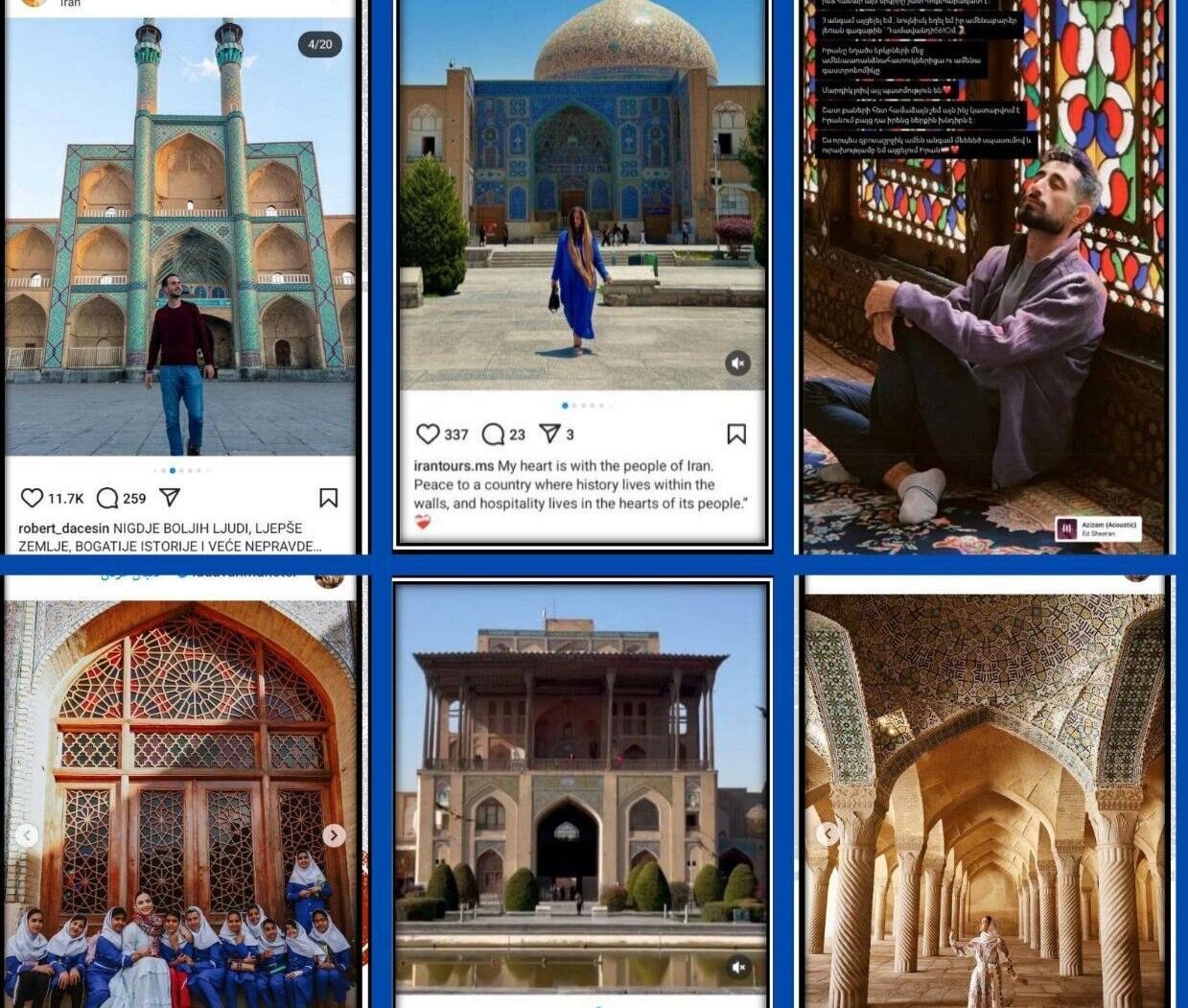
Tehran – Some first-person stories have emerged, not from Tehran’s official media or national broadcasts, but from the mouths of foreigners who have visited the Islamic Republic, as they somehow settled from the 12-day Israeli war with Iran that erupted on June 13, 2025.
These individuals – journalists, social media influencers, documentary filmmakers, cultural ambassadors, and more, have found not only eyewitnesses, but also racist of Iranian civilian resilience and rebelliousness.
Their comments are reflected through “Talking about the World About Iran,” a comprehensive initiative launched in 2022 by Iran’s Islamic Cultural Organization (ICRO).
When Israeli fighters attacked key facilities in cities such as Tehran, Tabriz, Shiraz and Isfahan, foreign guests observed that daily life continued amid rising flames and incredible blows.
So far, it has hosted 180 influential figures from 28 countries, including Spain, Tunisia, Serbia, Bosnia, Russia and Indonesia. They share a perspective on the conflict in which the Zionist regime runs air forces in many homes and hospitals among other civilians.
Cafes and restaurants remained open, people commute to work, and social interaction continued.
Alaa Chebbi, a well-known Tunisian television host in Tehran at the beginning of the conflict, described the Iranians as “resilient, sophisticated and courageous” and returned home to share observations with over 5 million viewers.
Chebbi emphasized that despite decades of sanctions, the country’s infrastructure will “rival” its “European rivals.” The people of Iran are truly noble. They continued their lives with incredible calm, he said, even during missile strikes.
His message, which is widely seen and shared in the Arabic media, reflects an anti-narrative to Iran’s depiction of the West as a vulnerable and isolated nation.
Bosnian blogger and cultural commentator Robert Dathesin shared archived footage and photos of his recent visit to Iran during the conflict. “I have never seen such kind people, such beauty, and such rich history anywhere else. But other countries have not faced such injustice,” he wrote.
Some participants used social platforms to challenge what was deemed global hypocrisy and indifference, particularly regarding Israel’s actions in Gaza.
Serbian national broadcaster Lanka Jaccik wrote frankly on Facebook: Her post not only praised Iran’s bold attitude, but also criticised the moral bankruptcy of the state in line with Western power structures. “Civilization did not begin with the United States or Israel — a symbol of greed and militarism,” she declared.
From Spain, journalist Carlos Paz has published a tweet that has earned over 211,000 views on X (formerly Twitter). His message was, “Libya was dangerous and destroyed. Palestine is slaughtered because it was dangerous! Iran was bombed because it was dangerous! The danger is Israel.” His commentary, caught up in geopolitical critique, strongly resonated with anti-war audiences in Latin America and Europe.

The program also encouraged interest from television networks and film producers who were keen to explore Iran’s artistic and historical wealth.
As organizers stated, “Talking about the World About Iran” was originally intended to combat Iranphobia and misrepresentation in global media.
Supported by several national agencies (IRIB), including the Ministry of Foreign Affairs, the Ministry of Culture and Islamic Leadership, the Ministry of Intelligence and the Iranian Broadcasting (IRIB), the programme promoted a direct encounter between foreign media figures and Iranian culture, society and politics.
According to the ICRO, participants visited various parts of Iran and worked with citizens to investigate cultural, historical and technical assets. The program highlights unfiltered experiences with official messages and has become a powerful tool for cultural diplomacy.
Many of these visitors, already familiar with Iran’s complexities, rejected simple wartime framing, perpetuated by mainstream media. Instead, they acted as informal spokesmen, using their own credibility and reach to amplify Iranian perspectives. Often, their content has reached millions.
Officials behind the initiative emphasize that the key to its success lies in sustainable cooperation across government and non-governmental sectors. “Cultural and media diplomacy is not an option. It’s essential,” an ICRO official said. “In today’s world, the image of the country is the most strategic asset.”
If Iran continues to invest in initiatives such as “Telling the World About Iran,” experts suggest that it can reconstruct its global image as well as its political leverage, especially in non-Western blocs where the narrative is more fluid and less dictated by Western media giants.
As the world reflects in a 12-day war, solidarity expressed by these international voices offers Iran more than moral support – it shows the rare diplomatic success achieved not by military forces but by the power of narrative, living experiences and cultural connections.
morning