
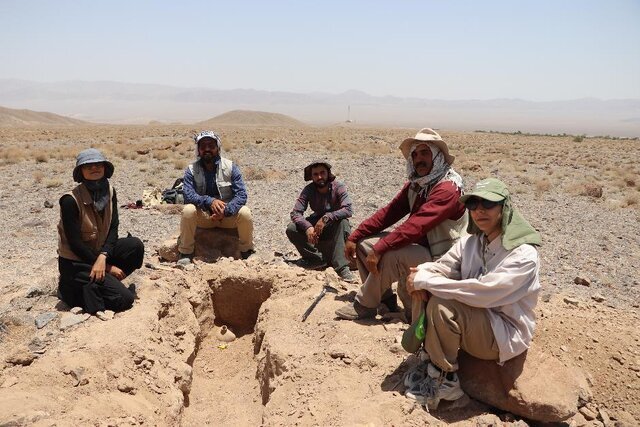
TEHRAN – A group of Iranian archaeologists identified 1,793 graves on an area of 1,000 hectares in Yazd province during a month’s exploration. Approximately 90% of the graverooms reportedly were destroyed by illegal excavation.
Archaeologists believe that the ancients of these tombs were discovered in some of them during the Parthian period, Isna reported.
The Research Institute of the Ministry of Cultural Heritage has declared that an intensive survey and trenching project has been carried out at Kabijang Cemetery in Behabad County, Yazd State, declared financial support for Behabad Municipality and permission from the Institute.
The archaeological trench was held at the same time as a 12-day Israeli war with Iran and continued uninterrupted.
Mohammad Hossein Ajitzi Haranagi, who led the exploration at the site, said the project was implemented during the war despite pressures over group members and concerns about future incidents.
He continued that Yazd is one of the least known states in terms of archaeological research. He added that there is little information about the state’s cultural history period.
The reason for this is perhaps the extraordinary richness of Yazd’s historical texture and monuments, which he said is what attracts all the attention.
However, the lack of publicity for the results of archaeological research in Yazd State could be one reason for the lack of attention from the authorities in conducting such research in the state, he added.
Azizi Kharanaghi also said that Behabad is no exception to this rule and has little knowledge of the cultural and historical sequences of human settlements in this county.
Despite the continued and frequent follow-up of cultural enthusiasts and local officials, the cemetery was never placed on the National Heritage List. This has led to an increase in fraudulent excavations in this area.
Unfortunately, the structure and shallow depth of the tomb, and the structure of the soil around the tomb and the area makes it easier to penetrate moisture and water into the tomb inside, and in some cases there are few human skeletal remains, and in some cases, long bone wear and crushed shells remain.
Items buried in the tomb include one or two clay containers at the top of the head and feet of the burial, as well as small bronze objects containing bracelets, rings and stone/glass paste beads.
He said local officials from the Behabad and Yazd Cultural Heritage Department are working together on the project.
KD