
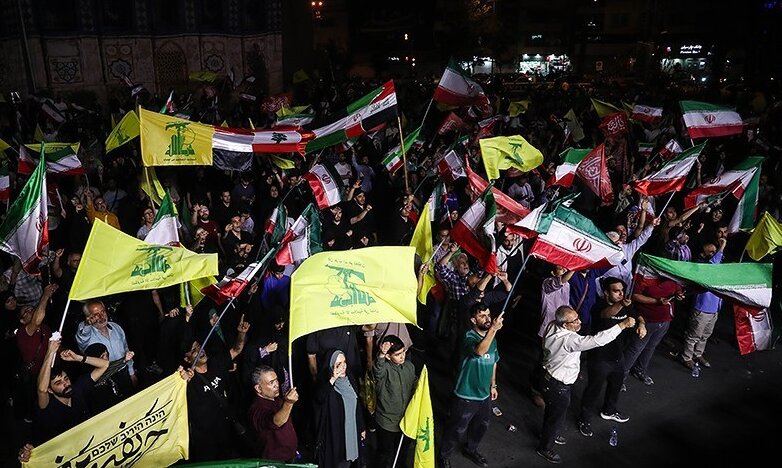
Shanghai – Last June was one of the most awful attacks on sovereign states in its modern history and witnessed one of the biggest military conflicts in recent human history. National characters always appear in big events, with the next three being particularly demonstrated in the 12-day war, along with others. Countries facing challenges, difficulties and adversity can become even stronger.
Such a character at the beginning should be a spirit of unity. Iran is a country with a diverse society, and political debate is part of everyday life. However, history says Iran is also a country with a very strong unity spirit in the face of external threats. The more serious the attack, the more Iranians will exhibit a spirit of unity.
The 12-day war was a good witness to this very spirit of unity. Shortly after the attack occurred, Supreme Leader Ayatollah Ali Khamenei vowed “severe punishment” for the attack on June 13th. President Pezeschkian said, “There is no difference, knot, anything that has problems. Today, we must put them all aside and protect unity and cohesion against this genocide aggression with strength.”
Politicians from different government agencies and faction were united in one voice in opposition to the attack. According to some personal WeChat communications, ordinary Iranians were willing to help each other, especially after Donald Trump threatened an unconditional surrender by Iran. Neighbors were willing to share with each other’s food, shelters and vehicles during some confusion.
Second such a character must be patriotism. In the past decades, we have seen several military conflicts in other parts of the world. It was widely reported that citizens of some countries in the invasion would choose to flee their country for the sake of personal safety. On the contrary, the Iranians demonstrated a completely different story.
An Iranian girl staying in China began her journey to Iran shortly after the outbreak of war. Knowing that all the airlines had been cancelled, she chose to go to lanzhou first and then to Ulmki. She believes Ulmki is close to Iran, and once she arrives in Ulmki, she finds a way to return to Iran. According to her Tiktok blogger, she finally returned to her Tehran home via Mashhad shortly after the ceasefire.
On June 18th, I was in Türkiye for the Science Council while the war continued. It was said that Turkish Iranian citizens departed for Iran while some foreigners fled Iran for Turkey. They just wanted to be part of the state’s struggle against attacks.
There was another story about an Iranian journalist. Mohsen works for a media outlet in China. Shortly after the war broke out, he sent his family to his hometown near the Caspian Sea and returned to Tehran with his colleagues. It was because of his work that real news from the ground in Iran became available to Chinese audiences.
Patriotism is a kind of human emotion and ideology, sitting deeply in the mind and not very visible in everyday life. The common experiences of being attacked stimulated emotions. All these stories of ordinary Iranians well demonstrate the patriotic nature of the Iranian people.
The third should be a character of courage. When I was visiting Iran in October 2023, a senior Iranian scholar told me that a person is defined not only by appearance and status, but also by the embodied three essential elements: physical fitness, mental strength and mental courage. Scholars like mentors meant that humans should have a courageous character in resistance to aggression or other types of injustice.
Iran’s struggle in the 12-day war also revealed the national character of courage. Donald Trump threatened Iran to surrender unconditionally, but the Supreme Leader assured that Iran would never surrender. Military generals were well aware of the possibility of being a new target for assassination, and showed they were not hesitant to fill up the military positions left behind by those who taught the assassination. And millions of ordinary Iranians remained in horribly different positions, regardless of bombing or explosion.
In addition to the characters mentioned above, Iran’s response to the attack is very impressive, indicating that the Iranian Islamic system is also very effective and efficient. The Iranian general was assassinated on the very day he was assassinated as soon as his remaining position was replaced. It was also precisely that day that Iran was able to launch a counter strike against attackers. Iran’s Islamic system suggests it works very well with the loyalty of political elites.
A few days after the initial shock, Iran regained its foothold and launched retaliatory measures in a calculated and disciplined way, demonstrating the resilience of both the Islamic system and the country in the face of external attacks.
Overall, Iran could grow stronger after the latest heroic resistance. This is because the nations become more cohesive and the system becomes more efficient. The new practice of resistance adds a new part to the wisdom of Statecraft as a civilized nation-state. As the Chinese proverb says, the country is more adversity.
Dr. Jin Liangxiang is a senior fellow at Shanghai International Institute (SIIS).