
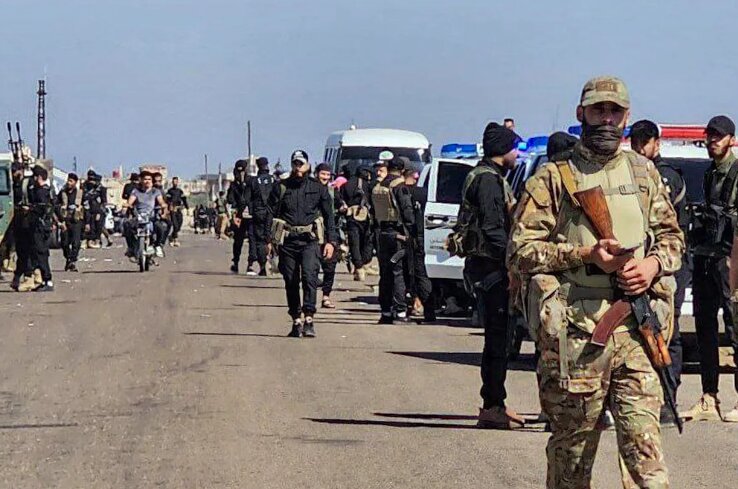
Tehran – Israel has been intensifying its military operations in both Gaza and Syria in recent weeks. Since then, the entire international community has been in total panic.
Tel Aviv officials portray the attack as a measure of protection for Israel and minorities, but when viewed well, it shows that vicious hands are at work.
There is growing concern about Israel’s deepening involvement in Syria. There, military action is increasingly seen not as mere deterrence, but as a broader strategy tool for reconstructing the strategic landscape of the region.
Fatal Situation in Syria
After the collapse of the ceasefire between the Syrian army and the Sweeda Druze militia, southern Syria became a fresh front for Israel. More than 100 Druze civilians were killed in the cross-section collision, which was cited as justification for Israeli intervention.
Israel claims it is trying to protect Druze by referring to its relationship with the Golan Heights community, but analysts have fought that and instead point to an increase in civilian casualties and evacuations produced in Sweida and Dara by Israeli airstrikes.
Nevertheless, with few reports of casualties from either Israel or Syria, the exact figures remain unknown, but humanitarian agencies are standing to confirm that dozens have been killed and injured in the past few weeks. They also complain that Israel is making sectarian tensions even sharper, rather than securing and stabilizing the region.
Eradication of Syria’s military infrastructure
The broader objectives behind Israeli operations in Syria seem to be increasingly focused on eliminating the remainder of Syrian military capabilities. Since the collapse of Bashar al-Assad government in late 2024, Israel has launched more than 350 airstrikes on Syrian territory. These attacks target key military assets such as missile storage facilities, air defense systems and naval infrastructure.
Regional security experts and multiple independent sources show that 70% to 90% of Syria’s former military infrastructure is currently being destroyed. This goes far beyond deterring potential threats. This represents the preemptive dismantling of Syrian ability to re-emerge as a strategic actor. Some observers characterize this as a form of war that aims to ensure permanent fragmentation and crippling of the Syrian state, as well as the national target.
Strategic interests disguised as humanitarian concerns
Israel’s emphasis on protecting the Druze community in southern Syria has encountered widespread skepticism. The common ethnic ties between the Israeli druze and the Syrian druze may retain certain cultural truths, but it is the geopolitical convenience of this story that makes analysts more persuasive.
Arab affairs expert Hassan Hanizadeh argues that Israel is exploiting local sectarian grievances as an excuse to deepen its military operations and advance strategic footing in southern Syria. He argues that the campaign aims to pressure Syria’s de facto leadership under Ahmad Sharya (Abu Mohammad al-Jurani) and encourage separatist movements among ethnic and sectarian minorities.
Hanizadeh has identified Druze, Kurds, Turkmen and Alawis as communities attracted to the growth project that benefits Israel and the American interests by ensuring Syria does not return to their unified sovereign actor status, but as the community is drawn into the fragmentation project.
Regional Planning for Fragmentation and Control
Analysts further argue that Israel and the US are jointly pursuing a regional strategy designed to divide Syria into smaller, ethnic and sectarian states. This redrawing of boundaries and the destruction of centralized power structures is of great importance not only due to the integrity of Syrian territory, but also the wider stability of the Levant.
In support of this larger vision, the US is reportedly promoting the mobilization of 15,000 extremists near Lebanon, aimed at inducing Hezbollah and raising cross-border tensions. Meanwhile, Hanizadeh suggests that Jurani may be engaged in secret negotiations with Israel under the framework established by the Abraham Agreement. In return for financial support and political recognition, Jurani may agree to abandon Syrian historical claims against Israeli-occupied Golan Heights, effectively isolating Hezbollah and undermine Iran’s influence in the region.
He also points out how erosion of Syrian traditional military structures is faithful to the Assad government, empowering the Takfiri militia under Jurani’s control, and further altering the dynamics of internal forces that are tailored to Israel’s strategic interests.
Humanitarian disasters in a strategic war game
Both Gaza and Syria endure severe humanitarian crises exacerbated by ongoing military and political manipulation. Israeli airstrikes in Syria, particularly around Sweida, have caused massive displacements, cutting thousands of people out of critical aid.
Targeting evacuation centres, hospitals and major roads is crippling humanitarian efforts, along with warnings from international organizations about hunger and illness if attacks continue. Despite the escalation of the crisis, many Western governments have largely remained silent, effectively enabling Israel’s aggressive military strategy.
Critics argue that Israel will use the use of air forces and proxy militias to control southern Syria to deepen instability and promote radicalization. Israeli operations go beyond immediate security concerns and instead aim to rebuild regional alignment through Syrian internal dynamics and alliances with sectarian groups. This burden is falling most heavily for civilians in the majority of Druze regions captured amid the collapse of Assad’s government, the rise of Takfiri militias and sustained foreign intervention.