
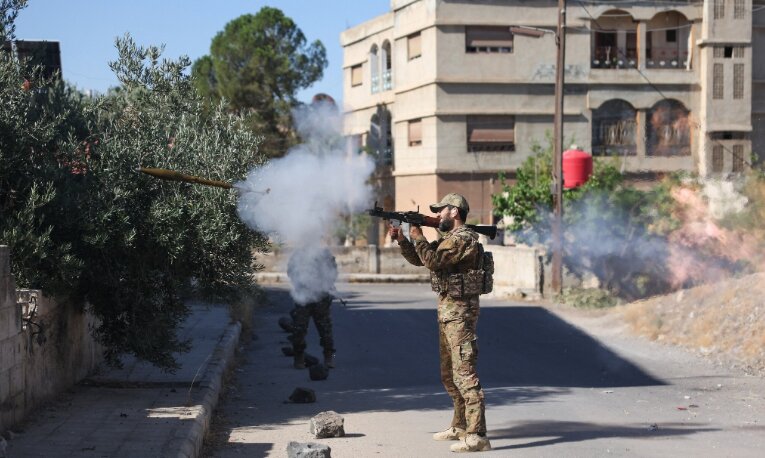
Beirut – There are increasing signs that the current structure of the Syrian government is no longer useful for Western interests. By entering Sweida, factions operating under Syrian government forces showed that they were certainly out of control.
Syrian leaders apparently believed that by responding to Israel’s demands, the faction could act freely on Sweida. The assumption was that mutual interest between Israel and the Syrian state would outweigh the relations between Israel and the Druze. That calculation failed.
This situation provides clear lessons. Actors who are allied with American and Israeli professional organizations should understand that they are disposable. Just as these forces raise local troops to serve their agenda, they abandon or undermine them when they fit their interests.
No matter how much the Syrian government accepts Western demands, it is not considered a reliable tool if it proves that it cannot control the armed groups below it. Chaos is useful to the West if you want to direct your target. However, Israeli occupational organizations cannot stand the chaotic or factional situation in their backyards. What we are seeing now is that the sectarianism within these factions outweighs the Syrian leadership ability to contain them, revealing a major loss of authority.
Despite meeting Western demands, Damascus shows that it cannot contain these chaotic elements, which could threaten the very interest the West is trying to protect. In such cases, the West would prefer to deal with the included enemies rather than allies with the uncontrolled militia. Therefore, the West may be considering alternatives. It shows the ability and ability to redirect it, actors who can achieve their goals and control loose situations.
In a recent speech, the Syrian president framed the Syrian path as a choice of continued war and internal peace, expressing his preference for the latter. However, the statement serves as a signal to Israeli occupation. “I am fully prepared to meet your demands.” The effective handover of Sweida to Israel marks a turning point. From just 10 km outside Damascus, passing through Kneitra, Daraa and Svaida, Israel now retains its de facto influence justified through the existence of uncontrolled factions on the ground.
The immediate question now concerns who will control Damascus if the central government falls. In the case of collapse, the situation can become even more unstable. The Kurds in the northeast are located to assert themselves against the Turks in the north and the Israelis in the south, under American support. Denominational militias do not remain passive. Rather, we can expect a fierce conflict as all factions and their foreign supporters compete for power.