
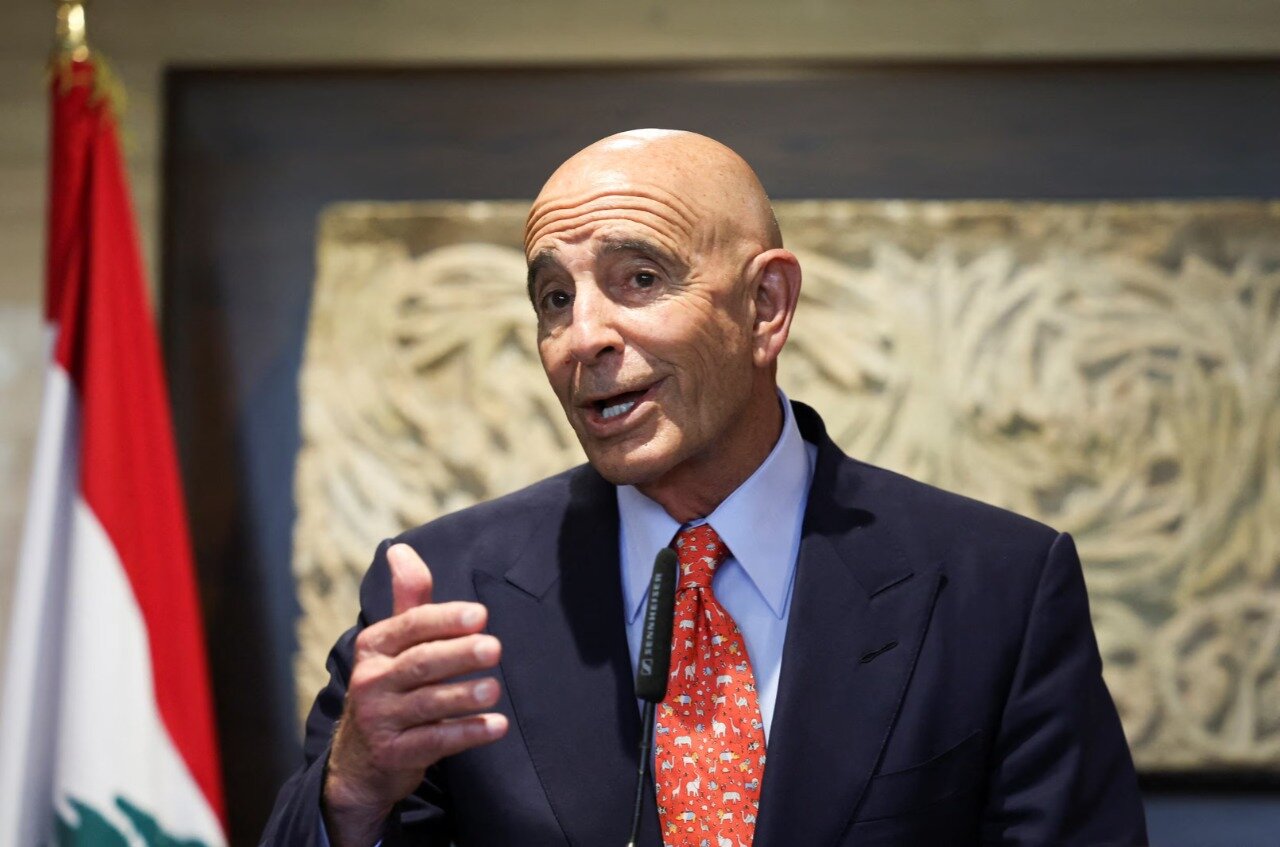
Beirut – Since his first visit to Beirut, US envoy Thomas Barrack has repeatedly turned around. He affirmed his commitment to UN Resolution 1701 and proposed an American “solution” that Lebanon responded by prioritizing halting Israeli invasions, withdrawing from occupied territories and liberating Lebanese prisoners.
Meanwhile, Kan Radio has revealed the existence of a secret high security wing within the Ayalon prison where Lebanese prisoners are being detained along with Palestinians.
A secret detention center called Rakeft is built underground and features the latest surveillance technology and strict security measures.
According to Hebrew radio, security guards use numbers-only coded cards to protect security and personal identity, rather than being identified by name.
Lebanese and Palestinian detainees are deceived within these confinement cells and are only allowed for an hour in small, enclosed concrete yards with limited sunlight.
During that time, communication or conversation between detainees is prohibited. Time is allocated for showers, cleaning and walking.
Detainees are also not permitted to leave their secret wings to meet with lawyers, get medical treatment or attend court hearings.
On the wall is a large placard of carpet bombed Gaza, entitled Arabic: “New Gaza.”
Earlier this month, the Palestinian Prisoner Intelligence Agency recorded shocking testimonies of systemic torture in Israeli prisons.
According to those he met, Thomas Barrack was “very strict” and repeatedly reiterated that Hezbollah was a “terrorist organization” that Washington would not negotiate.
Barack explicitly declared that Washington cannot provide the guarantees Lebanon is seeking, saying, “We cannot force Israel to do anything.”
Furthermore, US envoys argue that while Washington uses its influence and leverage to reach a “solution”, the problem rests solely on the Lebanese government and political forces, he is tired of “fighting” and seeking “understanding and peace with his neighbors.”
Barack also threatened Lebanon and said that if the government does not make a unanimous decision to disarm Hezbollah as soon as possible, Washington “cannot impose anything on Israel and prevent it from doing anything.”
In parallel with the US claims to disarm resistance, Hezbollah continues to question US policy announcements. It explains that it promises to help you find the solution “empty” and “empty”.
Sources within the Tripartite Committee – President Joseph Ounu, Speaker of the Congress Nabi Beli and Prime Minister Nawaf Salam acknowledged the common commitment to prioritizing internal dialogue. On a matter of national interest, officials agreed to the Barracks proposal, avoiding a detailed discussion.
In this context, the National Front for Salvation in Lebanon (a coalition of Lebanese parties) warned the Lebanese government in a joint statement to the pressures of barracks that “allowed Syrian lands and airspace to invade Israel’s enemies, leading to a catastrophic civil war.”
The NFSL has shown that these facts “need to be carefully considered to prevent the government from following the example of the new Syrian regime.”
NFSL added: “It is not resistance that is preventing the establishment of a state in Lebanon. Quite the contrary, it was the absence and its refusal to fulfill its obligation to protect its homeland to force the people to attack, kill, destroy, and enforce the establishment of resistance in light of evacuation in which they are subject to shelters.”
It concluded the statement: “If anyone wants to resolve exclusivity to the state, if it is sincere, then resolve the problem of building a state and do not demand the destruction of resistance.