
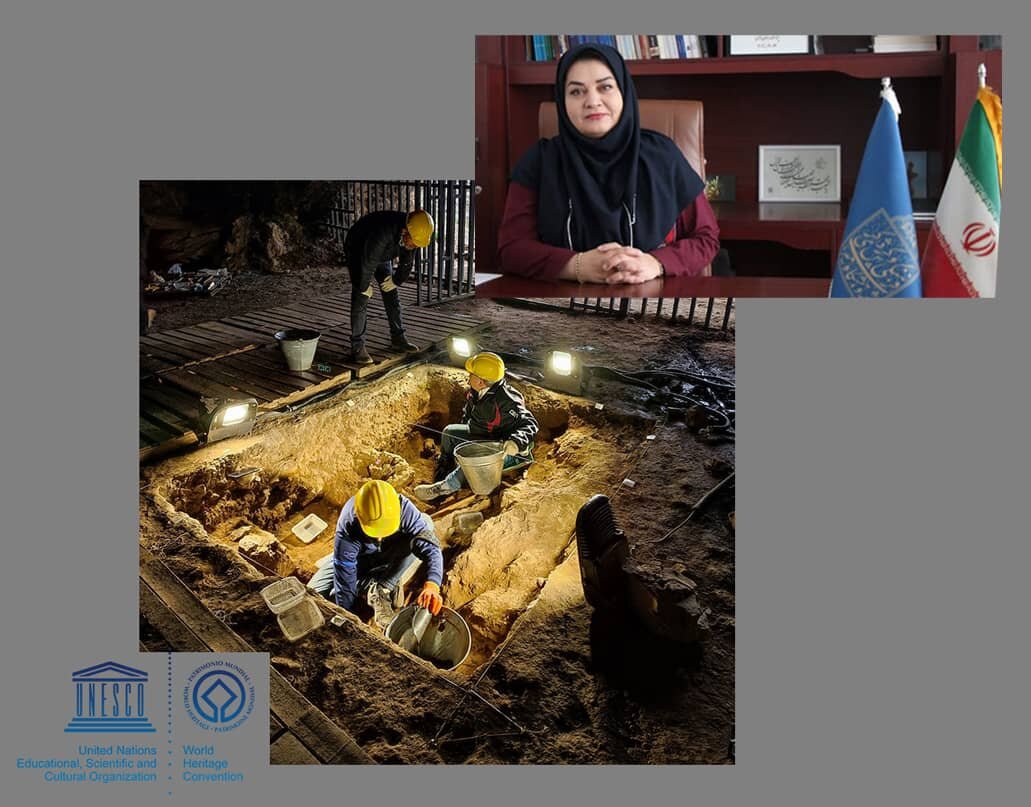
Tehran – The recent inscriptions on the Holamabad Valley prehistoric site on the UNESCO World Heritage List are a significant achievement for Iranian archaeology, imposing over 50 years of dedicated research and excavation.
In an interview with Tehran Times, Dr Masoumeh Mosala, director of the Iranian Centre for Archaeological Research (ICAR), highlighted the importance of UNESCO designation.
“This designation is a groundbreaking achievement, examining the lasting importance of archaeological research and highlighting the important role of discipline in gaining international recognition and ensuring long-term protection of ancient sites.”
“The inscription reflects over half a century of systematic excavations and scientific research,” she emphasized.
Speaking about his efforts to develop professional files for UNESCO nominations, Mosala said:
The site is engraved in UNESCO Standards (III) and recognizes outstanding testimony to the cultural traditions of early modern people. Dr. Mosala emphasized the importance of important findings, including perforated shells from the Jafe Cave and deer tooth ornaments (40,000-30,000 years ago) and recent evidence of Neanderthal occupation at the Gamali Cave. These findings demonstrate a high level of cognitive and cultural complexity that can only be revealed through rigorous archaeological sciences, she added.
“Making a successful UNESCO nomination is not a management challenge, it’s an academic achievement,” Mosala said.
“Deep expertise in stratigraphic, material culture, and both regional and global contexts is required. Only archaeologists can integrate decades of data, clarify its importance, and effectively respond to technical assessments.
She also highlighted the strategic strength of multisite nominations rooted in archaeology. “By presenting a network of caves and rock shelters, Neanderthals, early Homo sapiens and subsequent occupations, Holamabad’s nomination provided a cohesive narrative of human existence.
Dr. Mosala confirmed that this achievement raises Iran’s profile in the world’s Paleolithic heritage and works with major countries such as France and China. However, she warned that the status of the world heritage is just the beginning. “International recognition has a responsibility to protect these sites and deepen interdisciplinary research. This is an opportunity to boost the frontier of understanding human history in Zagros.”
In conclusion, she called for increased collaboration and sustained investment. “Khorramabad Dossier’s success sets the norm, showing that long-term, high-scoring archaeological work is linked to expert engagement in the heritage process.
morning