
Tehran- Abdullah Jendeia, 19-year-old, can’t fill the stomach, but the restless dream left the house in Arsabra, who was abused by her mother when the afternoon heat settled down.
“Eat what we have left,” pleaded his sister Nadoreen. But hunger is its own tyrant. For Abdullah and his brother, there must be a need. They begin their long trekking, passing through ruins and military checkpoints, heading towards the faint promise of aid truck rumored to arrive once a week.
The gambling was unraveled in Netzarim Corridor (militarized zones slice Gaza in half). As they were waiting with dozens of other people, Israeli soldiers fired. By the time midnight fell, Nadoreen’s phone rang with devastating news: Abdullah was gone and his brother was injured.
“It was a joy to be around,” she whispered later, holding back memories of a sunlit afternoon on Gaza beaches long before hunger replaced laughter and football. He once dreamed of carrying his shop after the war, but even his dreams became extravagant.
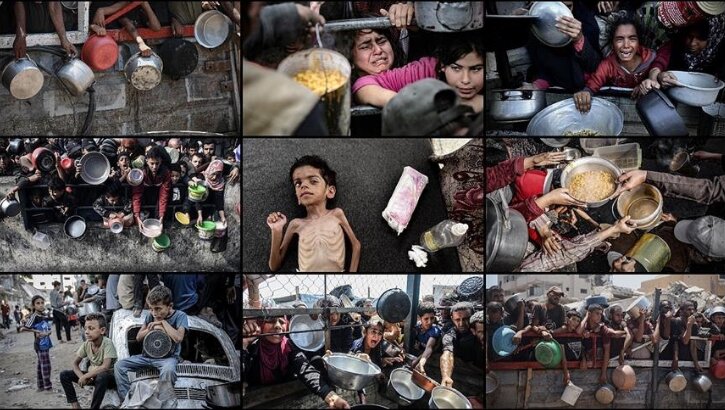
The story of Abdullah is not a peculiar tragedy. You will pass through the hallway of the Patient Friends Hospital in northern Gaza. There, Dr. Lana Sobo passes her path between rows of skeletal children, their bodies now silent in hunger that no longer offers mercy.
Normal treatments (nutritional formulas and therapeutic foods) disappeared from the shelves and were replaced by makeshift treatment and mother’s prayers. Five children died in just four days, and for the first time, even the sickly-free people were in vain right in front of their mothers.
“There is no word that we are facing the disaster we are in,” Dr. Sobo confesses, yelling heavily in fatigue and despair. “Children are almost dying in front of the world… there’s no more ugly or horrifying stage.” Some children are too weak to cry. Others have lost even the power of pain.
In Shati refugee camp a few miles away, Naima Abu Hur gently lifted his two-year-old son Yazan. His arms are hanging, limp and skeleton, each rib and vertebrae visible through the thin skin of paper. His brother watches his mother try to evoke food from nothing. Two eggplants boiled in water for three days. “The doctor says we should feed him,” says Yazan’s father Mahmoud.
“But there’s no food.” For hours, Yazan lies on the floor, weak enough to play, and there’s no reason to cry. Mahmoud holds his son’s frail arms, and Yazan simply escapes between his fingers, mourning without resolving.
On the cracked pavement of Khan Younis and Rafah, the hunger results are obvious. Women in their 50s are falling apart and are unable to gather the energy to walk. “I just wanted bread for the kids,” she whispers as a stranger tries to revive her with the water. A single panty stretch line for blocks. Once a birthright, bread is a myth that is now traded on the black market for a day’s wages.
The numbers are merciless. Since October, at least 69 children have died of malnutrition. Fungi-related deaths are spiraling over 600, with around 650,000 children under the age of five, and tens of thousands of pregnant women, on the edge of survival.
Gaza health officials stare at the deeper by “real hunger.” Hospitals are reporting waves of people fainting in the streets as humanitarian aid shrinks to trickle and harvests corruption behind closed intersections.
When the aid fleet breaks through, they become scenes of confusion, despair and gunshots. Since May, more than 1,000 people have died during food distribution. The World Food Program warns that hunger is not only authentic, but also proliferating. It is probably only melted by a ceasefire that remains distant hope.
Vocabulary has changed throughout Gaza. Bread is no longer a right, but it’s a rumour. The mother’s whispers at night is a crumb prayer. Social media is full of hard-working confessions from teachers, doctors and journalists. “There’s no more talk of war. I’m only hungry. That’s the headline.” “How can I sleep while my children cry from hunger?” asks another person.
“For the 2.4 million people in Gaza, we are not alive,” says Ahmed Abu Nada. “We are permanent.” Between hunger and hope, between yesterday’s dreams and tomorrow’s emptiness, the people of Gaza grasp their dignity under global silence.
In Gaza, nights without bread continue on days without bread. And for now, the world is simply looking.