
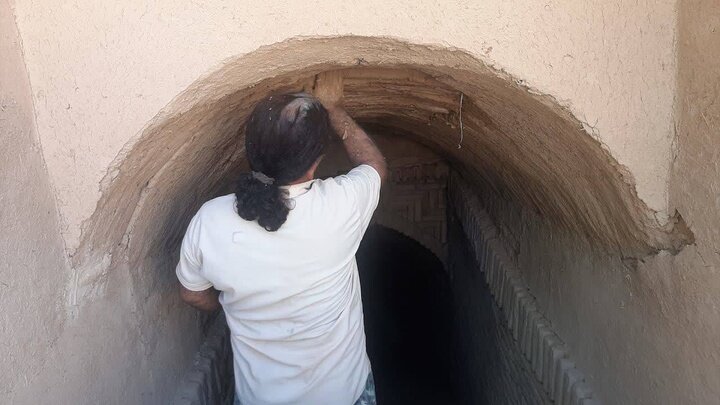
TEHRAN – Work on restoration and rehabilitation has begun as part of the regional ancient water infrastructure conservation initiative in a series of historic canats located in an old urban fabric in Aldakan, Yazd province, local officials said.
The restoration programme, announced Sunday by Yazd’s cultural heritage authorities, includes several interventions designed to maintain the structural integrity and traditional functioning of Qanats.
Key pillars of the restoration plan include cutting wastewater lines illegally connected to the QANAT path, removing accumulated wastewater, trimming and reshaping the walls of the QANAT tunnel, and strengthening the vertical water access shaft.
This project also includes restoring the Qanats stairs to improve both safety and durability. The initiative aims to prevent the collapse of the tunnel, maintain the original underground construction and support the use of the potential tourism of QANAT infrastructure.
Qanats are ancient underground waterways that use gravity to transport groundwater from aquifers to their surfaces. Developed more than 2,000 years ago, the system supports agriculture and reconciliation in arid regions of Iran. The historic city of central Iran, the Ardakan relies heavily on this traditional method of water distribution.
Usually, each QANAT contains a gentle sloped tunnel extending underground, kilometres, and vertical shafts are regularly constructed to remove excavated material and allow for airflow. These shafts are visible from the surface and often mark the line of Qanat.
Water drawn from the underground aquifer is distributed through a network of field channels and is shared by multiple stakeholders through a long-standing cooperative management system. Many QANATs also include auxiliary structures such as reservoirs, public baths, rest areas and waterwheels.
morning