
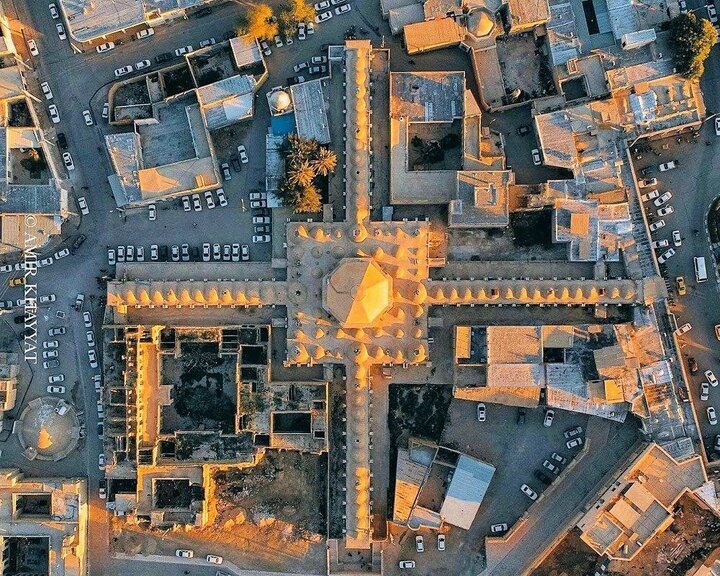
Tehran – Senior Regional Development Planning Experts have proposed the development of a four-year restoration plan for Qeysarieh Bazaar, southern Iran, involving private sector participation and non-governmental organizations.
Mohammad Ali Jamsidi, a tourism advisor to Rah City Council, outlined the proposal in a memo submitted to the Tehran Times. He described Qeysarieh Bazaar as a “million-old gem” and one of the oldest continuing operating markets in West Asia.
According to Jamshidi, historical, archaeological and lyrical evidence dates back to the AH (about 1,000 years ago) of the 4th to 6th centuries. Some sources have taken the current structure from the Safavid period (early the 17th century), but said that the bazaar’s origins are in that era, and that restoration and expansion are only involved.
He said the bazaar’s strategic location on the caravan route connecting central Iran to the Persian Gulf became an important economic hub from the 8th to the 12th centuries. Its trade network has been expanded to ports such as Bandar Abbas, Shiraf, Bushell, and islands such as Qeshm and Kish, as well as areas in the Gulf, including Oman and the northern UAE.
Jamsidi has identified several threats to the preservation of the bazaar, including inappropriate materials such as cement and iron beams, incompatible modern business that destroys traditional social fabrics, inconsistent urban development that causes visual and structural damage, and floods that lead to structural cracks and subsidence.
He also emphasized that there is no tourism infrastructure such as lighting, signage, visitor services and cultural tours.
Jamsidi said that a properly restored Qeysarieh Bazaar can attract 150,000 to 250,000 national and international visitors each year, using comparisons to Tabriz, Kaman, Yazd and Kazbin’s other historic Iranian bazaars. He estimated that economic revenue could reach 1.5-2 trillion rials (& $1.6 million to $2.2 million) per year, creating around 500 sustainable jobs in traditional restoration, tourism services, handicraft sales, accommodation and education.
He emphasized the uniqueness of the bazaar, given its history of about 1,000 years, and its status as one of the few active traditional bazaars in the country, older than Iran’s other famous bazaars.
Jamshidi recommended that the process of UNESCO’s World Heritage Registry be launched with cooperation from the University of Architecture, the Department of Cultural Heritage in Fars and related local governments. He also called for the preparation of a comprehensive four-year revival plan with active involvement of the private sector and civil society organizations.
“Qeysarieh Bazaar is a living cultural heritage that reflects the history, architecture, trade and culture of southern Iran,” he writes. “With proper attention, planning and recovery, it will not only be a major tourist attraction, but also a driving force behind the economic development of LAR.”
morning