
Madrid – A recent editorial published by the Wall Street Journal does not represent an autonomous analysis or authentic voice of Palestinian reality, according to various critical reports armed by Israeli to fight Hamas. Rather, it is a statement built under the influence of colonial forces seeking to justify systematic violence and the ongoing genocide in Gaza, while simultaneously promoting internal fragmentation and control through tactical partnerships with local actors.
Far from reflecting the legitimate perspective and authentic voices of the Palestinian people, the editor is a political communicature built within the framework of colonial instrumentalization. By giving a platform to major media outlets to this nature, this article, the “leader” of armed groups linked to foreign interests, engages in a media whitewashing strategy aimed at justifying Gaza’s silent genocide and replacing unified narratives of resistance with depictions of division and functional accomplice.
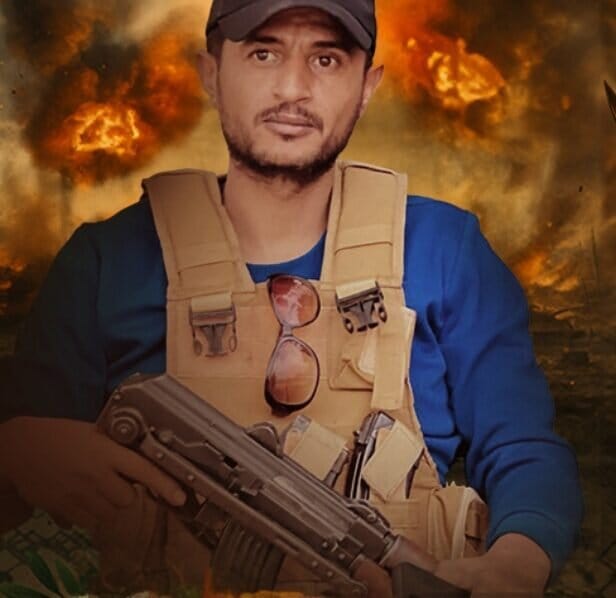
Yasser Abu Shabab: Local actor, regional pawn
Abu Shabaab’s diagram illustrates both the inner complexity of Gaza and the instrumentalization of fragmented groups for social control and fragmentation. Reports say Abu Shabaab, a member of the Tarabin Bedouin tribe in 1993, was transplanted from small crimes, including drug trafficking, to lead militias that rule certain areas of Gaza as part of a broader armed network directly supported by Israel.
This support includes the provision of weapons and tactical privileges explicitly designed to weaken Hamas in the context of war and to control civilians. Rather than representing an organic or legal representation of Palestinian resistance, his role clearly subserves the interests of the colony, which utilizes marginal actors to establish disruption and justifies large-scale military operations.
By publishing editors of this nature, outlets like the Wall Street Journal contribute to amplifying functional narratives that replace the complex nature of conflict with overdepicting justifying occupational and social cleansing.
Barrage begins with language: necropolitics and dehumanization
The extreme violence unleashed in Gaza does not occur in a vacuum. Before the bombs fall and civilian lives are erased, debateful status is placed by the politics of language that deprives them of their status as political and human subjects. In this context, texts attributed to Abu Shabaab serve as “practical alternatives” for certain local armed actors controlled by Israel or functionally, or as debate preludes for the wild bar, functionally or to minimize the ongoing context of the blockade, blockade, and apartehid imposed on Gaza.
Such discourses belong to the necropolitical inventory. It is mass extinction and normalization of suffering as “necessary collateral damage” that politically legalizes indiscriminate violence, the destruction of society, and the impossibility of dignified life. Dehumanizing and fragmenting is the first step towards material genocide.
Explicit Western media co-confessions
By publishing such communicatures and providing space for figures like Abu Shabaab, the Wall Street Journal follows the broader pattern of Western media accomplices during the Palestinian crisis. Far from playing its critical role, mainstream media recreates and amplifies biased narratives that justify Israel’s extinction strategy, portraying Palestinian resistance as dysfunctional or terrorists, and constructs a version of reality tailored to the interests of US and Israeli foreign policy.
This media action not only silences the legal voices demanding justice and recognition, but also helps to construct and maintain a hegemonic narrative of dehumanization and delegitimization.
Iran in Western Tales: Distorted Reasoning and Continuous Orientalism
In this controversial machine, Iran holds its central location as a typical “external enemy” portrayed as irrational, fanatic and belligerent in simple, monochromatic terms. This debateful gesture, rigorously analyzed by many critical thinkers in the region, supports the long tradition of Orientalism, where the Middle East is framed through two exclusive lenses: “enemy” or “irrational others.”
This systematic imagination distorted the political understanding of the Iranian state and obscured its strategic and diplomatic logic. This is logic that includes political rationality, national security concerns, and legitimate aspirations within regional order. Mainstream media representation fails to acknowledge these elements and instead promotes reductionist narratives that justify sanctions, blockades, and military action with catastrophic humanitarian consequences.
Therefore, Iran becomes a rhetorical figure supporting exclusive and violent policies, obstructing the practical possibilities of regionally-led dialogue or integration. This approach contributes to a permanent state of escalation and extends the cycle of conflict.
Structural silencing and Gaza costs
This media dynamics lead to explicit silencing of voices denounced occupation, apartheid, and lockdown. It justifies the “war on terror” story as a sufficient explanation of the systemic destruction of infrastructure, basic services and civilian life.
The immediate outcome is an exemption from international crime and perpetuation of unbearable humanitarian circumstances, captivating the racist narratives in which death and destruction are reduced to acceptable statistics for Western audiences and serve the agenda of entrenched power.
Towards the necessary critical and debateful change
To confront this necropolitical and imperial logic, criticism must focus on how wild bars begin in language. Dehumanizing them and justifying their extinction through discourse is the first step towards physical violence. Describing the continuity of Orientalism and dismantling stereotype images of Iran and the region are necessary conditions for opening up a more honest space of dialogue and effective political resistance.
This approach calls for Hamas’ recognition as a legitimate political actor within the Palestinian cause, recognition of Iran’s strategic rationality, and a deeper understanding of the complex web of territorial interests and resistance.
Conclusion
The editors attributed to the Wall Street Journal’s Yaser Abu Shabaab are not independent analysis but alternative means of Israeli and Western media machines used to whitewash the ongoing genocide in Gaza. By amplifying voices that serve the occupying people and systematically demonize Iran, the editors contribute to the fragmentation of the Palestinians and justify extinction policies supported by media accomplices.
The reality of Gaza requires critical narratives. It identifies the challenges of media instrumentation, general Orientalism, and promotes local sovereignty and human rights. Only an approach that combines analytical rigor, historical integrity and respect for pluralism can provide the foundation for resisting necrotic violence and moving towards a fair solution.