
Tehran – History of Cultural Heritage Reza Salehi Amiri highlighted the need to abandon the management of historical sites in the private sector, calling this approach an effective alternative to revitalizing national heritage.
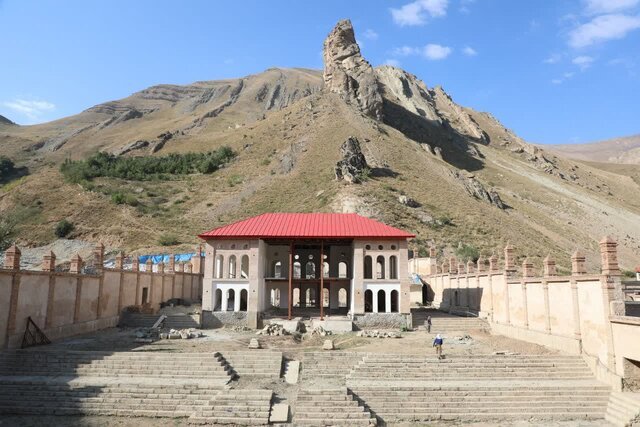
On the sidelines of a visit to Naseri Palace in Shalestanak, Alborz, he announced on Thursday that the restoration of the Kajal building had reached 70% advances, Isna reported.
Pointing out the importance of the private sector in the preservation and revitalization of the country’s cultural heritage, he added: “Our experience in managing cultural heritage has shown that governments should not monopolize all administrative issues. Rather, they should hand over the management and exploitation of historical sites to the private sector.”
Regarding the restoration and recreation of Naseri Palace by private investors, he said the complex, handed over several years ago, has witnessed major advances in its restoration thanks to private sector efforts. “This successful experience confirms the fund’s decisive policy for restoration,
We also announce and pursue serious exploitation of historical sites. ”
Thanking the Alborz province and the investor’s management of the project, he said that over 70% of the restoration project for this historic palace has been completed, and three important steps have been completed, including the completion of infrastructure, the equipment for the hotel facilities, and the introduction of this valuable capability to people across the country.
Referring to the history of Naseri Palace, dating back to the Qajar era, Salehi Amiri states that the building is a summer residence of the Nator Al Din Shah family. Not only can it be a monument to authentic Iranian architecture, it can also be converted to a residential complex that includes boutique hotels, galleries, cultural spaces, public places, galleries and cultural spaces.
He added that despite a lack of a quick outlook for return on investment, investors in the project are entering this path with the motivation to maintain their cultural heritage and owing significant costs. “What we are today is to appreciate this cultural interest and help us continue our work.”
He pointed to the country’s enormous historic capabilities, saying that in states like Yazd, Neyshabur and Sabzevar there are hundreds of hectares of historic monuments that need to be restored with the participation of the people. Karaj also has many historic monuments from a variety of eras, from Qajar to Safavid.
During his recent trip to Karaj and visits to some historic monuments, the message became clear that the development and preservation of Iranian civilization is not impossible without the participation of the people, he noted.
Referring to the goal of a balanced distribution of domestic tourism, he states: “It’s wrong to concentrate tourists only in big cities. They must direct tourists towards ecotourism, villages, caravanseras and historic palaces. Today, there are hundreds of Karavanseras in countries registered around the world.
Surrounded by the Alborz Mountains, Shalestanak is an attractive village that perfectly combines natural beauty with cultural heritage.
Located about 60km from Tehran, it offers a quiet escape from the busy streets of Iranian capital for a day’s excursion.
Shahrestanak was a magnificent summer retreat of Naser Al-Din Shah Qajar, who reigned from 1848 to 1896.
The palace is now abandoned, but it whispers the story of a bygone era and gives visitors a glimpse into the luxurious lifestyle of the former Iranian monarch. Nearby, stone inscriptions from the same era add to the area’s historical charm.
For those who love history, the palace that ran is a must-see. Sitting in the mountains and reaching it requires a short hike, but the effort is well rewarded. The ancient walls stand as evidence of the region’s prestigious past, revealing the strategic importance of this once imposed base.
KD