

TEHRAN – Amid the escalation of violence and the deepening humanitarian crisis in Gaza, the world is seeing more than 61,000 Palestinians have been killed and 152,000 injured since Israel launched its devastating military campaign in October 2023.
The conflict ignited a wave of global rage as the ongoing Israeli lockdown caused serious starvation and led to the tragic deaths of around 200 Palestinians from starvation alone.
However, many Western governments remain silent or accomplice, failing to take meaningful actions to stop what UN experts and rights groups call ethnic cleansing and genocide.
In Slovakia, public dissent has become increasingly noticeable. On Thursday, the capital Bratislava witnessed a powerful “empty pot march,” a protest aimed at attracting international attention to the deliberate starvation imposed on Gaza by Israel.
Among the protesters were university lecturer, activist, commentator and publicist Lucia Hubinka, who spoke openly about the protests and political situation in Slovak, and had the broader implications of Western accomplices during the Gaza crisis in an interview with the Tehran Times. She sheds light on growing solidarity movements, harsh failures in political leadership, and moral orders that demand action.
This is an excerpt from the interview.
Can I share details about the location of the protest and the route for the march?
The protest took place in Bratislava. It began in front of the National Assembly, then we marched to the house of the European Commission, followed by the Presidential Palace, and finally through the Old Town.
Can you explain the purpose of sorting out the march of the empty pot protests and the message you wanted to convey?
The protest was called the march of the empty pot. This is a harsh and unforgettable image that speaks not only to the hunger that swallows Gaza, but also to the hunger and human suffering that has continued to occur in Yemen, Sudan, and beyond. Each empty pot that passed through the street reminded us that hunger was never a coincidence. It is the product of political choice, blockades and war.
We are painfully aware of what is unfolding in Gaza. It is ethnic cleansing, genocide, and careful hunger used as a weapon against the whole population. Conscientiously, how can this be done right in front of you? However, our government has not once condemned Israel’s actions. Instead, they continue to shake hands with Israeli leaders, sign trade deals and even sell their arms. This is not neutral, but accomplice, and becomes part of the machinery that enables these crimes. We say: It’s not our name.
How do protests in Slovakia reflect the public response to Gaza’s recent conflict?
This was not the first protest. In fact, it was the third march of empty pots in the past three weeks. There was also a demonstration in Bratislava at the beginning of January, and several other demonstrations before that in solidarity with Gaza. Recently, the Unified Group for Peace has organized a march against the EU’s plan to increase military spending to 5% of GDP.
While awareness of these issues is slowly growing, in my view, we are far from putting the kind of pressure necessary to force governments to act. Empty pots alone will not change policies. It should involve sustained public mobilization. We need more protest, more grassroots initiatives, more solidarity, and yes, more righteous public wrath.
Has the Slovak government condemned Israel’s actions in Gaza or did it take measures regarding the conflict? What’s more, how do politicians perceive the situation in Gaza? ”
Unfortunately, “No.” Politicians and the government have not expressed any condemnation. On the contrary, it is phenomenal that in the face of one of the worst atrocities of today, there are still people who deny the undeniable ongoing genocide and the intentional starvation in Gaza. Among them are politicians, religious leaders, commentators and scholars who, instead of acknowledging well-documented crimes, flood the public sphere with grotesque falsehood.
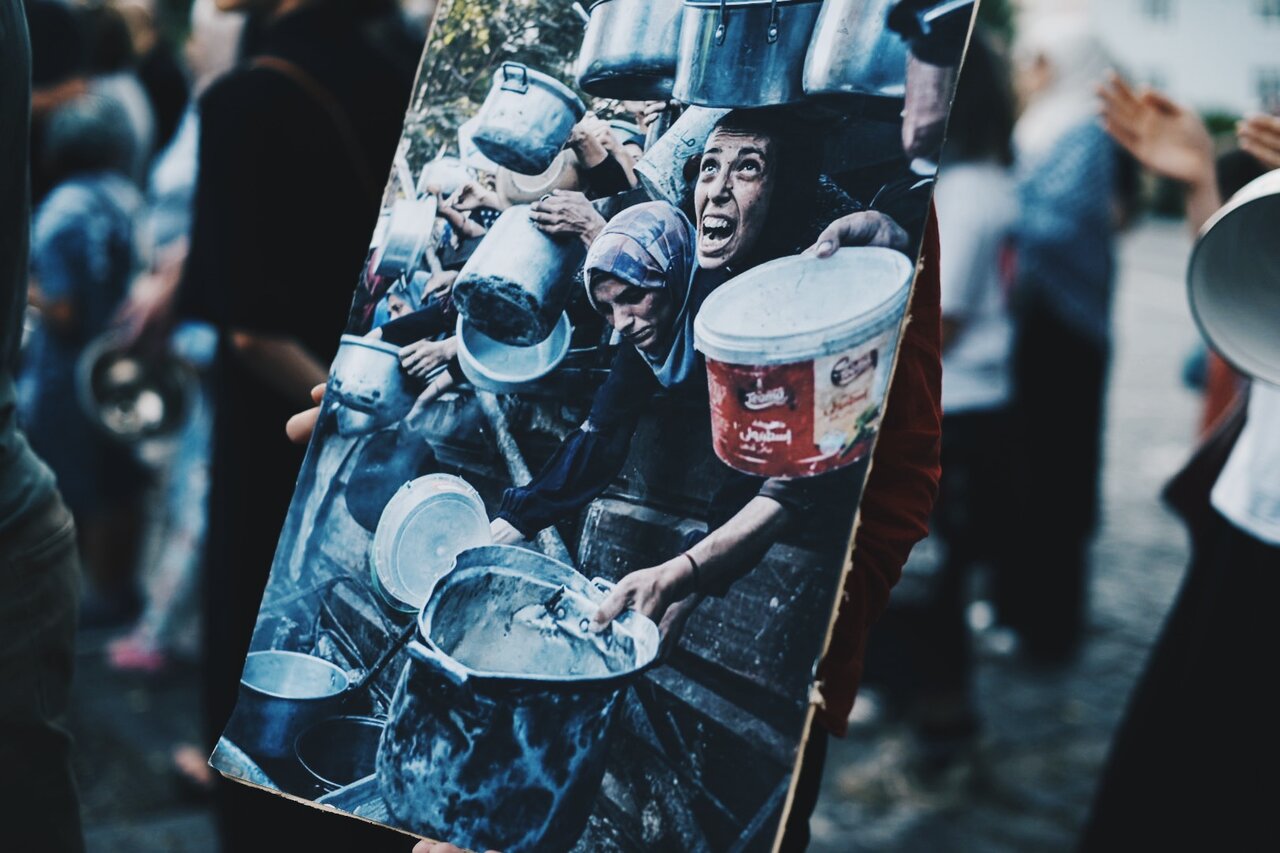
Slovak activists: Our politicians shake hands with Israeli leaders, sign trade contracts, and even sell arms to them. We say: It’s not our name. (Photo: Tereza Vančov)
For example, the current iconic photo of a child who was hungry for his mother’s arm is a “hoologue”, claiming that the boy’s condition was due to a genetic illness, and that Israel repeatedly propagated Israel that he sent him compassionately to Italy for treatment. In reality, Israel hinders his evacuation. Only the efforts of doctors, volunteers and independent journalists have driven him out. The 4-year-old Osama Alracav weighs only 9 kg (a shadow of the skeleton of a once healthy child), resulting in months without food or medicine.
Others push the equally obscene claim that Gaza’s hunger is nothing more than a “hamas advert.” It can even be resonated by a religious system that has become so popular that it publicly supports Israel’s military action. When faith-based organizations blur the boundaries between promoting religion and promoting the politics of a nation engaged in apartheid and war crimes, they are fuel-inflicting themselves.
The playbook is always the same. From the United Nations, UNICEF, the Red Cross to the Frontiers of Medesin and even Israel’s own major human rights organization, anyone referring to hunger and genocide is painted as “Hamas supporters.” Meanwhile, the hunger is deeper, and the entire neighborhood is shrinking into a tile rub, and children are shot by collisions with their heads and chests.
Some European governments are beginning to act: Slovenia and the Netherlands have approved Israeli ministers, and Slovenia has banned all arms trade with Israel. But in countries like Slovakia, leaders block even symbolic measures and stick to silence and accomplice.
Religious justification is particularly dangerous. Modern Israel is not a “biblical promise,” but a political project built on occupation, apartheid, and bloodshed. The Bible does not order genocide of children or starvation of the entire community. If you close your eyes to this, how can you claim to act in the name of faith? This is nothing but fanaticism.
Israeli security cabinets have approved plans to gain control of Gaza city and expand “security control” to Palestinian territory. What are the beliefs among Slovak leaders about Prime Minister Benjamin Netanyahu’s warming in Gaza?
Netanyahu’s push to capture Gaza is not about security, but about controlling crime scenes. Zionist authorities intend to erase the evidence, knowing that when the world’s eyes gain full and unlimited access, Gaza will be revealed as a vast landscape of atrocities.
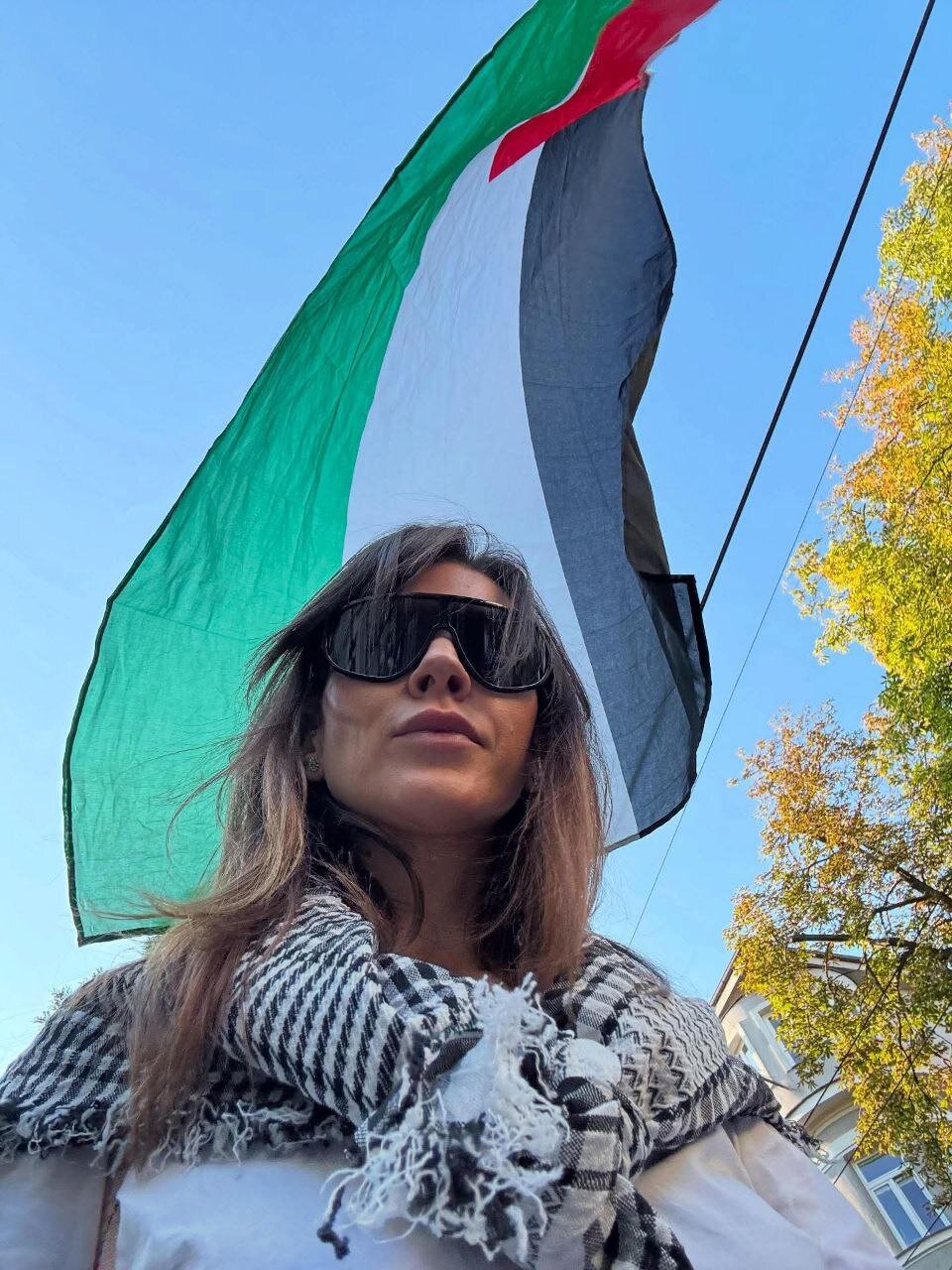
Lucia Hubinska: The courage of the nation is not measured in size. I believe that even in small countries we can take on big challenges
Western governments support this agenda not only as an accomplice, but as an active collaborator in all crimes committed. Losing Gaza’s control not only exposes Israel, but could also cause a fatal blow to the Western Empire’s rule.
Here in Slovakia, our leaders reflect the feeling that as a small nation, we cannot significantly challenge the Western order. EU and NATO membership is presented as a constraint that leaves little room for true independence. But there is a deep national desire for true sovereignty – even neutrality. However, experience shows that such aspirations are difficult to realize within our current alliance.
However, the courage of the nation is not measured by size. A country half our size, Slovenia demonstrates its political will to take bold and principled action at a global stage. This is not about capacity, it is about resolve. Perhaps it is time to limit us too long and be free to use this moment to redefine the world’s position based on our own interests, values and moral responsibility.