
Tehran – A political science professor explains that despite two years of war in the Gaza Strip and killing “5-10% of the 2.2 million population”, “Israel is not approaching serving its stated purpose of eliminating Hamas.”
Robert A. Purp, director of the University of Chicago project on security and threats, says Hamas still has a great attraction among Palestinians in the Gaza and the West Bank, despite the disruptive company of the Mammoths.
“It may decrease as military force, but it can replenish the exhausted rank with new recruits. Independently, several accounts have allowed us to introduce over 10,000 new fighter jets since the war began,” Professor Pape wrote on Foreign Affairs on August 7th.
Below is an excerpt from an article entitled “The Unparalleled Devastation of Gaza.”
After nearly 700 days of war, Gaza’s death toll rose to extraordinary levels. The fierce artillery fire that transformed the territory into a rusty rub and a severe blockade of wasteland has led to massive hunger and even starvation, killing more than 61,000 Palestinians and seriously injured over 145,000 people.
But the true number of victims of war may well surpass those numbers. These figures do not include the thousands of bodies remaining under the tile rub, the numerous deaths that have failed to reach Morgue, and excessive deaths due to infrastructure destruction and ensai disease, hunger, and lack of medical care. In February, the medical journal The Lancet published an extensive analysis based on various sources (including obituaries) and estimated that although official deaths were underreported by at least 41%, and perhaps 107%, they underreported the official death toll by at least 107%, but underrepresented by the food supply, which was influenced by the supply that led to the supply of Israelime, the supplier of Gaza-related suppliers. Hygiene.
Israeli campaign in Gaza is the most deadly case of Western democracy, which uses civilian punishment as a war tactic.
In short, the authors of the study suggested that the Israeli campaign caused deaths of at least 26,000 Palestinians, and perhaps more than 120,000 additional deaths. Taking that into consideration, the Israeli war in Gaza in late July 2025 resulted in 5-10% deaths of around 2.2 million frontline population. This represents an unprecedented massacre. Israeli campaign in Gaza is the most deadly case of Western democracy, which uses civilian punishment as a war tactic.
Leaders and scholars have long assumed that democracy will provide solutions to the worst pathology of authoritarian states, particularly the willingness to force, cruelty and violence on its population. In fact, US and other Western democracies, including Israel, argue that democracy is essential for basic human rights, personal prosperity, and promoting a more peaceful world. For Israel, a country that has long touted democratic authenticity to violate central democratic norms in such a dramatic way, will cheapen the value of the Democratic government itself.
Israeli defenders may argue that civilian death is inevitable in conflict with a holed enemy. But it is clear from Israel’s actions that include Israeli wars opposing everything in Gaza rather than oppose Hamas, merciless bombing of civilian infrastructure and housing, civilian blockades and starvation, Israeli blockades and starvation. It is also the conclusion of numerous international organizations and human rights organizations. Certainly, the notion that Hamas can be eradicated through military means is a “fantasy,” as former Singh Bett director Yoram Cohen said this week. As civilians continued to suffer in Gaza, Israel wasted moral highlands and did not raise strategic objectives.
Israeli critics may demand that the country should not be considered a democratic based on the treatment of the Palestinians. It underestimates the perfect dimension of Israel’s actions in Gaza. The Gaza massacre is not the work of authoritarians or demagogs, but the blame of democracy. Therefore, Israel’s campaign has deep implications for both the long-term security of the country and the value of democracy around the world.
In my 1996 book, “Bombing to Win,” I learned all the campaigns of the 20th century, all that adopted air force with the intention of harming civilians. Of the more than 1% of civilian deaths, only five of five, exceeded 1% of civilians. These included four campaigns: Japan’s invasion of China from 1937 to 1945, Germany’s invasion of Poland from 1939 to 1945, Germany’s bombing and German invasion from 1939 to 1945, Japan’s US bombing and conquest from 1942 to 1945, Japan’s US bombing and conquest from 1945 to 1988, Afghan invasion from Afghan countries and US bombing and conquest from 1945. Poland is ranked as the most deadly of these campaigns, killing more than 20% of the frontline population in six years.
Up to Gaza, the worst civil punishment campaigns by Western democracy were German bombings and ground invasions in World War II. This killed about 2-4% of the population, overtaking US nuclear and fire bombing attacks in Japan, killing about 1% of the population. These estimates from Germany explain deaths, as well as direct and indirect deaths caused by both Soviet and Western forces (as in the Lancet study of Gaza).
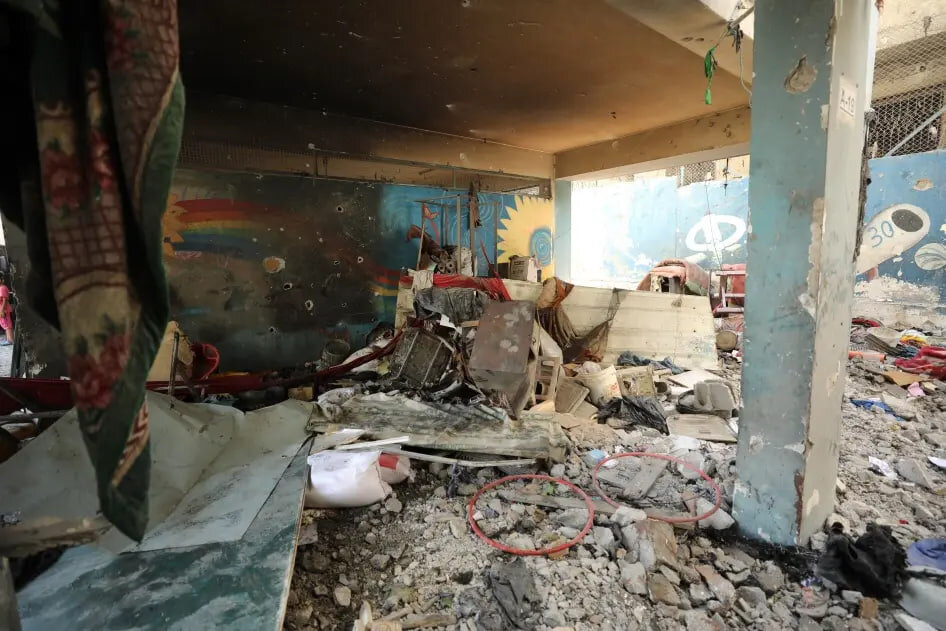
Whether it was called “genocide” or not, wise observers could not see Israeli war in Gaza and miss the spectacular level of devastation the Palestinians endured. Beyond massive death and suffering, the level of physical devastation is astounding. Satellite analysis by trusted independent media outlets such as the Economists and the Financial Age reveals that at least 60% of Gaza’s buildings and 90% of homes have been seriously damaged or completely destroyed. All universities, schools and mosques of Gaza University have also been demolished, as well as numerous churches, museums and libraries. Hospitals in Gaza are not fully functional, with only 20 of the 36 hospitals partially operating.
Yet, despite this destructive mammoth company, Israel is not approaching its stated purpose of eliminating Hamas. The group still has great attraction among Palestinians in Gaza and the West Bank. It may decrease as military force, but it can replenish the exhausted ranks with new recruits. Several accounts have allowed the introduction of more than 10,000 new fighter jets since the war began. The extreme atrocities that Israel has inflicted on the Palestinians have not produced the strategic benefits promised by Israeli officials.
Moral cases for harming civilians are always questionable, even when such violence serves strategic purposes. However, if that strategic objective is not present, the moral case evaporates completely. Israel has now found itself in a morally unacceptable situation. Rather than increasing the global growth, increasing economic pressure and the possibility of future violence, Israel must reverse courses and pursue alternatives to the massive death campaign in Gaza.
Throughout history, the state has severely punished civilians to force communities to oppose governments and extremist groups. But even intense civilian punishment rarely achieves these goals. Instead, it often leads to what I called the “Pearl Port Effect.” It is an increased support among attacked civilian communities, for the sake of government or local groups.
In January 2025, US officials revealed that Hamas had recruited around 15,000 new fighter jets, according to their estimates, since the start of Israeli military operations in 2023.
In June 2024, I insisted in diplomacy, in at least one way, that Hamas was stronger than before October 7, 2023. However, Palestinian support for Hamas remained the same or revived in Gaza and the West Bank, according to the most reliable voting information available at the time. Overall, Hamas’ power Taplout has actually increased its ability to recruit new fighters to fill up losses. In January 2025, US officials revealed that Hamas had recruited around 15,000 new fighter jets, according to their estimates, since the start of Israeli military operations in 2023.
A lot has happened since the beginning of this year. The end of the two-month ceasefire in March, the escalation of Israel’s siege, and the severe blockade of food and humanitarian goods entering the territory, the humanitarian crisis affecting the entire population of Gaza, Israeli Israel has announced that it will conquer the leaders of the Israeli area at least and conquer at least 75%. territory. Hamas appears to be strengthening ambush and bombing guerilla tactics targeting Israeli soldiers in Gaza, but the group has failed to meaningfully protect its territory and its population from Israeli attacks.
Media coverage over the past few months has revealed sporadic demonstrations in Gaza against Hamas, suggesting that some Palestinians are tired of the group and their actions. However, recent polls show that Hamas has gained widespread popularity among Palestinians in both Gaza and the West Bank.
Hamas’ relative power cannot be simply measured in the same way as it measures the military balance between Israel and its national rivals. Military balance between opponents is paramount in interstate competitions. Their troops usually engage in direct, large-scale battles to seize and retain territory, control the air beyond territory, and provide secure access to contested territory. The success of these operations is determined by key indicators such as the number of fighter jets, weapon inventory, and level of financial support. If such factors had determined the nature of the battle between Hamas and Israel, the war would have been long ago, as Israel outweighed the group for all the usual indicators of military power. The war has been going on for almost two years, and Hamas is keeping the adequate governing authority in Gaza as it hides the remaining Israeli hostages, gives victims to Israeli security forces, and strongly suggests that Hamas’ true power is not found in traditional indicators of military balance.