
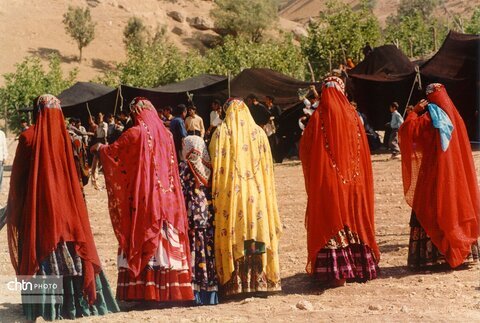
Tehran – The traditional costumes of women of Bakhtiari and Kashkai Chaharmahal Bakhtiari, as well as the urban and rural areas of Chaharmahal, introduce some of the most beautiful expressions of Iranian art and culture.
These garments are distinguished by their vivid use of colors such as pink, green, red, orange, purple, blue, yellow, and white.
This unique type of clothing from LOR, Turkey, Faz, Chaharmahal Bhaktiari province has been used since the SAFAVID era as formal clothing for various weddings, mourning ceremonies, and other formal and informal programs, and has always been used as everyday clothing for various formal and information programs, according to many experts and scholars.
Women of Chaharmahal-Bakhtiari still wear local costumes and clothing, especially in the nomadic areas of Bakhtiari and Kashqai, the cities of Shar e Cord and Farovshar, and villages in this state.
Of course, along with the women of Chaharmahar Bhaktiari, men from this state also wear local costumes and clothing.
The interest of the people of Chaharmahal Bhaktiari, especially women in traditional clothing, is so great that despite current sanctions and price conditions, the use of local clothing of this type has not diminished among them, but continues to enjoy special and special prosperity.
Local clothing and clothing of Chaharmahar Bakhtiari women and men has always enjoyed the public interest at national and international levels, especially among women.
Currently, the market for local clothing and clothing production for Chaharmahal-Bakhtiari women is booming, with many fans in the country and other states around the world.
The local clothing and garments production of Chaharmahal-Bakhtiari women is not experiencing a recession today, and there is no decline in customers in this art and industry.
The use of local clothing and costumes by women of Chaharmahal-Bakhtiari is currently popular and thriving among various age groups in Bakhtiari, Qashqai, and Chaharmahal, villages and urban areas of this state.
Local clothing and costumes are used in these areas with the aim of maintaining the identity and credibility of the people in this area.
Of course, the use of local clothing and costumes by Chaharmahal-Bakhtiari women has increased in nomadic and rural areas, making it more colorful today’s generations.
The local attire of Chaharmahal Bhaktiari women is mainly used in the cities of Lordegan, Kanmirza, Couran, Ardal, Falsan and Borgen.
The boom in the production of local women and boys clothing in Chaharmahal Bhaktiari has been so positive that even some cities in the state have large production workshops currently active in this area.
The price of each local clothing in Chaharmahal Bhaktiari state is determined in proportion to the variety of raw materials used in production, the size of the fabric and the quality.
The rise in gold prices as one of the most important ingredients and the main raw materials will have a direct impact on the production of local women’s clothing in the state.
Gold is used in the production of “Rachak” of Bahtiari clothing and “Taj” of Qashqai clothing for women. The high cost of raw materials and gold reduced the production of “Rachak” of bakhtiari clothing for women and “Taj” of Qashqai clothing.
Local clothing for men in Bakhtiari includes felt hats, loose pants, choga, giveaways, shawls and slippers, while local clothing for women in Bakhtiari includes pants, yal (short coat), jowve (shirt), vest, rachaku (hat), and meina (head scarf).
KD