
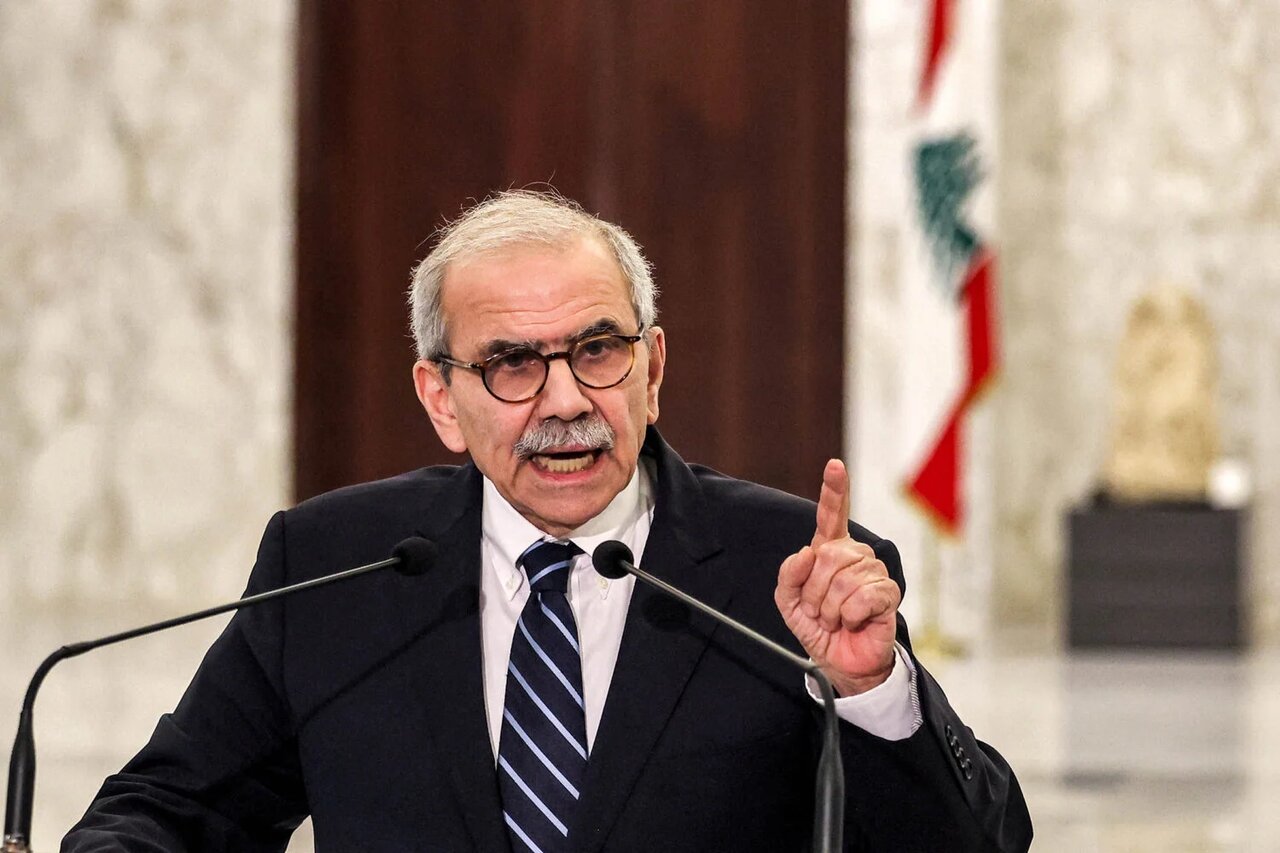
Beirut – In parallel with the rapid transformation taking place in Western Asia, Lebanese political history witnesses one of the most dangerous times as the government of Nawaf Salam acquiesced the US and Israeli desire to “legalize” the dismantling of military weapons in the national resistance movement.
This dangerous step certainly corresponds to an existential challenge. Lebanon is at a dangerous crossroads. If the Nawaf Salam government does not correct any serious mistakes, it is certainly on the brink of collapse.
The Lebanon National Agreement Document (also known as the TAIF Agreement) clearly states that Lebanon has the right to take action to free the occupied territories from Israeli occupation, whether in an armed struggle or through diplomacy. But diplomacy is worthless and useless without the military power, popular resistance, or both.
The national agreement ratified by Parliament on November 5, 1989 serves as a fundamental blueprint for postwar civil peace and national consensus in Lebanon after the 15th civil war.
“Lebanon is a sovereign, free and independent country, the ultimate home for all citizens… People are the source of authority, owners of sovereignty, and exercise it through the constitutional system… Authorities that contradict the coexistence contract are not legitimate.”
This general resistance is therefore a national, political, constitutional and national choice based on international law, guaranteeing a legitimate right to external attacks that oppose self-defense.
Despite opposition from Shiite ministers (from the Hezbollah and the Amal movement), the Lebanese government succumbed to the American situation in a reckless manner. It was definitely a political coup.
This is not the first time Lebanon has witnessed blatant foreign interference. Its sole purpose is to draw the country towards security and sectarian conflict under pressure of popularity.
Clearly, during a time of delicate and sensitive nature, Nawaf Salam managed to transform the Lebanon-Israel conflict into a different context.
This raises the hypothesis that Israel, or potentially another actor, will carry out an assassination that will inspire even more tension, reminiscent of the effects of former Prime Minister Rafiq Hariri.
What’s more, security sources have expressed serious concerns and are afraid of changes in Syria.
Washington is rushing to complete what takes into account the “wins” achieved after Hezbollah was hit seriously last year. Hezbollah believes it will take a decisive blow that will ensure a final defeat now that the government has voted to disarm it.
Washington considers Hezbollah as the backbone of the axis of resistance, limiting its movement and disrupting military and organizational structures constitutes a “final and complete victory” prelude that can only be achieved by fully disarming.
Regardless of the expected changes in Syria, by remaining armed, Hezbollah will reorganize and regain its previous strength.
Therefore, security sources warn that Israeli enemies, currently about 20 kilometres from the Lebanese border, could invade the Bekaa Valley area, given the assessment that the Bekaa Valley contains most of the strategic stores in Hezbollah.
There, Israel activates terrorist groups, inevitably pushing Hezbollah to protect its territory, turning it into exposed targets.
This is part of the “maximum pressure” policy that separates and drains resistance.
The undeclared coordination between Damascus and Tel Aviv has been strengthened recently through a series of meetings that began with the meeting of Syrian Foreign Minister Assad al-Sibani and Israeli Strategy Minister Ron Dahma in Baku, the Republic of Azerbaijan.
The goal of these meetings is to surround Hezbollah by changing the lever of pressure on the resistance by transforming the Syrian and Lebanon borders as strategic hubs.